












































Paradromics and Nvidia Join Forces to Turn Brain Signals Into Speech in Under 10 Milliseconds
Paradromics has announced a technical collaboration with Nvidia to build Nvidia Holoscan and Jetson edge computing into its Connexus brain-computer interface, aiming to cut speech-restoration delay below 10 milliseconds and shrink the decoding hardware from a cart of lab equipment to a box that fits on a wheelchair.
Paradromics and Nvidia Join Forces to Turn Brain Signals Into Speech in Under 10 Milliseconds
Paradromics, the Austin-based neurotechnology company behind the Connexus brain-computer interface, has announced a technical collaboration with Nvidia to rebuild the computing behind its speech-restoration system around Nvidia's Holoscan platform and Jetson edge hardware. The goal is to make a device that reads a person's intended speech directly from the brain fast enough for natural conversation — and small enough to live on a wheelchair instead of a laboratory cart.
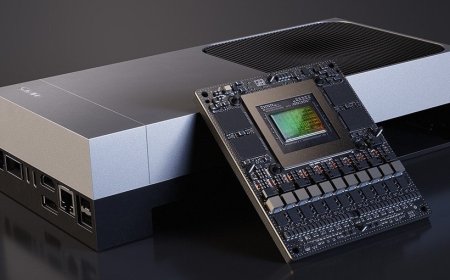
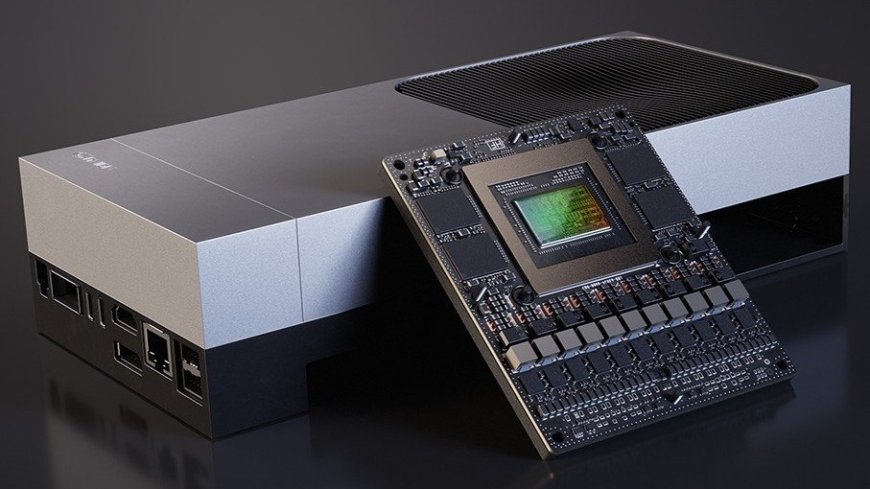
The image above shows Nvidia's Jetson AGX Thor edge computer, the class of hardware Paradromics is building into its system. The Connexus implant itself sits inside the brain and is not pictured.
What the two companies announced
Announced on November 23, 2026, the collaboration will integrate Nvidia Holoscan and Nvidia edge computing into Paradromics' brain-computer interface development stack, beginning with speech and communication and extending through the company's Paradromics Application Expansion (APEX) Program. The work focuses on translating high-bandwidth neural signals into useful outputs with the low latency, adaptive performance and power efficiency that real-world use demands.
Paradromics' Connexus system is designed to record neural activity at the resolution of individual neurons — more than 400 electrodes capture the signals — and translate that intent into speech or computer control for people with severe motor impairment. It is an investigational device, currently being evaluated in the FDA-approved Connect-One Early Feasibility Study.
"High data rate brain computer interfaces are the ultimate application for edge computing," said Matt Angle, founder and chief executive of Paradromics. "Intracortical brain computer interfaces produce rich data streams from large networks of individual neurons. Extracting meaning from those signals requires powerful, low latency processors that fit in a small form factor."
Why the computing is the bottleneck
Today's clinical setup pairs the implanted electrode array with an external Connexus Control Unit that houses an Nvidia Jetson Orin Nano module — and that unit still has to be tethered to a separate laboratory workstation to run the machine-learning models that decode neural signals into intended speech. It works, but it is not something a person can carry through a normal day.
The collaboration moves the whole pipeline onto the Nvidia Holoscan software framework running on dedicated embedded hardware, removing the external workstation from the loop. Holoscan is Nvidia's real-time platform for processing live sensor data, and Paradromics plans to use it to bring neural decoding, adaptive learning, language models and speech synthesis together inside one computational environment.
"Helping people who have lost the ability to speak communicate naturally again requires AI that can translate complex brain signals into speech and adapt as those signals change," said David Niewolny, senior director and global head of business development for healthcare and medical at Nvidia. "Through our work with Paradromics, we're using Nvidia Holoscan and Nvidia Jetson to bring neural decoding and speech generation together in real time."
The latency targets: under 10 milliseconds
The technical roadmap sets two demanding targets, both measured as compute and data-transport latency. Direct brain-to-speech systems, which convert cortical activity straight into synthetic speech waveforms, are targeted at under 10 milliseconds. Multi-stage pipelines — decoding neural signals into text with language models, then reading that text aloud — are targeted at under 100 milliseconds.
Those numbers are targets on an engineering roadmap, not results the system has already achieved. But they matter because conversation breaks down quickly when delay creeps in: even small lags change the experience of talking, as Paradromics chief scientific officer Vikash Gilja noted. "For natural communication, even relatively small delays can change the experience," he said.
The roadmap also includes online fine-tuning, so the decoding models can recalibrate themselves in the background as a person's neural signals shift over time — a known problem with implanted interfaces, where the signals the decoder learned on day one slowly drift.
From a cart of electronics to a wheelchair box
The longer-term aim of the work is physical as well as computational. Paradromics and Nvidia will explore ways to cut the size, weight and power draw of the external computing hardware, with the goal of moving from a cart of electronics to a compact enclosure that mounts on a user's wheelchair within about a year, and toward increasingly mobile form factors after that — hardware that can support all-day use rather than lab sessions.
That matters because the first people using Connexus are not in laboratories. They are people who have lost the ability to speak because of ALS, stroke or spinal cord injury, and who need a system that works at home, at the dinner table and on the phone — not one that needs a technician and a workstation nearby.
What happens next
Work begins this year with porting Paradromics' speech decoders and speech synthesis pipelines onto Nvidia Holoscan, followed by power profiling and optimisation, and deployment to speech-focused research partners in the APEX Program. In 2027, the roadmap expands to high-degree-of-freedom motor control and to vision-language-action models, which would let the interface support more complex, context-aware interaction with physical systems.
Through APEX, Paradromics also plans to deploy Nvidia IGX and Holoscan-ready systems to academic research partners, giving labs working on new applications for the implant a common computing setup instead of each group rebuilding the infrastructure from scratch. Beyond speech, APEX research is expected to explore applications relevant to stroke, spinal cord injury, movement disorders and other neurological conditions. No financial terms for the collaboration were disclosed.
The first patient already spoke through it
The announcement builds on a milestone Paradromics reached earlier this year. The company completed its first long-term human implantation in June 2026, and in September the first participant in its Connect-One study — a Michigan woman in her 60s living with motor neuron disease — used her Connexus implant to choose her own words and speak with her grandchildren on a live phone call.
That is the experience the Nvidia collaboration is meant to make faster, more reliable and portable. If the engineering roadmap delivers, the same conversation could one day happen with a delay measured in single-digit milliseconds, from a device small enough to ride on a wheelchair. For now, Connexus remains investigational, limited by United States law to investigational use, and the latency figures are goals the two companies are working toward — not claims about what the system does today.
For readers following this field, Innopark IT previously covered how a Neuralink patient steered a robot vacuum around his home using only his thoughts: He Steered a Robot With His Thoughts: How a Neuralink Patient Drove a Vacuum Around His Home.
Sources
- Business Wire — Paradromics Advances High-Performance AI Computing for Brain-Computer Interfaces with NVIDIA (November 23, 2026)
- MobiHealthNews — Paradromics partners with NVIDIA on brain interfaces
- Inside BCI — Paradromics teams up with Nvidia on the computing behind its speech BCI
- Read Magazine — Paradromics NVIDIA BCI Collaboration Targets Sub-10ms Speech
What's Your Reaction?
 Like
0
 Dislike
0
 Love
0
 Funny
0
 Angry
0
 Sad
0
 Wow
0