













































vivo X300 Pro Review: Superb Zeiss Cameras and Top Speed, but Europe Gets a Smaller Battery
GSMArena's full review of the vivo X300 Pro finds an outstanding camera phone with a 200MP Zeiss telephoto, a bright 6.78-inch display and Dimensity 9500 power — held back mainly by the smaller 5,440mAh battery fitted to European models and an expensive telephoto extender kit.

vivo X300 Pro Review: Superb Zeiss Cameras and Top Speed, but Europe Gets a Smaller Battery
The vivo X300 Pro arrives as the latest chapter in a series that has quietly become one of the most dependable names in phone photography. Compared with the X200 Pro from 2024, it brings a new main camera sensor, a refined telephoto, a faster chip, a brighter flat display and a bigger battery — at least in most markets. GSMArena's full review puts the phone through its paces and comes away impressed, with one clear complaint: buyers in Europe get a noticeably smaller battery than everyone else.
At a European list price of 1,400 euros, the X300 Pro sits squarely against the toughest rivals in the business — the Oppo Find X9 Pro, the Xiaomi 15 Ultra, the Galaxy S25 Ultra and the Pixel 10 Pro XL. The review's verdict is that it earns its place among them, and for anyone who puts the camera first, it should be near the top of the shortlist.
Design: flat, premium and built to survive
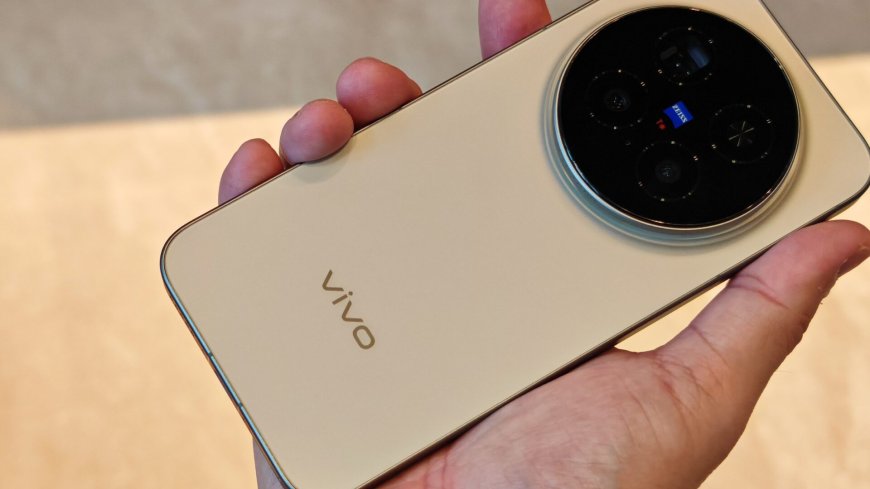
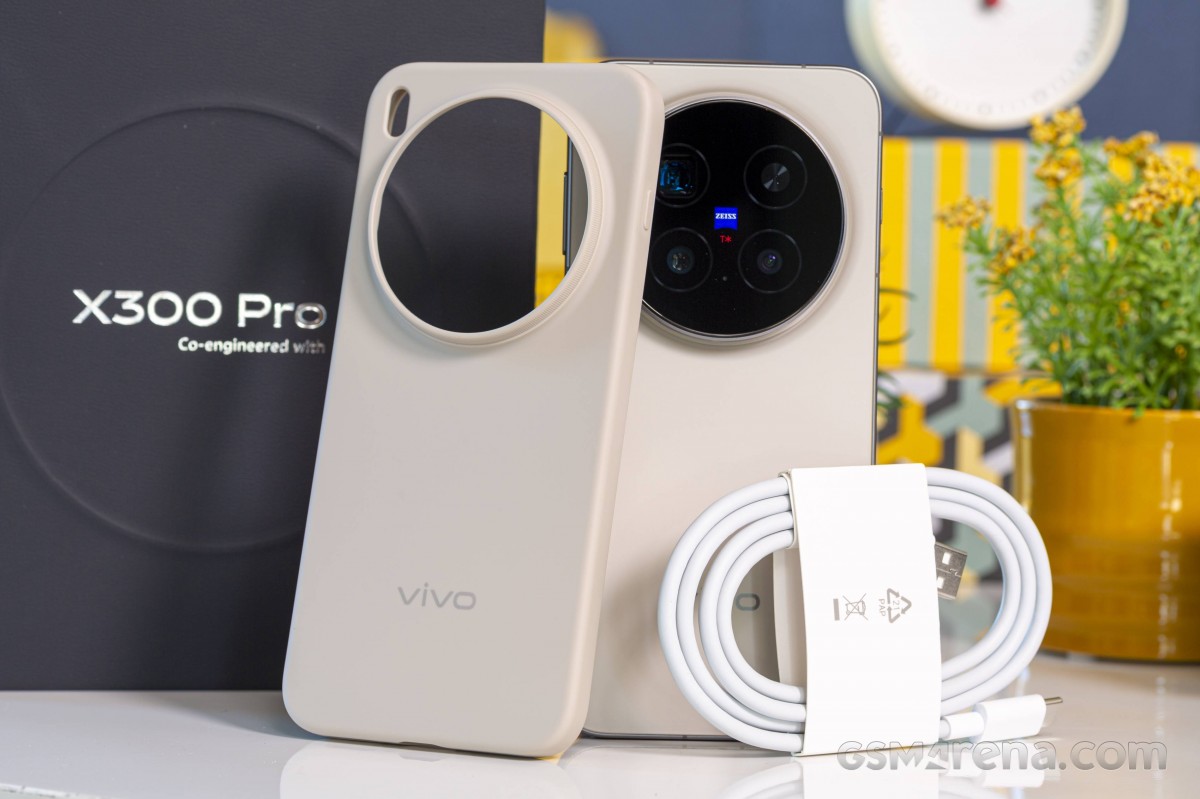
The X300 Pro keeps the big circular camera island that has defined the line, complete with a small Zeiss badge in the middle, but both the front and the back are now entirely flat. The step-down ring around the camera cluster is gone, which the reviewers suggest may be preparation for the telephoto extender kit's case. The phone is offered in black and a brown colourway globally, with baby blue and white versions limited to China.
The rear panel is frosted glass, slippery but resistant to fingerprints, wrapped in a flat aluminium frame with just enough of a rounded edge to feel comfortable. A new shortcut button sits on the left side and can launch the camera and fire the shutter, though it lacks the two-stage action of a true camera control. The ultrasonic fingerprint reader sits in a good spot under the display, works quickly and reliably, and tolerates the factory-applied screen protector.
Durability is strong: the phone carries IP68 and IP69 ratings, so it is protected against dust, immersion in up to 1.5 metres of water for 30 minutes, and even high-pressure hot water jets. At 226 grams it is no featherweight, and GSMArena notes an irony in that weight — European buyers carry the same heavy body but get less battery capacity inside it.
Display: bright, smooth and easy to love
The 6.78-inch LTPO AMOLED panel is largely carried over from the X200 Pro, which the reviewers count as a good thing. Resolution is 1,260 by 2,800 pixels with a 120Hz refresh rate, 2,160Hz PWM dimming and support for Dolby Vision, HDR10+ and HDR Vivid. Vivo promises up to 4,500 nits of peak local brightness, and in testing the panel measured over 2,100 nits across a large white area and more than 2,600 nits on a smaller window — properly impressive figures that keep the screen readable in harsh sunlight. Minimum brightness dips under 2 nits for comfortable use in the dark.
One small step back is the variable refresh rate range: where the old phone could drop as low as 0.1Hz, the new one bottoms out at 1Hz. In practice that matters little, and the phone still adjusts smoothly to what is on screen. Streaming is well covered, with Widevine L1, HDR on Netflix and YouTube, and support for Android's Ultra HDR photo format.
Performance and software: Dimensity 9500 and a welcome OriginOS debut
Under the hood is MediaTek's Dimensity 9500, a 3nm chip with an all-big-core CPU in a 1+3+4 layout, the Arm G1-Ultra GPU and a ninth-generation NPU. MediaTek claims 32 percent higher single-core CPU performance than the previous chip, 17 percent better multi-core performance and a 33 percent GPU improvement. In GSMArena's benchmarks the X300 Pro proved a top-class performer, scoring slightly above the Oppo Find X9 Pro, which uses the same chip, and beating the Snapdragon 8 Elite Gen 5-powered Xiaomi 17 Pro Max in GPU tests while trailing it slightly on CPU.
Sustained performance is more ordinary. Under prolonged load the CPU throttled to a little over 60 percent of its initial result within about seven minutes, and the 3DMark Wild Life Extreme stress test settled at 59 percent stability — slightly better than the Find X9 Pro and about on par with the Xiaomi 17 Pro Max. Surface temperatures stayed manageable, with the frame the hottest part but well below 50 degrees.
The bigger software news is that FuntouchOS is gone. Global models now run OriginOS 6 on top of Android 16, the same interface previously reserved for Chinese vivos. The review team calls the change a clear upgrade: a more modern settings menu and notification shade, new blur effects and transitions, a custom font, and smoother animations. Vivo promises five major Android upgrades and seven years of security updates. New additions include the Origin Island contextual area around the front camera, a Connection Center for linking with PCs and iPhones, a Private Space for sensitive data, and even Motion Prompts, which shows moving dots on screen to ease motion sickness in a vehicle. Some AI features seen in the OriginOS 6 beta, such as AI Writing and AI Transcribe, were missing from the review unit, though.
Cameras: the star of the show
The camera hardware looks familiar at a glance, but there are meaningful changes. The main camera moves to a new Sony Lytia LYT-828 sensor, still 1/1.28 inch, promising wider dynamic range and cleaner noise performance, behind a 24mm f/1.6 lens with stabilisation. The 200MP telephoto swaps the Samsung HP9 sensor for a customised evolution vivo calls HPB, still one of the largest telephoto sensors in any phone at 1/1.4 inch, paired with an 85mm f/2.7 lens offering 3.7x optical zoom and close focusing down to 14cm. The ultrawide is unchanged on paper — a 50MP Samsung JN1 with autofocus — while the front camera is a major upgrade: a 50MP autofocus unit replacing the old 32MP fixed-focus module.
In daylight, the main camera produces photos the reviewers describe as great from afar and up close, with wide dynamic range, dependable white balance, likeable vivid colours and natural-looking detail. Skin tones are lifelike, and the full-resolution 50MP mode is a genuine improvement over the soft output of the X200 Pro. The 2x crop is nicely detailed too, and portrait shots at 35mm and 50mm hold up well.
The telephoto is the standout. At its native 3.5x zoom it delivers detailed shots with great contrast and vibrant colour, flattering perspective for people and excellent close-ups thanks to that short minimum focus distance. Detail holds up well at 7x and remains decent at 10x, though with extra sharpening. The ultrawide, despite unchanged hardware, is noticeably sharper than on the X200 Pro and outperforms what its sensor would suggest.
Selfies benefit most obviously from the new front camera, with sharp focus at arm's length and close-ups, great skin tones and excellent detail in good light, though colours are a touch subdued next to the rear cameras and detail falls off in dim conditions.
Low-light shooting is strong on the main and telephoto cameras, with well-exposed images, wide dynamic range and excellent detail. The 2x mode can be soft, and the 7x zoom is weaker than the 3.5x and 10x levels, which the reviewers suspect is down to processing tuned for the named zoom shortcuts. Video covers 4K at 30 and 60 frames per second on all four cameras, 4K at 120 frames on the main and telephoto, and 8K at 30 frames on the main camera, with Dolby Vision capture and a Pro mode with Log recording. Stabilisation is superb — handheld 4K clips look almost tripod-like — but low-light video is softer than the class best, and 10x video is shaky and near unusable.

The telephoto extender: a pricey party trick
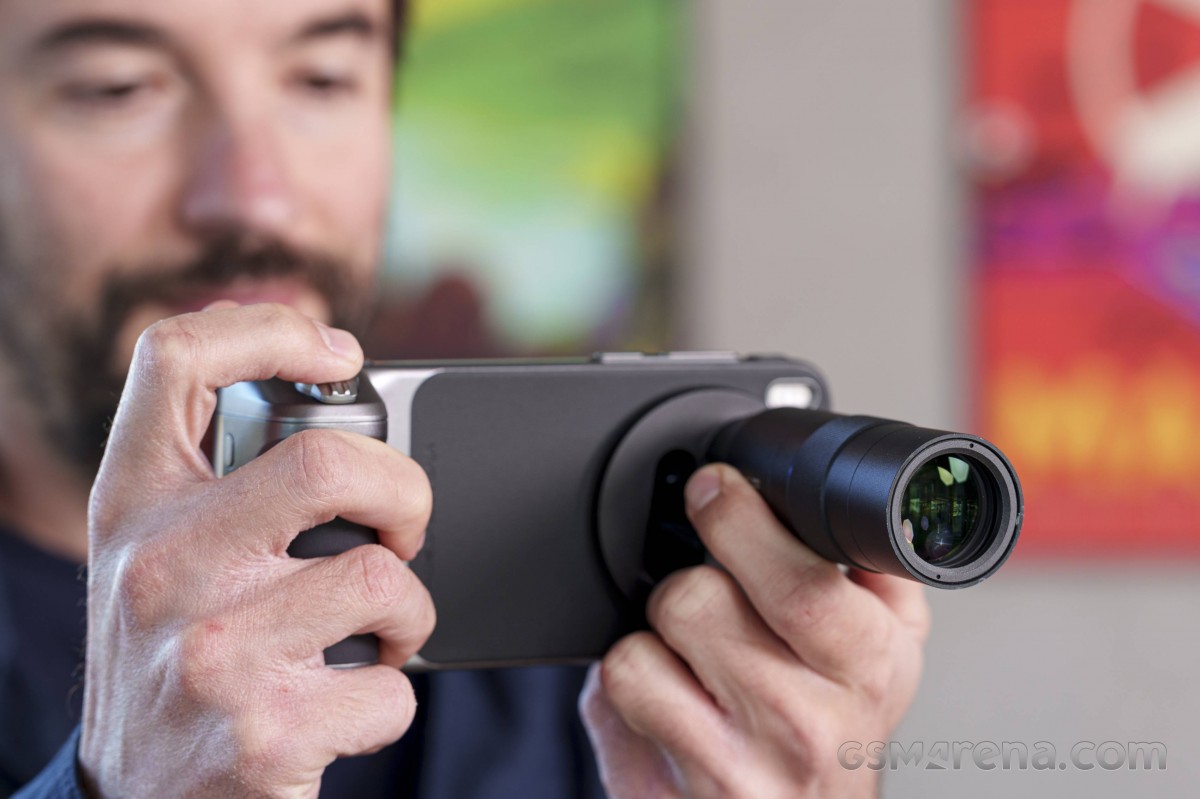
One feature trickling down from the X200 Ultra is support for vivo's telephoto extender, sold as part of a Professional Photography Kit that includes a case with a bayonet mount, a battery grip with its own 2,300mAh battery, a neck strap and filter rings. The kit costs around 600 euros in Europe. Mounted, the extender reaches a 200mm equivalent focal length, with usable results at 400mm and questionable output beyond that as AI processing takes over. It works across camera modes, unlike on the X200 Ultra, and the reviewers found it plainly better than the rival approach from Oppo — but the price makes it a luxury for dedicated enthusiasts rather than a mainstream reason to buy the phone.
Battery and charging: the big catch
Here is where the review turns critical. Outside Europe, the X300 Pro packs a 6,510mAh battery, a sensible upgrade from the X200 Pro's 6,000mAh. In the EU, the same phone is limited to 5,440mAh — the reviewers believe the same cell is simply programmed to a narrower voltage range, most likely to stay under the 20Wh threshold that triggers stricter dangerous-goods shipping rules in Europe. The result is an Active Use Score of 12 hours 45 minutes on the EU unit, about 16 percent worse than last year's model and well behind this year's competition. Oppo, the review notes, went to the trouble of shipping the Find X9 Pro with a 7,500mAh battery in the EU as well.
Charging, at least, is excellent. The phone supports 90W wired charging with vivo's FlashCharge adapter, or 55W over standard USB Power Delivery, and both filled the battery from 1 to 100 percent in 29 minutes in testing. Wireless charging is now rated at 40W, and reverse wired and wireless charging are supported. One complaint: the phone keeps drawing around 28W for 13 minutes after reporting 100 percent, which the reviewers call a lack of transparency in charging behaviour. OriginOS 6 adds battery-health features including a charge limit as low as 70 percent, overnight optimisation and bypass charging for gaming.
The speakers, meanwhile, earned a Very Good loudness rating but sound a little hollow and lacking in bass — essentially all competitors sound better, according to the review.
Competition and verdict
The most direct rival is the Oppo Find X9 Pro, which wins easily on battery life and costs 100 euros less, but the reviewers give the overall nod to the vivo on camera quality. The Xiaomi 15 Ultra counters with a higher-class main camera and two telephoto lenses, and has already been discounted. The Galaxy S25 Ultra remains the easy choice for a feature-packed Android all-rounder, while the Pixel 10 Pro XL suits Android purists. Within vivo's own range, the smaller X300 scores points for compactness, and last year's X200 Pro is nearly as good for less money.
GSMArena's verdict is that the X300 Pro is a winner and a top choice for anyone shopping for smartphone camera excellence — an outstanding camera system made better by the improved main sensor, nicer selfies and telephoto extender support, wrapped in a great-looking durable body with a wonderful display, excellent charging and top-tier performance. The frustrations are real, though: the nerfed European battery, merely average speakers, heavy throttling under sustained load, low-light video that could be better, and an extender kit that costs too much.
For buyers outside Europe, the battery complaint largely disappears, and the X300 Pro becomes an easier recommendation. For European buyers, the decision comes down to how much the camera matters — and for photography-first users, the review suggests it matters enough. Readers who want to compare vivo's other recent flagships can also read our vivo X500 Pro review and our vivo X500 Pro Max review.
Pros and cons
Pros
- Fully flat design, glass protector friendly, IP68/IP69-rated.
- Super-bright display, Dolby Vision capable, excellent overall.
- Class-leading charging speed, with both proprietary and standard chargers.
- Top-class performance, standout GPU results.
- Great camera performance overall. Spectacular telephoto camera, particularly great at night and at close range; nice selfies.
- Telephoto Extender compatibility.
Cons
- Nerfed battery capacity in EU markets (as tested).
- Speakers can be better.
- Heavy throttling — both the CPU and the GPU can be affected.
- Low-light videos not quite up to scratch.
- Telephoto Extender Kit is pretty expensive in the EU.
Sources
What's Your Reaction?
 Like
0
 Dislike
0
 Love
0
 Funny
0
 Angry
0
 Sad
0
 Wow
0