








































Musk Tells SpaceX Staff the Company Is Falling Behind in AI as Compute Rentals to Anthropic and Google Take Over
Elon Musk has told SpaceX employees the company is falling behind in artificial intelligence and that renting out its computing power now pays better than using it for its own Grok chatbot, according to a New York Times report published on 23 November. Anthropic is paying about $3.1 billion a month once all contracted capacity is delivered, and Google about $800 million a month, making the company's AI infrastructure unit its biggest business.

Musk Tells SpaceX Staff the Company Is Falling Behind in AI as Compute Rentals to Anthropic and Google Take Over
Elon Musk has told SpaceX employees that the company is falling behind in artificial intelligence — and that renting out its computing power to rivals now earns more than using it to build its own AI models. The admission, reported by The New York Times on 23 November, lays bare an unusual position for a company racing to lead in AI: its biggest AI business is powering the competitors trying to beat it.
According to the Times, Musk told staff that SpaceX's own chatbot, Grok, trails the leading models from OpenAI and Anthropic, and that leasing the company's vast fleet of Nvidia graphics processors to those same rivals has become the more profitable use of the hardware. The report, based on people familiar with Musk's comments and internal company communications, was relayed by Forbes, TechTimes and other outlets on 24 November.
Rentals are now more than half of SpaceX's revenue
The numbers explain the shift. SpaceX's AI division, known internally as SpaceXSI (Super Intelligence), reported about $7.6 billion in revenue for the three months to September — more than half of the company's total revenue of about $14.58 billion in the quarter, and up sharply from $2.6 billion in the previous quarter.
Anthropic, the maker of Claude, is the largest customer. Its contracts call for about $3.1 billion a month once SpaceX delivers all the computing capacity it has agreed to supply, which its November prospectus expects to happen in December. The agreements could cost Anthropic up to $120.5 billion through 2029. Bloomberg reported that the customer SpaceX calls Customer B, identified as Anthropic, supplied 34.5 percent of third-quarter revenue — about $5.03 billion — which averages roughly $1.7 billion a month at current delivery levels, below the $3.1 billion forward rate.
Google is paying about $800 million a month for capacity to run its Gemini models, according to the Times. A SpaceX filing from June put Google's fee higher, at $920 million a month from October 2026 through June 2029, for roughly 110,000 Nvidia GPUs, with a reduced fee during the ramp-up period — so the two figures may reflect different stages of the same deal. Forbes reported that Anthropic became SpaceX's biggest customer in October, overtaking the US government.
"Sell compute because we can't compete"
Musk's frustration has been visible inside the company for months. In August, he temporarily renamed an internal group chat with hundreds of AI engineers "Sell compute because we can't compete", according to the Times, and warned that anyone wasting GPUs while the company was "failing to compete" would be asked to leave. He has since asked some engineers to justify their GPU use, and has told staff that revenue per GPU — not benchmark scores — is the test of whether the company is competitive.
On 10 November, asked on X how Grok 4.8 compares with Anthropic's Claude Opus 5.5, Musk answered that Grok was "not as good", calling Opus 5.5 "a masterpiece", but said Grok 5 should exceed it within two or three months. Grok 4.8 has finished pretraining and is in reinforcement learning, the phase in which a model's answers are shaped by feedback and rewards.
The rental-first logic has already had consequences for SpaceX's own products. The Information reported on 13 November that the company laid off about 60 people from Grok Imagine, its image and video generator, leaving a handful of staff to maintain it. The tool remains available. Forbes, citing the Times, also reported that SpaceX moved money away from Digital Optimus, a Tesla-linked project to train AI models on video games. SpaceX chief financial officer Bret Johnsen has said the company has not given up on its internal AI services, including Grok.
Why Colossus 1 went to Anthropic
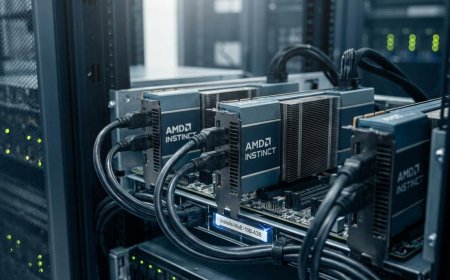
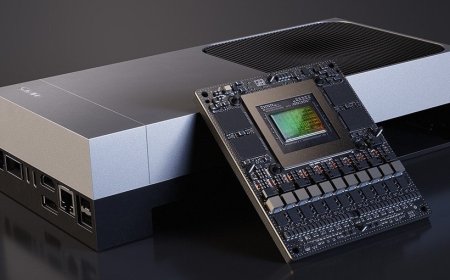
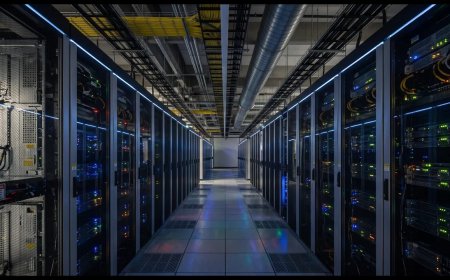
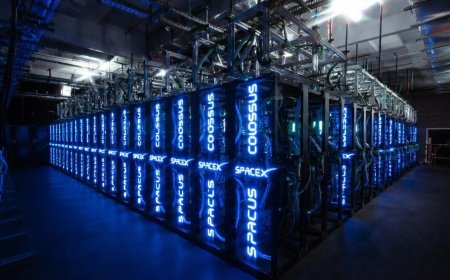
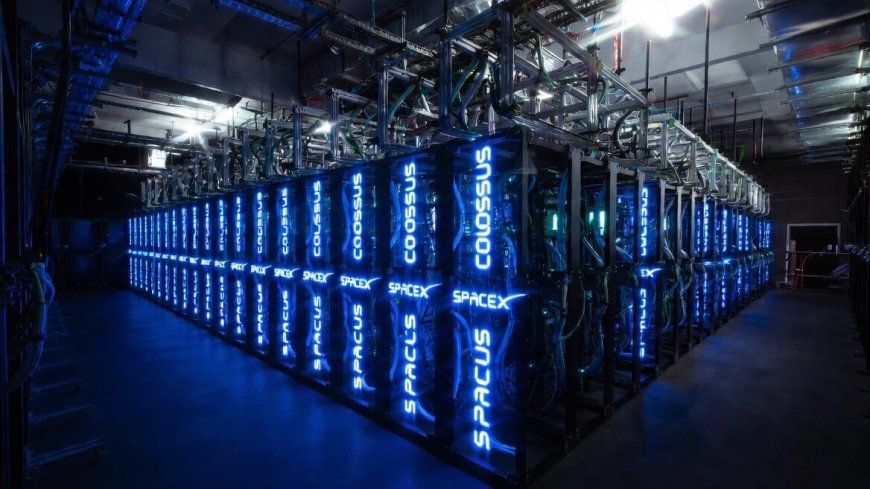
The centre of the story is Colossus, SpaceX's giant data centre complex in Memphis, Tennessee. SpaceX moved its own AI training to a second facility, Colossus 2, freeing the original Colossus 1 for Anthropic, which reserved the facility's entire computing capacity — more than 220,000 Nvidia GPUs, including H100, H200 and newer GB200 accelerators.
The Times, via Forbes, cites internal documents showing xAI used less than half of its Colossus capacity last year. Bloomberg reported that SpaceX rented Colossus 1 to Anthropic after hitting latency problems linking it with two sites more than 10 miles apart, along with ageing network infrastructure and mixed GPU generations. Anthropic's deal with SpaceX, announced in May, was struck as the Claude maker faced severe capacity constraints driven by surging demand for products such as Claude Code.
Cancelable deals — and a possible 10 gigawatts more
The rental income is not locked in. Anthropic's agreements have fixed opening terms that end in January or March 2027, after which either side can cancel with 90 days' notice. That makes the business both lucrative and fragile: every customer Grok wins from Claude is computing capacity Anthropic would no longer need to rent.
Musk, speaking publicly at the New York Times DealBook Summit on 18 November, struck a more upbeat note, saying Anthropic had indicated it was extremely likely to keep renting from SpaceX and that its highest-probability outcome included an additional 10 gigawatts of capacity. Anthropic has not publicly confirmed the 10-gigawatt figure.
The tension at the heart of the business is unlikely to resolve soon. SpaceX is investing heavily in expanding its data centre footprint, including a planned $74 billion investment in facilities in Arizona and Texas, while its own models still chase the leaders. For now, the company that set out to build the world's most powerful AI is making more money renting out the machines than using them.
Sources
- The New York Times, 23 November 2026, as relayed by Forbes and TechTimes (24 November 2026)
- WinBuzzer, "Musk: SpaceX Can Earn More Renting Out AI Computing Power Than Using It", 24 November 2026
- TechTimes, "SpaceX Compute Rentals Outearn Grok as Musk Ranks Revenue Per GPU Above Benchmarks, NYT Says", 24 November 2026
- The Information, 13 November 2026, via TechTimes (Grok Imagine layoffs)
- Bloomberg, via TechTimes (third-quarter revenue figures)
- Anthropic IPO prospectus, 18 November 2026, via WinBuzzer
- CNBC, DealBook Summit coverage, 18 November 2026, via ExplainX
Further reading on Innopark IT: SpaceX's $74 billion AI supercomputing campuses in Texas and Arizona and Anthropic shares close 17 percent higher on Nasdaq debut.
What's Your Reaction?
 Like
0
 Dislike
0
 Love
0
 Funny
0
 Angry
0
 Sad
0
 Wow
0