


















































AMD and TCS to Build 200MW Helios AI Data Centres in India
AMD and Tata Consultancy Services are expanding their partnership to bring AMD's Helios rack-scale AI architecture to India, co-developing an AI-ready data centre blueprint through TCS subsidiary HyperVault that can support up to 200 megawatts of capacity.

AMD and TCS to Build 200MW Helios AI Data Centres in India
AMD and Tata Consultancy Services have expanded their long-standing partnership to bring AMD's Helios rack-scale AI architecture to India, the two companies announced on Monday, November 16. The collaboration will see the firms jointly develop and deploy large-scale AI infrastructure aimed at enterprises, hyperscalers and India's national AI ambitions.
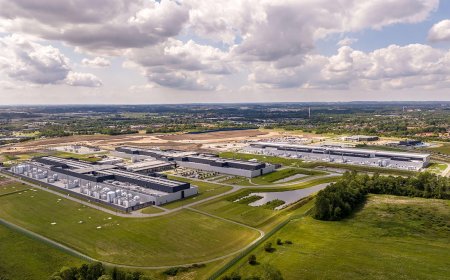
The work will run through HyperVault AI Data Centre Limited, the TCS subsidiary set up in 2025 to build AI-ready infrastructure. Together, AMD and TCS will co-develop a rack-scale AI infrastructure design based on the Helios platform, and offer an AI-ready data centre blueprint that can support up to 200 megawatts of capacity.
What Helios brings to the table
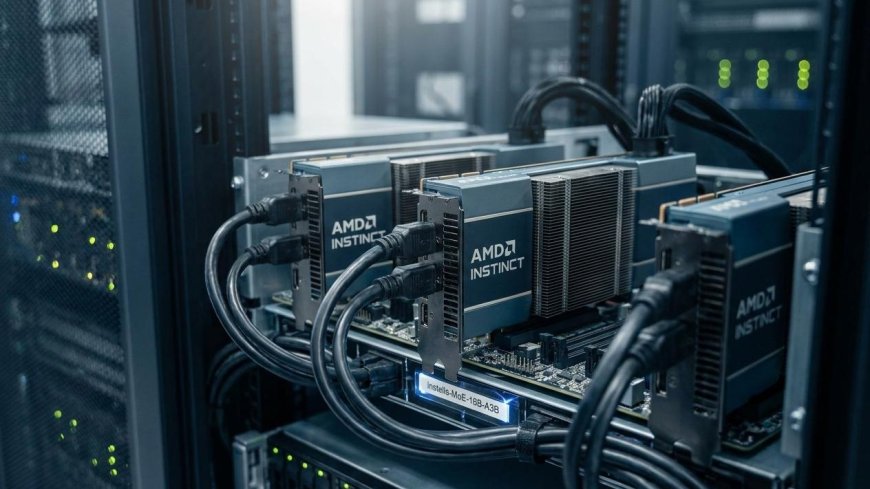
Helios is AMD's rack-scale platform for AI training and inference, designed to operate as a single integrated system rather than a collection of separate servers. Each Helios rack combines AMD Instinct MI455X GPUs, next-generation AMD EPYC "Venice" CPUs and AMD Pensando Vulcano network interface cards, all running on AMD's open ROCm software ecosystem.
According to AMD, a single Helios rack packs 72 interconnected MI455X accelerators and can deliver up to 2.9 exaflops of FP4 compute performance. The company expects the first Helios systems to start rolling out globally, including in India, in the second half of 2026.
AMD positions the platform for sovereign AI factories — large computing setups that let countries and enterprises build and run AI models on their own infrastructure, rather than depending on capacity abroad. That framing matters in India, where the government has been pushing domestic AI compute capacity and where demand from local enterprises and global hyperscalers has been growing fast.
Why TCS, and why now
For AMD, TCS brings the engineering muscle to turn a hardware blueprint into working data centres. TCS has spent decades building and operating large IT infrastructure for global clients, and HyperVault was created specifically to deliver secure, AI-ready facilities at gigawatt scale for hyperscalers, AI companies and large enterprises.
"AI adoption is accelerating from pilots to large-scale deployments, and that shift requires a new blueprint for compute infrastructure," said Dr. Lisa Su, Chair and CEO of AMD. "With Helios, we are delivering an open, rack-scale AI platform designed for performance, efficiency, and long-term flexibility. Together with TCS, we are enabling enterprises across India to deploy AI at scale today while building the compute foundation of tomorrow."
K. Krithivasan, Managing Director and CEO of TCS, said the collaboration "lays the foundation for AMD's first Helios-powered AI infrastructure in India," adding that the two companies would combine strengths in AI, connectivity, sustainable power and advanced data centre engineering.
An open alternative in a crowded race
The announcement also sharpens the competition in India's AI infrastructure market. Nvidia's hardware dominates AI data centres today, but AMD has been pitching Helios as an open alternative built around ROCm, in contrast to Nvidia's closed CUDA software stack. TCS's enterprise reach gives AMD a credible route into Indian customers that a chip launch alone could not.
The partnership builds on an earlier AMD–TCS collaboration to help enterprises scale AI adoption and modernise hybrid environments. Beyond the 200MW blueprint, the companies said they will work with hyperscalers and AI firms to accelerate data centre build-outs across India — though they have not yet named specific customers or locations for the first deployments.
For now, the deal is a blueprint and a commitment rather than a finished facility. The test will be whether the first Helios-powered sites come online on schedule in the second half of 2026, and whether Indian enterprises adopt the open ROCm platform at the scale AMD and TCS are planning for.
Sources
- Gadgets 360 — AMD and TCS to Co-Develop Helios AI Data Centre Architecture, Deliver 200MW Data Centre Blueprint
- The Economic Times — TCS, AMD to expand AI partnership to take on Nvidia in India
- The Indian Express — AMD, Tata Consultancy Services to bring 'Helios' rack-scale AI architecture in India
- APN News — AMD and TCS to bring state-of-the-art 'Helios' rack-scale AI architecture to India
What's Your Reaction?
 Like
0
 Dislike
0
 Love
0
 Funny
0
 Angry
0
 Sad
0
 Wow
0