













































Oppo Find X9 Pro Review: A 7,500mAh Battery and 200MP Zoom That Redefine the Flagship
The Oppo Find X9 Pro pairs a record-breaking 7,500mAh battery with a 200MP Hasselblad telephoto camera and MediaTek's Dimensity 9500 chip. GSMArena awarded it 4.6 out of 5 in its full review, calling it "almost too good to be true" — here is what the lab tests actually found, from the 21-hour 57-minute endurance score to the optional 10x teleconverter.

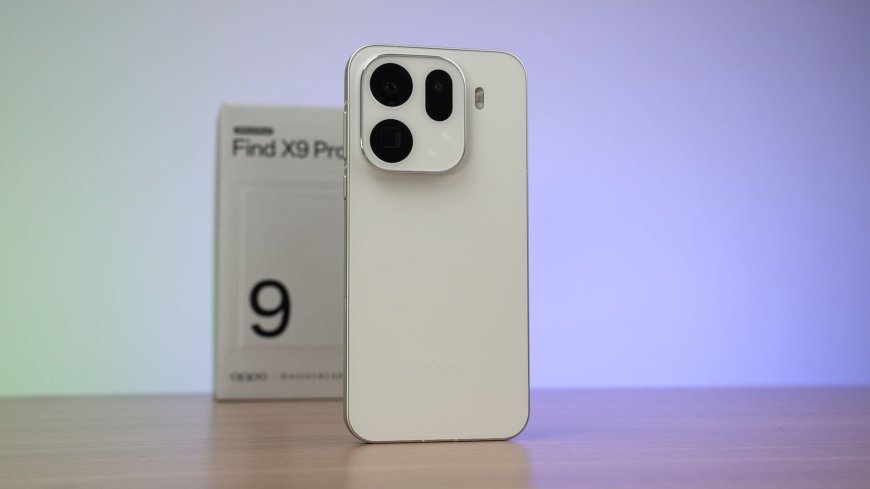
Oppo Find X9 Pro Review: A 7,500mAh Battery and 200MP Zoom That Redefine the Flagship
Oppo's Find X9 Pro went global in late October 2025 with two headline promises: the biggest battery ever fitted to a Find flagship, and a camera system built around a 200MP telephoto. After weeks of lab testing, GSMArena's full review gave the phone 4.6 out of 5 and called it "almost too good to be true". That is a bold verdict for any phone, so it is worth looking closely at what the tests actually showed — and where the phone still falls short.
The short version is that the two things Oppo talked about most — endurance and zoom — really do deliver. The 7,500mAh silicon-carbon battery posted the highest Active Use Score GSMArena had recorded at the time of the review, and the new telephoto is genuinely versatile, from portraits to close-ups. The rest of the phone is strong too, though a couple of familiar Oppo quirks survive, including capped gaming frame rates and heavy throttling under sustained load.
Design and display: flatter, brighter, tougher
The Find X9 Pro moves to a flatter design than its predecessor, with a 6.78-inch LTPO AMOLED display, uniform slim bezels and a glass-and-aluminium body that measures 161.3 x 76.5 x 8.3mm and weighs 224 grams. Despite the enormous battery inside, it does not feel like a brick — a point the review stresses more than once. The phone is rated IP68 and IP69, so it is protected against dust, immersion and high-pressure water jets.
The screen itself is a 1272 x 2772 panel with a 1-120Hz adaptive refresh rate, 2160Hz PWM dimming and support for Dolby Vision, HDR10+ and HDR Vivid. Oppo rates it at 800 nits in manual use and 1,800 nits under bright light; GSMArena measured around 800 nits with the slider and just under 1,200 nits with adaptive brightness outdoors, while a test inside the Photos gallery app reached 1,803 nits. Streaming is well covered too, with HDR10 and Dolby Vision on Netflix, HDR on YouTube and Widevine L1 for high-resolution DRM playback.
In the box, buyers get a USB-A to USB-C cable and a Type-C to Type-A adapter, but no charger and no protective case — at least in the region GSMArena tested. Oppo does sell an optional aramid snap-on cover, plus a separate aramid case for the Teleconverter Kit.
Performance: Dimensity 9500 delivers, with familiar caveats
Under the hood sits MediaTek's Dimensity 9500, built on a 3nm process, paired with up to 16GB of RAM and up to 1TB of UFS 4.1 storage. In everyday use and benchmarks the chip performs to the high standard expected of a 2025 flagship. Digit's lab testing recorded an AnTuTu score of 3,417,536 and Geekbench 6 results of 3,216 single-core and 9,490 multi-core, which puts the phone firmly in top-tier territory.
There are two caveats, and both will be familiar to anyone who has used a recent Oppo flagship. Prolonged heavy loads cause the chip to throttle noticeably, and high-refresh-rate gaming remains capped — every title GSMArena tried was limited to 60Hz and 60fps. For a camera-first phone that is arguably an acceptable trade, but buyers who want a gaming handset should look elsewhere. The phone ships with Android 16 and ColorOS 16, with five major Android upgrades promised.
Cameras: the 200MP telephoto is the star
The headline change this generation is the camera system. Oppo has replaced the two telephotos of the Find X8 Pro with a single, higher-resolution unit: a 200MP sensor (1/1.56-inch, f/2.1) with 3x optical zoom, paired with a new 50MP main camera (1/1.28-inch, f/1.5) with optical image stabilisation and a 50MP ultrawide. The selfie camera is also upgraded to a 50MP autofocus module, up from the old 32MP fixed-focus unit.

The telephoto is where the phone earns its keep. It focuses as close as around 9cm, which makes for excellent macro-style close-ups, and image quality at 3x and 6x is impressively detailed, with clean results even at extended zoom levels. Low-light performance and portraits are strong too, and the Hasselblad colour tuning continues to be one of the system's signatures. Video reaches 4K at 120fps with Dolby Vision from the main and telephoto lenses, with 10-bit video and LOG recording for more serious work.
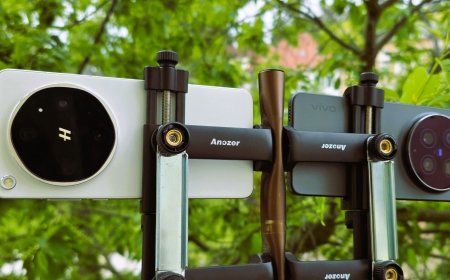
For photographers who want even more reach, Oppo sells an optional Teleconverter Kit that extends optical zoom to 10x, or 230mm. It is expensive in Europe, and the kit omits some accessories found in other regions, such as the magnetic grip and camera light — one of the few clear criticisms in the review.

The camera is not flawless. GSMArena noted minor white balance inconsistencies in low light, mediocre 2x video quality and weak 2x photos in the dark. These are small misses rather than deal-breakers, but they are worth knowing about before buying.
Battery life: the best GSMArena had ever measured
The 7,500mAh battery is the Find X9 Pro's defining feature, and the lab numbers back up the hype. GSMArena's Active Use Score came in at 21 hours 57 minutes — the highest result the site had recorded when the review was published. Web browsing and video playback were chart-toppers, and the gaming test returned the second-best figure ever recorded. Only call time was unremarkable, which GSMArena attributes to the Dimensity 9500's power draw during calls; heavy phone-call users may want to take note, but for screen-on use the endurance is unmatched.
Real-world testing elsewhere tells the same story. Digit's PCMark battery test ran for 26 hours 12 minutes, and the phone routinely delivered two full days of use. Oppo says the battery is designed to retain up to 80 percent of its capacity after five years of normal use.
Charging is good rather than great, which is understandable for a cell this size. With an 80W SuperVOOC adapter, GSMArena measured 1 hour 7 minutes from 1 to 100 percent; a USB PD charger took 1 hour 20 minutes. The phone also supports 50W wireless charging and 10W reverse wireless charging, though a generic Qi2 charger only delivered around 7W in testing, making it an overnight-only option.
Verdict: an easy recommendation for camera-first buyers
GSMArena's conclusion is unusually direct: it could see "no real reason why you shouldn't get a Find X9 Pro if you're in the market for a high-end cameraphone". The battery and the camera system — the two things Oppo led with — both turned out as good in practice as they looked on paper, and the phone achieves that without the bulk its battery size would suggest.
Pros
- Bright high-resolution OLED display with Dolby Vision support
- Class-leading battery life in a normal-sized flagship body
- Good charging speed for a 7,500mAh battery
- Very powerful Dimensity 9500 chipset
- Thoroughly capable camera system with standout telephoto close-ups
- Optional telephoto extender adds even more versatility
Cons
- Gaming is limited to 60fps in most titles
- Heavy throttling under sustained load
- 2x video quality is underwhelming, and 2x photos in the dark are weak
- Minor white balance inconsistencies in low light
- Teleconverter Kit is expensive in Europe and misses some accessories
Against the competition, the Find X9 Pro holds its own well. The vivo X300 Pro is its closest rival, with a nearly identical camera system and possibly an edge in zoom, but the Find wins on battery life in regions where the vivo ships with a smaller cell. The OnePlus 15 offers a Snapdragon chip and possibly a lower price with less exciting cameras, while the Galaxy S25 Ultra and Pixel 10 Pro XL remain safe all-round alternatives. The Xiaomi 17 Pro Max, meanwhile, is not confirmed for global sale.
Pricing starts at £1,099 in the UK and Rs 1,09,999 in India. At that level the Find X9 Pro competes directly with the most capable premium phones of the year — and on battery life and zoom photography, it beats most of them.
Sources
- GSMArena — Oppo Find X9 Pro review (introduction and specifications)
- GSMArena — Oppo Find X9 Pro review (display, battery life and charging)
- GSMArena — Oppo Find X9 Pro review (competition, verdict, pros and cons)
- Digit — Oppo Find X9 Pro Review: A Flagship That Finally Feels Complete
- PetaPixel — Oppo Find X9 Pro Review: This Phone Rocks for Photography
- BestSmartphone — Oppo Find X9 Pro (review consensus and launch pricing)
What's Your Reaction?
 Like
0
 Dislike
0
 Love
0
 Funny
0
 Angry
0
 Sad
0
 Wow
0