












































DeepL Aure v2 Halves Live Voice Translation Delay for Meetings and Calls
DeepL has launched Aure v2, a new speech-to-speech Voice AI model that cuts median translation delay in live conversations by 50% compared with its predecessor. Available now across DeepL Voice in six languages, the model translates directly from speech to speech, with DeepL reporting higher quality than six rival systems in its own internal tests.
DeepL Aure v2 Halves Live Voice Translation Delay for Meetings and Calls
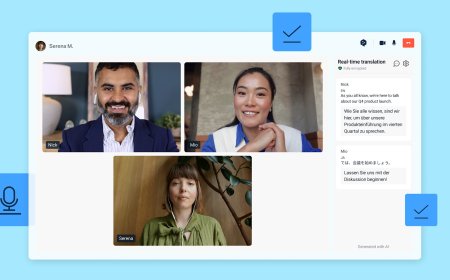
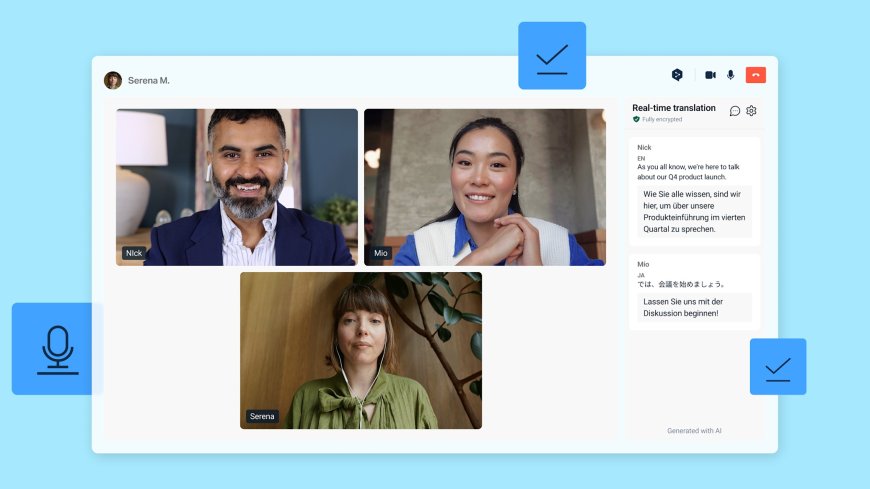
DeepL has launched Aure v2, a new Voice AI translation model that cuts the delay in live spoken translation in half. Unveiled on November 26, 2026 at the company's inaugural Unmute Summit in Tokyo, the model is available now to DeepL Voice customers and translates directly from speech to speech, without the separate transcription and text-to-speech steps that slow down most real-time translation systems.
According to DeepL, Aure v2 reduces median translation delay by 50% compared with the original Aure model, which the company introduced earlier in November. At the same time, DeepL says the new model improves accuracy and expressiveness, so conversations in different languages can flow more like an ordinary discussion and less like a relay.
What Aure v2 changes
The central problem in live voice translation is timing. A model has to wait long enough to understand what a speaker means, but waiting too long breaks the rhythm of a conversation, especially in languages such as German and Japanese, where the key information can arrive at the very end of a sentence. Start too early and the translation may be wrong; start too late and the conversation stalls.
DeepL says Aure v2 advances that balance on both sides. In the company's own internal benchmarks, the model delivered a 50% lower median translation delay than its predecessor, higher translation quality than six competing systems tested across every language pair, and 32% fewer English-Japanese translation errors than Google Gemini 3.5 Live Translate, one of the hardest language pairs for real-time voice translation. DeepL also reports that half of Aure v2's translated words reach listeners within 3.3 seconds, and that delay grows by only 0.1 seconds across a full minute of continuous speech.
Those figures come from DeepL's internal study, carried out in November 2026 on one-minute recordings of real speech across ten language pairs, with human-validated transcripts and every system tested over public APIs. They are the company's own results, not independent benchmarks, and DeepL notes that results may differ in real conversations.
How the new model works
Aure v2 is built on a new end-to-end model architecture. Traditional real-time translation chains three separate steps together: converting speech into text, translating that text, and generating speech from the translation. Each step depends on the one before it, and each adds processing time. Aure v2 folds those steps into a single process, translating directly from speech to speech.
The architecture alone was not enough. DeepL also trained the model with reinforcement learning to solve the timing question, teaching it when it has heard enough to start translating. During training, the model was rewarded for translations that were both accurate and quick to begin, so it learned to recognise when it had gathered enough context. "The key to real-time translation isn't simply processing speech faster — it's knowing when you have enough information to translate accurately," said Sebastian Enderlein, DeepL's chief technology officer.
The original Aure model, launched earlier in November, already made translations sound more natural by continuously adapting to a speaker's voice, tone and intonation throughout a conversation. Aure v2 keeps that approach and adds the faster architecture and the reinforcement-learning timing on top of it.
Where Aure v2 is available
Aure v2 supports six languages at launch: English, German, French, Spanish, Japanese and Korean, with more languages coming soon. It is now available across DeepL Voice for Online Meetings, DeepL Voice for In-Person Conversations and the DeepL API for Voice, and it is automatically enabled for supported languages without any additional setup.
DeepL is pitching the model squarely at business use, where a mistimed or garbled translation can carry real cost. "With Aure v2, we've significantly cut translation delays while also pushing the accuracy and quality of DeepL Voice even further," said Jarek Kutylowski, DeepL's founder and chief executive. "In a global meeting, people can respond to ideas as they're shared — or customer service agents can resolve issues faster without losing the nuance of a conversation."
Adoption is accelerating, especially in Asia
The launch comes as DeepL Voice usage is growing quickly. Total voice minutes were up more than eight times year over year in the third quarter of 2026, and translated meeting minutes rose approximately seven times over the same period. Momentum has been strongest in Asia: meeting usage grew more than seven times in Japan and five times in South Korea year over year, and more than six times in both the United States and Germany. As of October 2026, the number of active DeepL Voice subscriptions with meeting usage had grown about twelve times year over year in Japan and South Korea combined, eight times in the United States and nine times in Germany.
For enterprise customers, DeepL says audio, transcriptions and translations are not used to train its AI models, and meeting data is deleted when calls end, subject to customer-controlled retention settings. The company holds ISO 27001 and SOC 2 Type II certifications and supports GDPR compliance.
Why it matters
Live voice translation has long promised to remove language barriers from meetings, calls and customer support, but the lag has kept it feeling artificial. A model that waits several seconds before speaking can make a fast-moving discussion feel like a series of interruptions. By cutting that delay in half while claiming better accuracy, DeepL is trying to close the gap between translated conversation and natural conversation.
Whether the gains hold up outside DeepL's own test conditions is the open question. The 50% figure and the comparison with rival systems come from the company's internal study, and real meetings bring accents, crosstalk, background noise and specialised vocabulary that lab recordings do not. But the direction is clear: the race in voice AI is no longer only about how accurately a model translates, but about how quickly it can start speaking. With Aure v2, DeepL has made speed its headline claim — and automatic availability across its Voice products means existing customers will see the difference without changing anything.
Sources
- DeepL, "DeepL introduces Aure v2, its fastest Voice AI translation model," PR Newswire, November 26, 2026
- Yonhap News Agency, "DeepL introduces Aure v2," November 26, 2026
- AI Tech 365, "DeepL Aure v2 Cuts Live Voice Translation Delay by 50%," November 26, 2026
What's Your Reaction?
 Like
0
 Dislike
0
 Love
0
 Funny
0
 Angry
0
 Sad
0
 Wow
0