





















































US Chip Curbs and Distillation Crackdown Delay China's Next AI Flagships
Z.AI's flagship GLM-5.5 has missed its planned November launch and could slip into early 2027, while Moonshot AI expects its release cycle to double if it loses access to overseas computing power, as a new US Commerce rule and tougher anti-distillation safeguards squeeze China's leading AI labs from two directions at once.
US Chip Curbs and Distillation Crackdown Delay China's Next AI Flagships
China's leading AI labs are falling behind schedule on their next flagship models, caught between two pressures at once: tougher American rules on the computing power they rent overseas, and increasingly effective defences against a training technique known as distillation. The squeeze is now visible in named products and dates, not just in policy papers.
Z.AI, also known as Zhipu AI, had planned to release its next flagship model, GLM-5.5, in November. That date has now passed without a launch. Moonshot AI, meanwhile, expects the gap between its major releases to stretch from six months to a year or longer if it loses access to overseas computing power altogether. Both accounts come from people familiar with the matter, in a Reuters report published on November 26.
Z.AI's flagship slips past November
GLM-5.5 was designed with roughly 3 trillion parameters, a measure of a model's size, and it has been held up partly by increasingly effective safeguards against distillation, one of the people familiar with the matter told Reuters. Z.AI had hoped to complete training and release the model by year-end, but the new US computing restrictions could push its launch into the first quarter of 2027 or later.
The company still has a recent release to show. On Monday, November 23, Z.AI released GLM-5.4, built on an existing model with 750 billion parameters. Z.AI says a new design enables it to match the performance of models with 2 trillion to 3 trillion parameters. GLM-5.4 is a stopgap, not the flagship that was meant to arrive this month, and the distinction matters: the delays are slowing major development programmes rather than halting releases entirely.
Z.AI did not immediately respond to a request for comment from Reuters.
What distillation is, and why the crackdown matters
Distillation is a technique in which developers train a model using answers generated by a more capable one. For Chinese labs working under years of US export controls, it has been a key shortcut: a way to build competitive models at substantially lower cost by learning from the best American systems rather than training everything from scratch.
That shortcut is narrowing. Anthropic said in September that it had observed nearly 200 million exchanges with its Claude models linked to suspected distillation campaigns, attributing them to Chinese developers including Alibaba, Moonshot and Z.AI. OpenAI has made similar accusations against individuals associated with Moonshot. Both companies say they have stepped up measures to detect and block unauthorised distillation, and to disrupt the activity.
Moonshot has previously rejected suggestions that its Kimi K3 model's performance was achieved through distillation, telling China's National Business Daily in July that its performance gains came from original changes to the underlying architecture. But as obtaining training data from Anthropic's and OpenAI's models has become increasingly difficult, Moonshot has begun distilling from models developed by Google and Meta, whose latest releases have made them attractive sources of training data, a person familiar with the matter told Reuters. Google and Meta did not immediately respond to requests for comment.
Moonshot's release cycle could double
Moonshot is particularly exposed to the new US rule because it rents computing power to train its models and prioritises overseas providers, a person with knowledge of its operations told Reuters. The company internally expects its usual six-month interval between major releases could stretch to 12 months or longer if its overseas computing access is cut off entirely, and computing capacity available in China could not make up the shortfall.
Its next flagship model, Kimi K4, could be delayed until around the middle of 2027, the person estimated. Moonshot released Kimi K2 in July 2025, K2.5 in January 2026 and K3 in July 2026, a steady six-month cadence that the new restrictions now threaten to break.
The company is already looking for alternatives. Moonshot has stepped up efforts to rent computing power in Europe, a separate person familiar with the matter said, confirming an earlier CNBC report, and it plans to approach Chinese chipmakers about using their processors for training. The Information reported last week that Moonshot had scrapped a 150 million dollar deal to access Nvidia's advanced Blackwell AI chips through an Indonesian data centre. Moonshot declined to comment to that publication.
Closing the overseas-compute loophole
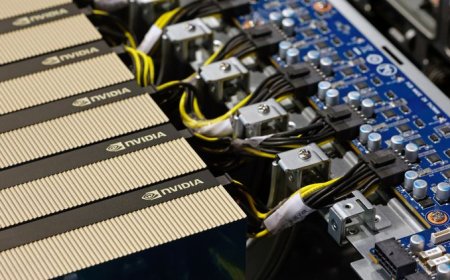
The hardware side of the squeeze comes from a US Commerce Department rule that took effect on November 19. It imposes licensing requirements aimed at restricting Chinese companies' access to large amounts of computing power from advanced US chips in overseas data centres, targeting a means of accessing Nvidia processors without importing them.
The rule covers computing arrangements at data centres outside the US above a threshold roughly equivalent to 750 of Nvidia's H100 chips, which have required US export licences for shipments to China since 2022. Operators already providing covered computing services before the rule took effect have 90 days to obtain licences. It also introduces licensing requirements for shipments of advanced chips, including H100s, to Malaysia, Singapore, Indonesia, Thailand and Brazil, with exceptions for qualifying US companies.
The new restrictions followed the short-lived resignation of Nvidia chief executive Jensen Huang over revelations of extramarital affairs, including with unrelated Chinese businesswoman Alice Huang, whose business dealings have drawn scrutiny amid concerns about Chinese access to restricted Nvidia technology. Nvidia told its manufacturing partners to stop shipping servers to those four Southeast Asian countries, the Financial Times reported on Thursday. Nvidia did not immediately respond to a request for comment.
Why this matters
The two constraints hit different parts of model development at the same time: access to advanced processors hosted abroad, and access to answers from frontier models that can be used as training material. Together, they threaten the cost advantage that has helped Chinese AI companies challenge their American rivals despite years of export controls.
The delays are still estimates from unnamed sources, and neither Z.AI nor Moonshot has confirmed a new launch date. But the pattern is now concrete: a flagship that missed its month, a rival whose release cycle may double, and a regulatory net that is closing around the overseas routes Chinese labs have relied on. For more on how Chinese models have already been linked to restricted Nvidia hardware, see our earlier report on Blackwell chips behind China's most powerful AI models.
Sources
- Reuters — "US chip curbs, distillation crackdown threaten Chinese AI model development, sources say" (November 26, 2026)
- The Business Times — syndicated copy of the Reuters report (November 26, 2026)
- The Straits Times — syndicated copy of the Reuters report (November 26, 2026)
- ET Telecom (Economic Times) — syndicated copy of the Reuters report (November 26, 2026)
What's Your Reaction?
 Like
0
 Dislike
0
 Love
0
 Funny
0
 Angry
0
 Sad
0
 Wow
0