
























































Samsung Galaxy A38 Surfaces on Geekbench With a MediaTek Dimensity 7500 Chip
Samsung's unannounced Galaxy A38 has turned up in the Geekbench database running a MediaTek Dimensity 7500 with 6GB of RAM and Android 17, scoring 928 in single-core and 2,687 in multi-core tests. The listing points to a switch away from the Exynos 1480 used in the Galaxy A37, with the phone expected to arrive in early 2027.

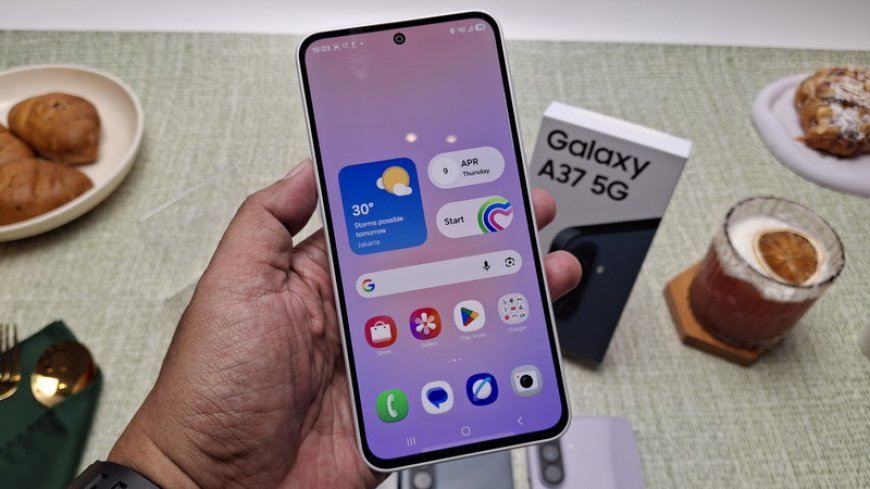
Samsung Galaxy A38 Surfaces on Geekbench With a MediaTek Dimensity 7500 Chip
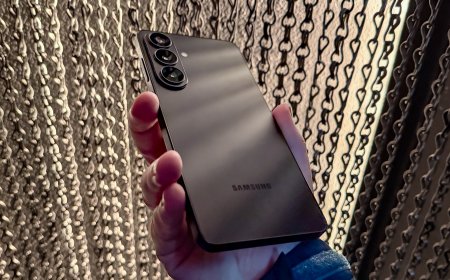
Samsung's next mid-range phone has made an early appearance online. The unannounced Galaxy A38 has been spotted in the Geekbench database, and the listing reveals a notable change under the hood: instead of one of Samsung's own Exynos chips, the phone runs on MediaTek's Dimensity 7500. Samsung has said nothing about the device yet, so this is a benchmark leak rather than an announcement, but it is the clearest look so far at what the successor to the Galaxy A37 will offer.
The entry, dated November 26, identifies the handset as model SM-A386B, which matches Samsung's naming pattern for the global version of the Galaxy A38. The tested prototype carried 6GB of RAM and ran Android 17, with Samsung's One UI on top. It posted a single-core score of 928 and a multi-core score of 2,687 in Geekbench 7.1.0 for Android.
What the benchmark listing shows
The Geekbench entry names the processor as MediaTek's MT6881, the identifier for the Dimensity 7500. The chip is built on TSMC's 4nm process and pairs four performance cores running at 2.6GHz with four efficiency cores at 2.0GHz, alongside a Mali-G625 graphics unit. MediaTek announced the Dimensity 7500 in May 2026, positioning it as a mid-range chip with a modern core design and on-device AI features.
The scores themselves deserve a note of caution. They come from a single early test unit, and prototype results usually climb once Samsung finishes tuning the software before launch. Geekbench 7 also uses a different scoring scale from older versions, so the numbers cannot be compared directly with results from earlier benchmark generations.
The listing shows 6GB of RAM on the tested unit, but that is unlikely to be the only option. The Galaxy A37 shipped with 6GB, 8GB and 12GB configurations, and Samsung can be expected to offer the A38 in more than one memory tier as well.
A switch away from Exynos
The chip change is the real story here. The Galaxy A37, launched in March 2026 and released the following month, runs on Samsung's Exynos 1480. If the Geekbench listing holds, the A38 will be the first phone in the A3x line to use a MediaTek chip as its main processor, continuing a pattern of Samsung changing chip supplier almost every year in this series: the Galaxy A35 used the Exynos 1380, the Galaxy A36 moved to Qualcomm's Snapdragon 6 Gen 3, and the A37 went back to Exynos.
Samsung is no stranger to MediaTek silicon in its A-series phones, having used the company's chips in models such as the Galaxy A34 and the Galaxy A32 5G. And the switch does not mean Exynos is being dropped from the line altogether: a separate Geekbench entry for the upcoming Galaxy A58 points to an Exynos chip, suggesting Samsung is picking suppliers model by model rather than making a clean break.
On paper, the Dimensity 7500 should be a step forward. SamMobile's analysis expects the newer TSMC 4nm chip to use less power than the Exynos 1480 while delivering roughly 10 to 20 percent faster processing, with similar graphics performance. For a mid-range phone, where battery life often matters more than raw speed, that combination could be more valuable than a headline benchmark score.
Bigger battery, possibly a smaller camera sensor
Separate leaks have already sketched out the rest of the A38. An earlier report pointed to a 6,000mAh battery, around 20 percent larger than the 5,000mAh cell in the Galaxy A37, which would make it the biggest battery ever fitted to a Galaxy A phone sold in Europe. We covered that leak in detail in our earlier report on the Galaxy A38 battery upgrade.
The camera picture is less clear. Recent reports suggest the phone will keep a 50MP main camera but switch to a smaller Sony IMX882 sensor, measuring 1/1.95 inches against the 1/1.56-inch IMX906 in the A37. That would be a quiet downgrade hidden behind the same megapixel count, and it remains unconfirmed. Combined with the bigger battery and newer chip, the A38 is shaping up as a phone built around trade-offs rather than a straight upgrade.
When to expect the Galaxy A38
Samsung has named no launch date and no price for the A38, and final specifications can still change before production. But the timing of the benchmark appearance fits the usual pattern: the Galaxy A37 was announced in March and went on sale in April, and the A38 is widely expected to follow in early 2027, most likely around March, roughly a month after Samsung's Galaxy S27 flagship series.
For anyone considering a Galaxy A37 today, the leak does not change much. The A38 looks like a modest step forward, led by a more efficient chip and a larger battery, with the camera question still open. The sensible move is to wait for Samsung's official specifications before deciding whether the upgrade is worth it.
Sources
What's Your Reaction?
 Like
0
 Dislike
0
 Love
0
 Funny
0
 Angry
0
 Sad
0
 Wow
0