






















































Samsung Galaxy S26+ Review: Excellent Hardware, But the Upgrade Is Hard to Justify
GSMArena's full review of the Samsung Galaxy S26+ finds a polished flagship with a superb display, strong battery life and a capable Exynos 2600 chip — but almost nothing has changed from the Galaxy S25+, making the $1,100 phone a tough recommendation.

Samsung Galaxy S26+ Review: Excellent Hardware, But the Upgrade Is Hard to Justify
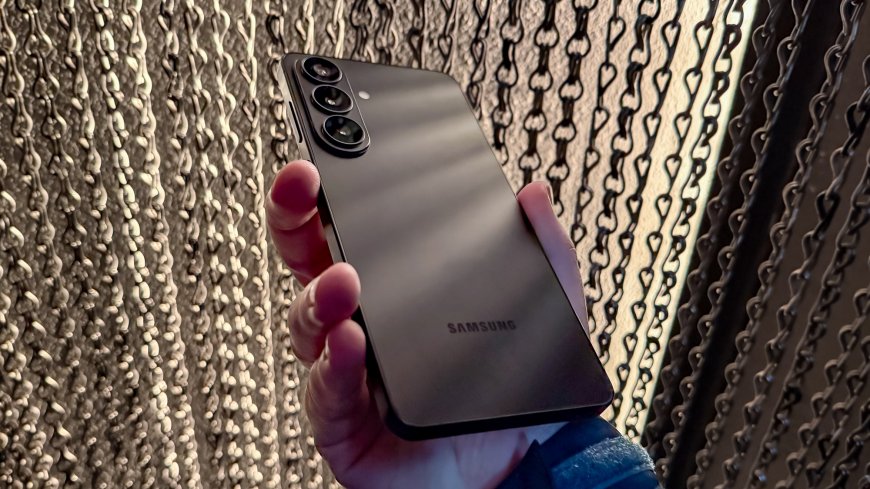
Samsung's Galaxy S26+ is a very easy phone to like and a surprisingly difficult one to recommend. That is the blunt conclusion of GSMArena's full review of the phone, and after working through the lab tests, the camera samples and the benchmarks, it is hard to disagree. On its own merits this is a proper flagship: the build is excellent, the display remains among the best in the business, performance is top-tier whichever chipset you get, and battery life is very solid. The problem is not what the Galaxy S26+ is. It is where it sits.
Like previous generations, the Plus model lives in an awkward middle ground. The standard Galaxy S26 is smaller and cheaper, while the Galaxy S26 Ultra delivers a far more complete flagship experience with a bigger display, stronger camera hardware and the S Pen. That leaves the S26+ as essentially a bigger Galaxy S26 with a higher price tag. Worse, Samsung barely changed anything compared to last year's Galaxy S25+. Aside from the new chipset, a slightly tweaked design and faster wireless charging, the two phones are nearly identical.
The Galaxy S26+ starts at $1,100 for 12GB of RAM and 256GB of storage, with the 512GB version at $1,300. Here is what the full review found.
Design: familiar, with one small change
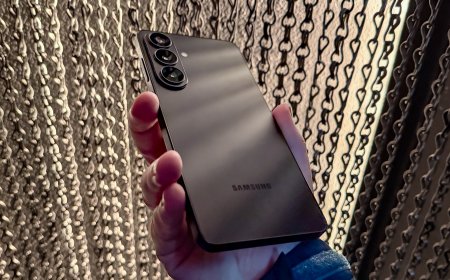
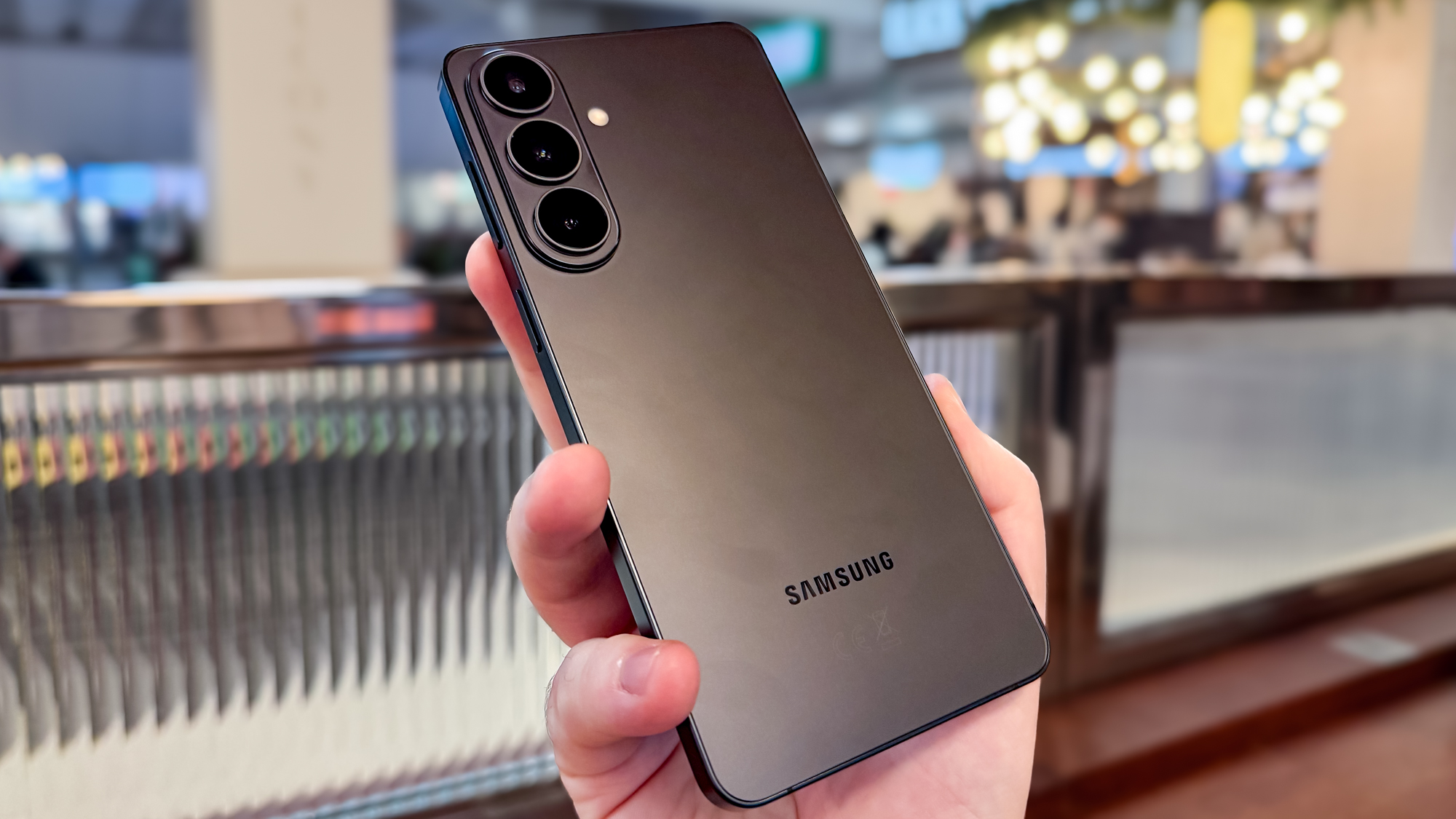
Unless you count a slightly tweaked camera island as a major change, the S26+ looks basically the same as last year's S25+. There is now a small camera bump on the back instead of three free-floating camera modules, and that is about it — just enough that cases are not interchangeable between the two phones.
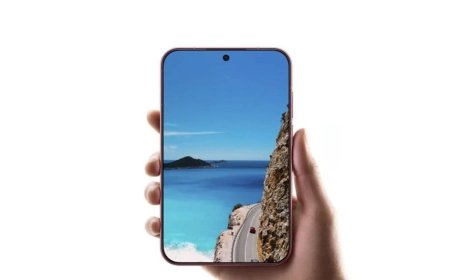
The build itself is beyond reproach. There is practically no flex to the chassis and no hollowness to the back. Gorilla Glass Victus 2 covers the front and back, the frame is Armor Aluminum 2 — a material Samsung trusts so much that even the Ultra has gone back to it instead of titanium — and the phone is IP68 rated for immersion in up to 1.5 metres of fresh water for 30 minutes. At 158.4 x 75.8 x 7.3mm and 190g, it is a large but comfortable handset, with a flat display, minimal bezels and an ultrasonic under-display fingerprint reader that GSMArena found accurate and snappy.
Colours include Silver Shadow and Pink Gold carried over from last year, plus Cobalt Violet, Sky Blue, Black and White, with some shades exclusive to Samsung's online store. The box contains only a USB-C cable — no charger, no case.
Display: still one of the best panels you can buy
Samsung changed nothing about the display, and honestly, it did not need to. The 6.7-inch Dynamic LTPO AMOLED 2X panel runs at 120Hz, supports HDR10+, and offers a sharper 1440 x 3120-pixel QHD+ resolution than the Full HD+ screen on the standard S26.
In GSMArena's lab tests, the screen measured around 755 nits at maximum brightness with the Extra brightness toggle on, and about 510 nits without it. Switch to automatic brightness and the numbers jump: 1,498 nits in a 75% window and 2,596 nits in a 10% window, which is more than enough for comfortable use in bright sunlight and a good HDR experience. Minimum brightness drops to just 1 nit.
Both refresh-rate modes are dynamic, but Adaptive scales all the way to 120Hz while Standard tops out at 60Hz. The screen can drop to 1Hz for static content. Samsung has added ProScaler, which sharpens lower-resolution images and text, and its mDNIe processing engine smooths colour gradients. HDR10 and HDR10+ are supported, but there is still no Dolby Vision — par for the course for Samsung. Netflix served HDR streams without issue, helped by Widevine L1 certification.
Performance: the Exynos 2600 is good, not great
The biggest change this year is the chipset, and Samsung has returned to its dual-chip strategy. The US, China and Japan get the Qualcomm Snapdragon 8 Elite Gen 5, while the rest of the world gets Samsung's own Exynos 2600, built on a 2nm process. GSMArena's review unit carried the Exynos 2600, paired with 12GB of RAM and UFS 4.x storage.
On paper the Exynos 2600 looks strong: Samsung claims up to 39% higher CPU performance than its predecessor and up to 113% higher AI performance from the upgraded NPU, while the Xclipse 960 GPU promises up to twice the computing performance and 50% better ray tracing. In practice, the benchmark results were mixed. Multi-core CPU scores matched the Snapdragon 8 Elite Gen 5 inside the S26 Ultra and ran about 10% ahead of last year's Snapdragon 8 Elite, but single-core scores barely improved at all. AnTuTu 11 scored about the same as last year's chips, and in 3DMark the Exynos 2600 improved on the S25 generation but scored much lower than the Snapdragon chip in the S26 Ultra.
Sustained performance told a similar story. The CPU held up well through prolonged stress testing, but the GPU throttled to about half of its peak performance in the 3DMark stress test. None of this means the phone is slow — the Exynos 2600 will handle pretty much everything you throw at it — but the gap between the two chipset versions is real, and buyers in Europe and Asia are once again on the wrong side of it.
Battery life: the quiet win
The 4,900mAh battery is the same capacity as the S25+, and Samsung is still using lithium-ion while rivals move to silicon-carbon cells. Even so, optimisation elsewhere delivered a clear improvement: GSMArena's standardised testing produced an Active Use Score of about 16 hours and 25 minutes, up from 14 hours and 26 minutes on the S25+ and practically identical to the S26 Ultra's 16 hours and 23 minutes. Heavy users should get through the day with battery to spare, and lighter users can realistically stretch to two days.
Charging is less impressive. Samsung upgraded charging speeds this year but limited the upgrade to the Ultra, so the S26+ stays at 45W wired and takes almost exactly an hour to charge fully. Wireless charging improves to 20W with Qi 2.2, and 4.5W reverse wireless charging is on board. Battery protection features include charge limiters and a smart charging mode that holds the phone at 80% overnight and tops it off before you wake up.
Cameras: solid, with standout selfies
The camera hardware is largely carried over from last year. The main camera uses a new 50MP Samsung ISOCELL GNG sensor — an update to the old GN3 with the same 1/1.56-inch size — alongside a 10MP 3x telephoto and a 12MP ultrawide with fixed focus. The front camera keeps its 12MP sensor but gains a wider 23mm lens and autofocus.
In daylight, the main camera takes great photos with very good detail, natural textures and excellent dynamic range, though there is a fair amount of grain in darker areas. The 2x zoom mode is solid in good light, and portrait mode handles subject detection well. The telephoto produces okay shots given its small sensor, and the ultrawide is very good outdoors but drops off sharply indoors and in shadows, where its fixed focus also means nearby subjects come out blurry.
Selfies are the highlight: sharp, with wide dynamic range, excellent colours and a wider frame thanks to the new lens. Even low-light selfies are decent. GSMArena calls the S26+ a top-class selfie phone.
Low light is where the phone frustrates. The new Night mode implementation has no dedicated Night mode in the camera — instead, an automatic multi-tiered approach kicks in when the phone decides it should, and you cannot force it on. The dedicated Night mode can be restored through the separate Camera Assistant app, and it produces more dependable results, but that is several layers removed from the normal shooting experience. Most other phones, cheap or expensive, do better here.
Video is a strong suit. All cameras record 4K60, the main camera offers 8K30, and Pro video mode adds 24fps settings, Log recording, 10-bit HDR10+ and a set of pre-loaded LUTs. There is no 4K120 and no pro-grade APV codec — both are reserved for the Ultra — but stabilisation is very good, and the Horizon Lock mode keeps video level even as you rotate the phone.
One UI 8.5 and Galaxy AI
The S26+ ships with Android 16 and One UI 8.5, and Samsung promises seven major Android upgrades and seven years of security patches — still the best support policy in the Android world. One UI 8.5 is an incremental update over 8.0, with refinements and a batch of new AI features.
Bixby is now considerably more capable, with better natural language understanding, live web search and the ability to guide you directly to the right setting when you describe a problem. Samsung has also integrated Perplexity AI more deeply — saying "Hey, Plex" launches it, and it can carry out multi-step tasks across apps. Now Brief pulls information from more apps, a new Now Nudge feature suggests actions based on what is on your screen, Circle to Search can now recognise multiple objects at once, Photo Assist accepts natural-language editing commands, and there is AI-powered screenshot search, an expanded Audio Eraser and a new Document Scanner mode in the Camera app.
As GSMArena notes, how useful all of this is will depend on language and regional support, since many of the tools currently work in only a limited number of languages.
Price and the competition
At $1,100, the S26+ has no shortage of rivals. The most awkward one sits in Samsung's own line-up: the Galaxy S25+ offers essentially the same experience for around $1,000, and with a well-timed deal, last year's Galaxy S25 Ultra can often be found for similar money while offering more hardware. We reviewed the S26 Ultra separately — it brings the bigger display, the second telephoto camera and the S Pen, and you can read our full take here: Samsung Galaxy S26 Ultra Review.
Outside Samsung, the OnePlus 15 costs a bit less and pairs the Snapdragon 8 Elite Gen 5 with a 7,300mAh battery and 120W charging, while the Poco F8 Ultra offers a triple 50MP camera setup and a 6,500mAh battery with 100W charging. Stretch the budget a little and the iPhone 17 Pro Max enters the picture with its A19 Pro chip and more capable cameras.
Verdict
The Galaxy S26+ is a very easy phone to like and a surprisingly difficult one to recommend. It is polished, powerful and dependable in all the ways we expect from a modern Samsung flagship, with a great display, very good battery life, strong sustained CPU performance and seven years of updates. But it is barely different from the Galaxy S25+, and it sits between two more compelling siblings. If you specifically want a large Galaxy S phone but do not need the Ultra's extra camera hardware or S Pen, the S26+ will serve you very well. For everyone else, there are simply more compelling choices — including, quite often, last year's Samsung flagships at lower prices.
Pros
- Premium build quality
- Great LTPO AMOLED display
- Very good battery life
- Great sustained CPU performance from the Exynos 2600
- Seven years of Android updates and security patches
- Excellent selfie camera with autofocus
- Versatile video recording with LUTs and Horizon Lock
Cons
- Very minor upgrade over the Galaxy S25+ overall
- Base-level IP68 rating — other Android phones now offer IP69
- Display lacks 10-bit depth, high-frequency PWM and Dolby Vision
- Unintuitive Night mode implementation
- Video recording lacks the 4K120 and APV codec found on the S26 Ultra
- Charging speeds still lag behind many competitors — and the S26 Ultra
Sources
- GSMArena — Samsung Galaxy S26+ review (introduction and specifications)
- GSMArena — Samsung Galaxy S26+ review (design and build)
- GSMArena — Samsung Galaxy S26+ review (display, battery, charging, speakers)
- GSMArena — Samsung Galaxy S26+ review (One UI 8.5, performance)
- GSMArena — Samsung Galaxy S26+ review (cameras and video)
- GSMArena — Samsung Galaxy S26+ review (verdict, pros and cons)
What's Your Reaction?
 Like
0
 Dislike
0
 Love
0
 Funny
0
 Angry
0
 Sad
0
 Wow
0