




















































iPhone 17 Pro Max Review: Battery and Video Shine, but the New Design Divides
GSMArena's full review of the iPhone 17 Pro Max finds Apple's most capable iPhone ever — with class-leading battery life, much faster charging and the best video on any phone — held back by a controversial aluminum redesign, a telephoto camera that is not the leap Apple promised, and an unpolished iOS 26.

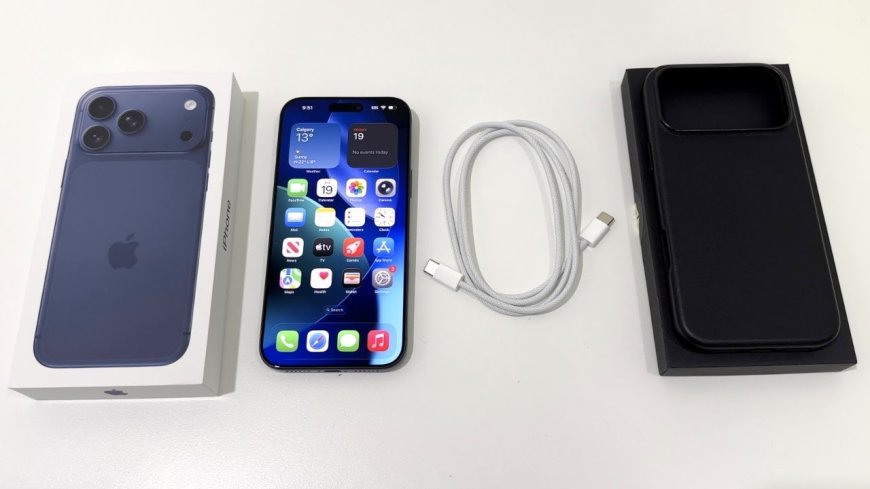
iPhone 17 Pro Max Review: Battery and Video Shine, but the New Design Divides
Apple's biggest iPhone has never been this capable — or this divisive. The iPhone 17 Pro Max arrives with a brand-new aluminum unibody, the A19 Pro chip, a new 48MP telephoto camera, a larger battery with genuinely faster charging, and iOS 26 with its Liquid Glass redesign. GSMArena's full review puts the phone through its lab tests, and the verdict is a mixed one: this is the best iPhone ever made, but it may not be the easiest iPhone to love.
Launched in September 2025 at $1,199 for the 256GB model, the 17 Pro Max now sits in an interesting spot. Apple has since moved on to its next generation, which makes the 17 Pro Max a phone you increasingly find at a discount through carriers and retailers rather than at full price from Apple. At that kind of price, its strengths — battery life and video — become much harder to argue with.
A new look that splits opinion
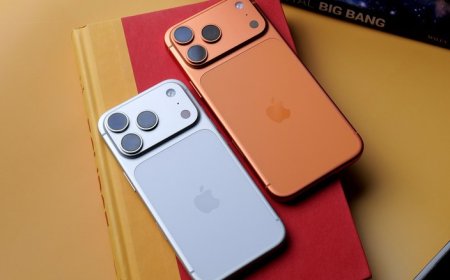
The headline change is the body. After years of steel and titanium, the Pro models switch to an aluminum unibody, with a full-width camera island stretching across the back and a glass window covering the wireless charging coil. The idea is practical: aluminum sheds heat better and keeps weight in check. The 17 Pro Max measures 163.4 x 78 x 8.8mm and weighs 233 grams — roughly the same size as the 16 Pro Max, a touch thicker and 5 grams heavier despite the lighter metal.
But the execution is where GSMArena's reviewers push back. The mix of aluminum and glass, with visible gaps between the two materials, looks less seamless than Apple products usually do. Worse, aluminum is much softer than titanium: one drop can deform the frame, and the protruding camera island scratches quickly if the phone is carried without a case. The new signature colour, Cosmic Orange, joins Deep Blue and Silver, and the reviewers reckon Deep Blue may be the best of the three for its matching parts and more traditional iPhone look.
On the plus side, the front glass is new Ceramic Shield 2 with an anti-reflective coating, and water resistance is rated IP68 to 6 metres for 30 minutes. The phone feels lovely in hand, with good balance and even weight distribution, even if the grip itself is no better than the 16 Pro Max.
Display: bright, but not quite as bright as promised
The 6.9-inch LTPO Super Retina XDR OLED keeps the same 1320 x 2868 resolution and 460ppi as before, with ProMotion running from 1Hz to 120Hz, HDR10 and Dolby Vision support. Apple's headline claim is up to 3,000 nits of peak brightness — and GSMArena's measurements tell a more nuanced story. The lab measured 804 nits of maximum manual brightness and 1,000 nits automatic, with a peak of 2,652 nits on a 15% white patch. It will reach 3,000 nits on an even smaller patch, the reviewers note, but the display is "very much capable of reaching high brightness when needed, just not when you command it to". Sunlight legibility is excellent thanks to the new anti-reflective coating, and the panel dips to just 1 nit at its dimmest.
Performance: fast, with cooling that falls short of Apple's claims
The A19 Pro is a 3nm chip with a 6-core CPU (two performance cores at 4.26GHz, four efficiency cores at 2.6GHz), a 6-core GPU with hardware ray tracing, and a 16-core Neural Engine, paired with 12GB of LPDDR5X RAM — up from 8GB. Base storage is 256GB, rising to a new 2TB option exclusive to the Pro Max. Connectivity runs through Apple's own N1 networking chip, with Wi-Fi 7, Bluetooth 6 and Thread, plus a USB-C 3.2 Gen 2 port at up to 10Gbps.
In benchmarks, single-core CPU performance is up 10% over the A18 Pro in the 16 Pro Max and multi-core is up 20%, while AnTuTu and 3DMark ray tracing put the phone at the top of the charts. The interesting question was cooling: Apple claimed the aluminum body and new vapour chamber would deliver 40% better performance under prolonged stress. GSMArena's stress tests found real but modest gains — 88% CPU stability in its APSI Bench test against 77% for the 16 Pro Max, and 67% in the 3DMark Wild Life stress test against 65%. "We are certainly not seeing the 40% improvement promised by Apple," the review concludes. The A19 Pro is one of the most powerful chips on the market, but the cooling story is more nuanced than the keynote suggested.
Battery life and charging: the real upgrade
This is where the 17 Pro Max genuinely impresses. The battery grows to 4,832mAh in the version with a physical SIM slot (5,088mAh in eSIM-only variants), and GSMArena's lab recorded class-leading screen-on results: just over 12 hours of gaming, around 15 and a half hours of web browsing, and about 25 and a half hours of video playback. The overall Active Use Score stands at 17 hours 58 minutes — the best the reviewers have measured on an iPhone.
Charging finally moves forward too. The phone supports 42W wired charging over the USB Power Delivery AVS protocol, with Apple promising 50% in 20 minutes using its new 40W Dynamic Power Adapter. Testing with a compatible third-party AVS adapter reached 47% in 20 minutes and a full charge in 1 hour 12 minutes. Wireless charging reaches 25W over MagSafe and Qi2, hitting 50% in 30 minutes. One catch: Apple's own new adapter is sold separately, and only in North America for now.
Cameras: a new telephoto, but not the leap hoped for
All three rear cameras are now 48MP. The main camera keeps its 48MP sensor, the ultrawide is unchanged, and the new telephoto uses a 48MP sensor with a 100mm-equivalent lens and 4x optical zoom — down from 5x on the 16 Pro Max. Apple also adds an 8x shortcut in the viewfinder, leaning on the higher-resolution sensor. On the front, a new 18MP Center Stage selfie camera uses an unusual multi-aspect sensor that can shoot landscape selfies while the phone is held upright.
In daylight, the main camera produces photos that are easy to like: plenty of detail, pleasing colour and excellent dynamic range, slightly more expressive than the 16 Pro. The 2x zoom from the main camera is a genuine improvement and doubles as the best option for close-ups. The telephoto is the disappointment. Its 4x shots are good but soft and heavily processed at pixel level, and head-to-head against the 16 Pro they are no better — at 8x, the older phone's shots may even be a touch sharper. Low-light results follow the same pattern: the main camera is excellent, the telephoto is merely fine. The ultrawide is essentially unchanged from last year.
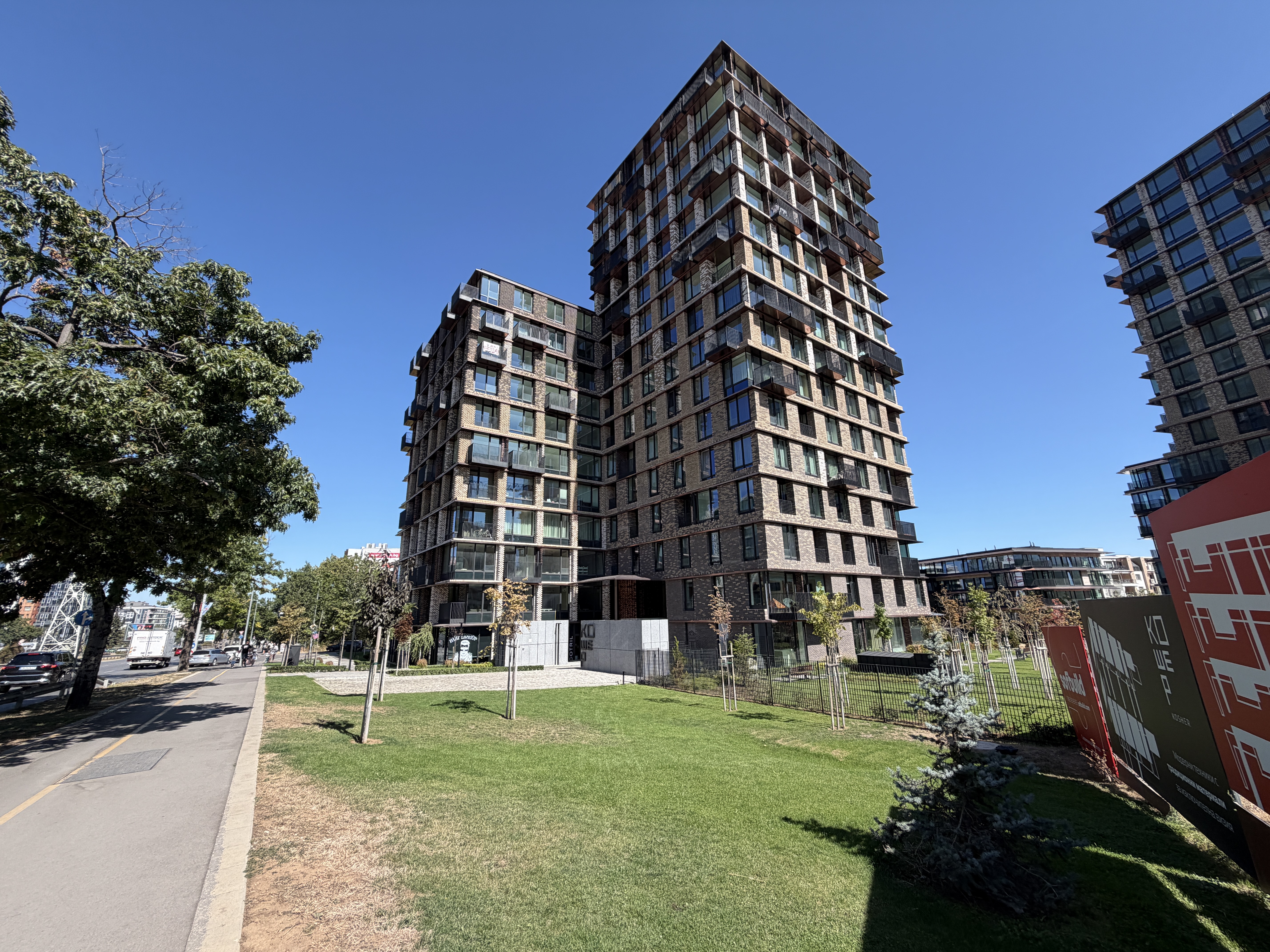
Video is where the phone is untouchable. It records 4K at up to 120fps with Dolby Vision from the main camera, plus ProRes and Apple Log 2, and GSMArena calls its video quality class-leading across every camera and condition, with superb stabilisation. The only flaw noted is internal lens reflections from bright lights at night.
iOS 26: a big redesign with rough edges
The 17 Pro Max ships with iOS 26, Apple's biggest visual overhaul in years, built around the Liquid Glass design language. The new look refreshes the lock screen, home screen, Safari, Photos, Messages and the Camera app, and adds Call Screening, Hold Assist, a dedicated Games app and Visual Intelligence, Apple's answer to Circle to Search. But the review is blunt about the execution: the design "makes a mess out of some elements" and the once-clean iOS now feels chaotic in places, with buttons and elements that need rethinking. Apple is also still behind in AI, the reviewers note, with no meaningful steps forward yet despite heavy investment. It remains a stable operating system, but one that needs polish.
Verdict
GSMArena's verdict is that the iPhone 17 Pro Max is the most capable iPhone ever, but not one that will go down in history as the best loved. The mixed-bag design, the lack of obvious camera improvements and the unpolished state of iOS 26 hold it back, while the improved battery, faster charging and class-leading video carry the expensive package. Millions will buy it, the reviewers write — far fewer will be truly excited about it.
That framing also points to who should buy it. Upgrading from an iPhone 15 Pro or older, the jump in performance, battery and cameras is large. From a 16 Pro Max, it is a much harder sell — unless battery life and video are what matter most to you.
Pros and cons
Pros
Large OLED display with Dolby Vision and HDR10; great battery life; fast charging is finally here; excellent performance; class-leading video quality; reliably great photo quality, if far from class-leading; 2TB storage option; superb water resistance.
Cons
Controversial design; despite the aluminum body and vapour chamber, sustained performance has improved only slightly; the new telephoto camera is not the massive upgrade hoped for.
iPhone 17 Pro Max specifications
6.9-inch LTPO Super Retina XDR OLED, 120Hz, 1320 x 2868; Apple A19 Pro (3nm); 12GB RAM; 256GB / 512GB / 1TB / 2TB storage; 48MP main + 48MP ultrawide + 48MP 4x telephoto; 18MP front camera; 4,832mAh battery (5,088mAh eSIM-only); 42W wired, 25W wireless charging; iOS 26; IP68; 233g. Launched September 2025 from $1,199 (256GB).
Sources
GSMArena — Apple iPhone 17 Pro Max review (full review, all pages): https://www.gsmarena.com/apple_iphone_17_pro_max-review-2884.php
What's Your Reaction?
 Like
0
 Dislike
0
 Love
0
 Funny
0
 Angry
0
 Sad
0
 Wow
0