



























































US Inflation Stays Hot at 3.8% as Economy Grows 4.3%, Cementing a December Fed Rate Hike
US inflation accelerated in October, with the Federal Reserve's preferred gauge rising 3.8% and core inflation hitting a three-year high of 3.3%, while third-quarter growth was revised sharply higher to 4.3%. The twin reports all but lock in a Fed rate hike in December, and they sent Wall Street through a violent session in which the Nasdaq briefly tumbled more than 4%.

US Inflation Stays Hot at 3.8% as Economy Grows 4.3%, Cementing a December Fed Rate Hike
US inflation picked up again in October while the economy grew far faster than first thought, a combination that leaves the Federal Reserve with little room to hold off on raising interest rates at its December meeting. The twin reports, released by the Bureau of Economic Analysis on Wednesday, November 25, landed on a market already rattled by worries over artificial intelligence valuations and fresh tariff proposals, and they helped trigger one of the most volatile trading days of the year.
The data presents a difficult picture for investors. Strong growth has helped sustain corporate earnings and stock valuations through 2026. But with inflation moving further from the Fed's 2% target rather than toward it, policymakers now look set to tighten further, raising borrowing costs for households and businesses alike.
Inflation accelerated in October
The personal consumption expenditures price index, the Fed's preferred inflation gauge, rose 0.3% in October from the previous month and 3.8% from a year earlier, up from a revised 3.7% in September and in line with economists' expectations. Core PCE, which strips out volatile food and energy prices, also rose 0.3% on the month, pushing its annual rate to 3.3%, up from 3.1% in September and above the 3.2% economists surveyed by FactSet had expected. It was the highest core reading since November 2023.
The underlying trend looks no softer. The three-month annualised rate of core PCE inflation climbed to 3.6% in October, from an upwardly revised 3% in September. Headline inflation has now run above the Fed's 2% target for five and a half years.
There was one softer note in the report: inflation-adjusted consumer spending was little changed in October after surging earlier in the year, with real personal consumption expenditure falling by less than 0.1%. Households, it seems, took a breather heading into the holiday season as persistent inflation squeezed budgets.
Growth revised sharply higher
A separate release on the same morning showed the economy expanded at a 4.3% annualised rate in the third quarter, up sharply from the 3.4% initially reported and the fastest pace in three years. The revision was driven by stronger business investment, which rose by the most since 2020, and by consumer spending growth revised up to 4.2% from 3.8%.
The strength matters because it suggests demand has not faded as quickly as policymakers had hoped. "The US October economic data illustrated two undeniable facts: aggregate demand remains hot, and inflation is accelerating," said Joe Brusuelas, chief economist at RSM US. Carl Weinberg, chief economist at High Frequency Economics, said that with the economy operating near capacity and inflation accelerating, he sees a case for several more rate increases.
A December hike now looks near-certain
Traders are pricing in a roughly 95% chance that the Fed raises its benchmark rate by a quarter point at its December 8-9 meeting, according to CME FedWatch, taking the federal funds rate to a 4.00% to 4.25% range from the current 3.75% to 4.00%. Market pricing also put roughly 60% odds on a further increase in January. The Fed raised rates in September for the first time in three years, and Governor Christopher Waller had signalled before the data that he could support a larger half-point increase to quell inflation.
"A December hike was already widely expected, but the bigger question now is whether the Fed sees it as enough, or signals that more tightening may be needed," Bret Kenwell, US investment strategist at eToro, wrote in a note.
The October report is the last major inflation reading before the December meeting: November consumer price data arrives only after the Fed announces its decision on December 9. That makes the hot October numbers the final word policymakers will have before they decide.
A violent day on Wall Street
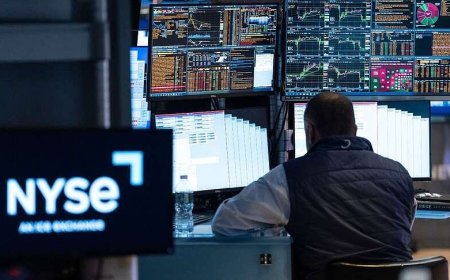
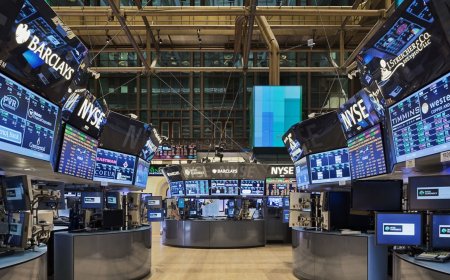
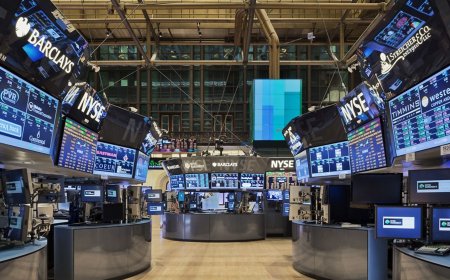
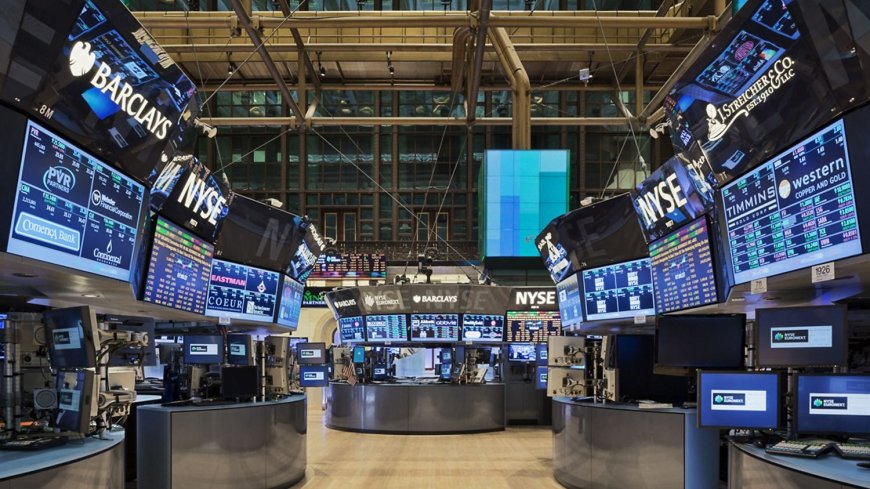
Stocks fell sharply at the open on Wednesday, with the Nasdaq Composite tumbling as much as 4.6% shortly after the opening bell and the Nasdaq 100 briefly falling 20% from its early-October peak, meeting the definition of a bear market, before paring losses. By the close, the Nasdaq was down 0.62%, the S&P 500 was lower by 0.25%, and the Dow erased a 1,100-point opening loss to gain 165 points, or 0.33%, as investors rotated into materials, real estate and energy shares.
The selling was concentrated in the technology and chip names at the centre of the AI boom. Nvidia shares slid 3.9%, memory-chip makers SanDisk and Micron Technology fell 5.6% and 4.6% respectively, and Anthropic dropped almost 10% intraday before recovering to end the day up by just over 1%. The slump came just two days after Nvidia's board reinstated Jensen Huang as chief executive, a move that had sent the company's shares soaring more than 30% on Monday.
Three forces weighed on sentiment at once: the hotter inflation data, renewed concern over the cost of the AI buildout, and President Donald Trump's proposal for 20% tariffs on 14 major trading partners, including China and the European Union. Futures had already slid in premarket trading on the tariff fears. "You add the two together, and you get violent moves," said Jamie Cox, managing partner at Harris Financial Group, referring to AI nerves colliding with expectations for higher rates.
The rush for safety pushed Treasury yields sharply lower, with the 10-year yield falling to around 4.84%, while Wall Street's fear gauge, the VIX, surged as high as 35. Gold fell below 3,500 dollars a troy ounce, its lowest level in over a year, before ending near flat, and Bitcoin briefly dropped below 58,000 dollars. The anxiety spread overseas too: South Korea's Kospi closed down 6.2% and Europe's Stoxx 600 lost a little more than 1%.
What to watch next
US markets were closed on Thursday for Thanksgiving, giving investors a day to digest the data before trading resumes. The focus now shifts to the Fed itself. Officials have signalled that higher rates are needed but have offered different views on how far and how fast to go, and the December meeting will test whether they remain focused on persistent inflation or grow concerned about the consequences of tighter financial conditions for an economy already showing strain in places.
A sustained sell-off could do some of the Fed's work for it by curbing demand. But with inflation moving further from target, it would likely take a considerable deterioration in financial conditions to persuade policymakers to hold off. As Bradford Smith, a portfolio manager at Janus Henderson Investors, put it: "The market is testing for the 'Fed put'" — the central bank's perceived willingness to step in when markets come under pressure. This time, the data suggests the Fed may not be in a hurry to oblige.
Sources
Barron's; CNN; Xinhua; Moneycontrol; CNBC-TV18; FXStreet; Exante; Invezz. Figures from the US Bureau of Economic Analysis, released November 25, 2026; market pricing from CME FedWatch.
What's Your Reaction?
 Like
0
 Dislike
0
 Love
0
 Funny
0
 Angry
0
 Sad
0
 Wow
0