


















































Anthropic Opens Enterprise Frontier Safeguards Public Beta, Bringing Misuse Detection to Customer Clouds Without Keeping Their Data
Anthropic has opened Enterprise Frontier Safeguards in public beta, giving business customers automated safety monitoring for Claude that detects misuse across many requests while keeping prompts and responses entirely in storage they own and control.

Anthropic Opens Enterprise Frontier Safeguards Public Beta, Bringing Misuse Detection to Customer Clouds Without Keeping Their Data
Anthropic has opened Enterprise Frontier Safeguards in public beta, offering business customers a way to watch for sophisticated misuse of Claude without handing their data to anyone else. The system, known as EFS, adds a layer of automated safety monitoring that works across many requests at once, while keeping prompts and responses inside storage the customer owns and controls.
The company announced the public beta on Monday, November 23, in a post on its Claude website. Anthropic first described EFS in September and has spent the months since developing it with more than 100 customers, including a quarter of the Fortune 100 and companies in healthcare, financial services and law, where rules on data visibility are strict. Bridgewater, Salesforce and Stripe were among the enterprises evaluating it in private beta.
What Enterprise Frontier Safeguards does
EFS is aimed at a gap in the way AI safety screening usually works. Customers who rely on zero data retention, or ZDR, are already protected by Claude's classifiers, real-time safeguards that screen individual requests for signs of harm. The problem, Anthropic says, is that the most sophisticated attacks do not happen in a single request. They unfold across many queries, each of which can look harmless on its own.
EFS adds a second defensive layer, automated safety monitoring, which looks for patterns of misuse across many requests. Anthropic says the monitoring can spot deliberate misuse that could lead to serious harm, such as offensive cyber operations, and also catch cases where an AI agent acts beyond what its user intended, for example by using a software exploit to reach an internal database or an external system.
Why single-request screening was not enough
Anthropic pointed to its own September threat intelligence report for an example of the kind of attack EFS is built to catch. That report described an operation against roughly fifty organizations in which an AI agent divided the work of an attack among many other agents running in parallel, saving the credentials it had harvested between sessions so the campaign could easily resume. Looked at one request at a time, the attack appeared as a series of separate, more benign tasks.
Automated safety monitoring is designed to connect those dots. When it finds a risk, it creates a Safety Case for the customer's security team to review. The cases can be read from the customer's own cloud storage or through an API, and they can be fed into security information and event management systems. They contain no inputs and outputs, only the information the team needs to investigate.
How the monitoring works without keeping data
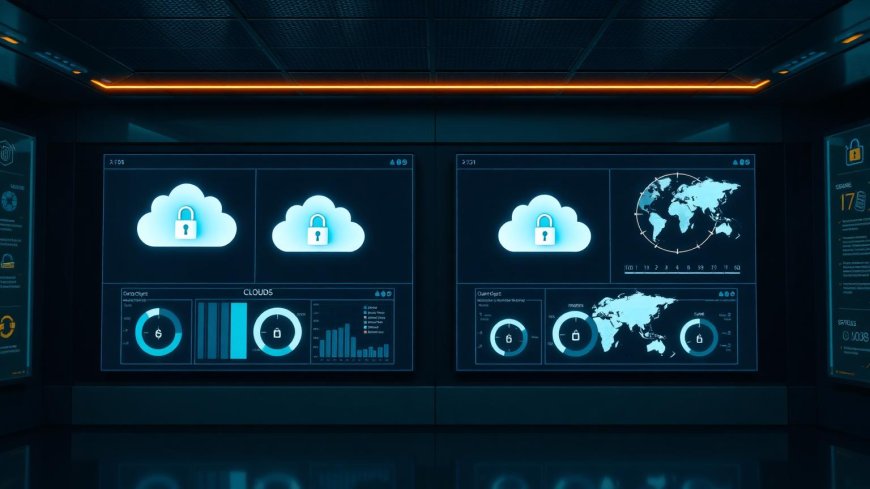
The central idea of EFS is that safety monitoring and data retention are separated. With EFS, a business brings its own storage for prompts and responses, using Amazon S3 or Google Cloud Storage in its own account. Anthropic's automated safety monitoring system then analyses data stored entirely on infrastructure the customer controls.
Anthropic sets out three guarantees for customers using EFS. First, zero data retention: neither Anthropic nor the cloud provider keeps a copy of the data once it is delivered to storage the customer controls, and inputs and outputs are deleted promptly after they are written there. Customers configure their own access policies and audit logging, and encrypt the safety data with their own keys.
Second, no operator human review: neither Anthropic nor cloud provider personnel access inputs and outputs, and only the automated safety monitoring system can reach the data. Third, Anthropic says the data is never used to train models or classifiers, and is used only for automated safety monitoring. Anthropic says it does not charge for EFS itself; the cloud provider bills for the storage, reads, writes and network transfer as usual.
Where businesses can use it
EFS is available through the Claude Platform, Claude Platform on AWS, Amazon Bedrock and Claude on Google Cloud. When it is used through Amazon Bedrock or Claude on Google Cloud in its Google-managed form, the system is operated by the cloud provider and the end-to-end data flow stays within that cloud's boundary. Support for EFS in Microsoft Foundry is coming soon, according to Anthropic.
Eligible customers will be notified with instructions on how to get started. Anthropic has published developer documentation for setting it up and a security whitepaper explaining the architecture, and says businesses can also deploy it through consulting partners including Accenture, Deloitte, KPMG and PwC.
The backstory: from a 30-day retention rule to customer-owned storage
EFS arrives as the resolution of a data policy dispute that has followed Anthropic for much of the year. In June, the company said it would keep customer data for 30 days for its most capable models, including the Fable and Mythos families, so it could spot and prevent new kinds of cyberattacks. The policy drew pushback from enterprise customers used to zero retention, particularly in regulated industries.
Anthropic answered in September by announcing EFS, a system that would keep the monitoring but move the storage to customers' own clouds. The public beta that opened on November 23 is that plan reaching businesses more broadly. The launch comes days after Anthropic completed the largest technology initial public offering in history, and as its shares trade below their debut price — a backdrop covered in our earlier report on Anthropic's stock falling below its IPO price.
For regulated businesses that held back from using Anthropic's most powerful models because of the retention rule, EFS removes the main obstacle: they can now keep their data in their own cloud accounts, under their own keys, while Anthropic's systems watch for misuse from the outside. Whether that is enough to bring the holdouts in will become clear as the beta rolls out to eligible customers in the coming weeks.
Sources
- Anthropic, "Zero data retention with Enterprise Frontier Safeguards is now in beta," November 23, 2026
- PYMNTS, "Anthropic Expands Availability of AI Safety Monitoring With Zero Data Retention," November 23, 2026
- Help Net Security, "Anthropic wants to catch rogue AI activity without retaining your data," November 25, 2026
- Business Standard, "Anthropic introduces zero data retention option for firms using advanced AI," November 24, 2026
- ITDaily, "Anthropic launches Enterprise Frontier Safeguards in public beta," November 24, 2026
What's Your Reaction?
 Like
0
 Dislike
0
 Love
0
 Funny
0
 Angry
0
 Sad
0
 Wow
0