






































Dell Adds 512-Core PowerEdge M8825 and 72-GPU AMD Helios Rack to Its AI Factory
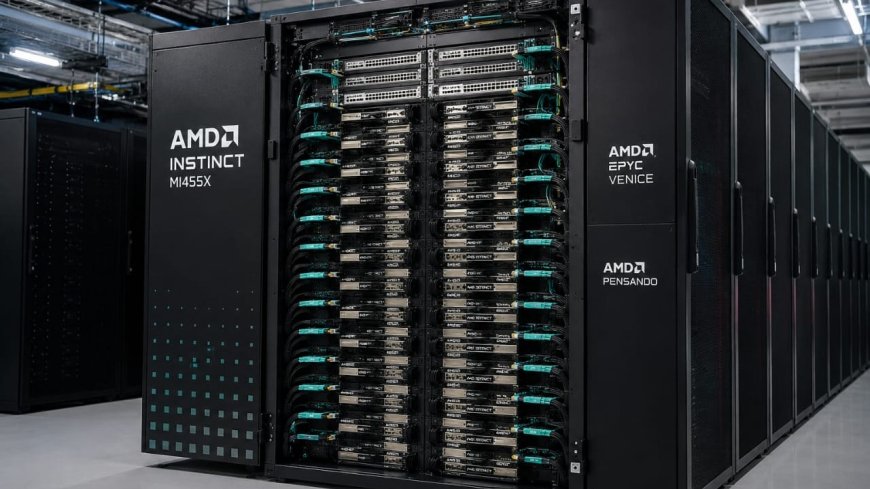
Dell Technologies has expanded its AMD-based AI infrastructure with the air-cooled PowerEdge M8825 server and the AMD Helios rack-scale solution, packing 72 Instinct MI455X GPUs and up to 2.9 exaflops of performance.

Dell Adds 512-Core PowerEdge M8825 and 72-GPU AMD Helios Rack to Its AI Factory
Dell Technologies is widening its bet on AMD for artificial intelligence infrastructure, adding a dense new CPU server and a full rack-scale GPU system to its Dell AI Factory lineup. Announced at the SC26 supercomputing conference on November 16, the update covers every scale of deployment, from a single air-cooled server to a liquid-cooled rack holding 72 of AMD's flagship Instinct MI455X accelerators.
The move gives enterprise buyers a single-vendor route to AMD-based AI compute at a moment when demand for training and inference capacity keeps outrunning supply. Rather than asking customers to assemble racks from parts, Dell is selling the whole stack: servers, networking, storage, software and deployment services, built around AMD silicon.
PowerEdge M8825: a dense, air-cooled CPU server
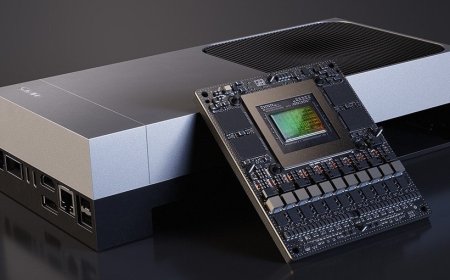
The headline server is the Dell PowerEdge M8825, a two-socket machine built on AMD EPYC processors. It is air-cooled, which matters: it is designed for organisations that want high CPU density without installing liquid cooling. Dell says each node supports up to 512 cores and 1,024 threads, aimed squarely at agentic AI and other workloads that chew through large amounts of compute.
Dell designed the M8825 for Open Rack deployments drawing 35kW to 75kW per rack, and its own internal analysis puts up to 46 servers in a rack depending on configuration, power limits and cooling capacity. The specifications are still preliminary, and Dell is targeting the first half of 2027 for availability. No pricing has been published.
A modular middle tier built on the MI350P
Between the single server and the full rack sits a set of new modular configurations for the Dell AI Platform with AMD. These are built on PowerEdge XE7745 and R7725 servers fitted with AMD Instinct MI350P PCIe GPUs, and they support the AMD Enterprise AI Suite as well as Red Hat OpenShift and Red Hat AI Enterprise.
The idea is incremental growth. A customer can start with one server, then add GPUs, server nodes, storage and networking as demand grows, without replacing the infrastructure it already has. Dell says this cuts the complexity of scaling, which is often the most expensive part of building AI capacity.
Helios: 72 MI455X GPUs in a single rack
At the top end is the AMD Helios Rack-scale Solution from Dell, aimed at organisations running the largest training and inference jobs. The rack combines 72 AMD Instinct MI455X GPUs and, according to Dell, delivers up to 2.9 exaflops of performance, based on AMD's internal analysis. AMD lists up to 31 TB of HBM4 memory for the rack, 260 TB/s of aggregate scale-up bandwidth and 43 TB/s of scale-out bandwidth.
Unlike the air-cooled M8825, Helios is liquid-cooled, with a cooling manifold distributing coolant to the compute and switch trays. Dell pairs the rack with its PowerRack infrastructure for networking and storage, plus deployment and lifecycle services, so customers get a validated, fully integrated system rather than a kit of parts. Dell has not given an availability date for its Helios rack.
Readers should treat the headline performance figure with the usual caution: it is a peak FP4 number from AMD's own analysis, and real-world results will depend on the model, software, configuration and utilisation.
The MI455X behind the rack
The Helios rack is built on AMD's Instinct MI400 family, which AMD launched at its Advancing AI event on July 23, 2026. On November 12, AMD widened the lineup, adding the MI450X with 288 GB of HBM4 alongside the MI455X, which carries 432 GB across 12 stacks.
AMD's own Performance Labs measured the MI455X at 21,333 tokens per second per GPU on DeepSeek-R1 in an MLPerf Inference Offline configuration, with testing carried out in October 2026. AMD compares that against Nvidia's published MLPerf result for the Vera Rubin NVL72 and claims up to 30 percent higher throughput. That comparison comes with caveats: AMD ran the test itself, the result is a lab measurement rather than an AMD MLPerf submission, and the Offline scenario measures aggregate throughput rather than interactive latency.
Production is already moving. AMD said in its third-quarter results material that Helios production was ramping as planned, that it started shipping MI455X in volume during the quarter, and that lead customers had brought their first Helios racks online. Its November 3 results release named Anthropic, Meta, Microsoft, OpenAI and Oracle Cloud Infrastructure as running models and workloads on the first racks.
Why it matters
Dell's pitch is choice. Customers can pick air cooling or liquid cooling, a single server or a full rack, and scale up without changing vendors or rebuilding their data centre. Yoo Sang-mo, president of Dell Technologies Korea, put it this way: having a broad range of choices, from processors and cooling methods to rack configurations and deployment scale, through a single trusted partner is a powerful advantage when building AI infrastructure.
The announcement also underlines how central AMD has become to the AI hardware race. Helios is the company's answer to Nvidia's rack-scale systems, and Dell putting its name and services behind it gives the platform a route into enterprises that buy complete, supported systems rather than raw accelerators.
Helios is also reaching beyond Dell. AMD and TCS are separately building 200MW of Helios-based AI data centres in India, a project Innopark IT covered earlier this month, which shows the rack design is being adopted as a blueprint rather than a one-off product. Read more: AMD and TCS to build 200MW Helios AI data centres in India
Sources
What's Your Reaction?
 Like
0
 Dislike
0
 Love
0
 Funny
0
 Angry
0
 Sad
0
 Wow
0