












































Ant Group's Ling-3.2-air Brings a 124B Open Model Built for Office Workflows
Ant Group's inclusionAI has released Ling-3.2-air, an open-weight multimodal AI model with 124 billion parameters that activates only 5.5 billion per token. Published on Hugging Face on 23 November 2026 under the MIT licence, the model is aimed at workflow automation and professional document work rather than chat.

Ant Group's Ling-3.2-air Brings a 124B Open Model Built for Office Workflows
Ant Group's AI lab inclusionAI has quietly put a new open-weight model on Hugging Face, and it is aimed squarely at the office rather than the chatbot. Ling-3.2-air, released on 23 November 2026, is a multimodal mixture-of-experts model with 124 billion parameters in total — but only 5.5 billion of them switch on for any given token. It is free to download and use under the MIT licence, one of the most permissive open licences available.
The release arrived without the fanfare that usually accompanies a model of this size. The weights simply appeared on Hugging Face, accompanied by a model card, deployment recipes for the SGLang and vLLM serving frameworks, and a short announcement from Ant's Ling team on X. For developers and companies that want to run a capable model on their own hardware, that is exactly the point: there is nothing to sign up for, and no hosted API to wait for.
A model built for work, not conversation
Ling-3.2-air shares the native multimodal architecture of Ling-3.0-flash-VL, Ant's earlier open vision-language model, and every improvement Ant lists is measured against that predecessor. The focus this time is narrower and more practical: automating multi-step workflows, reading long professional documents, and handling terminal tasks.
The headline figure in the model card is a jump on AutomationBench-AA, a benchmark for agentic office work, from 15.7 percent for Ling-3.0-flash-VL to 61 percent for the new model. Ant also reports gains on AA-Briefcase v1.1, where its Elo-style score rose from 987 to 1,340, and on Terminal-Bench 4.0, where it scored 27 percent. Artificial Analysis, which has already run the model, places it at 23 on its Intelligence Index.
These are vendor-reported numbers, and they should be read as such. But the model card is unusually candid about one result: on Harvey's LAB-AA legal benchmark, Ling-3.2-air meets 87.7 percent of individual grading criteria, yet its all-pass rate — getting every criterion right on a task — is just 8.3 percent, and 0.8 percent once material hallucinations are checked. That honesty is rare in a release note, and it is a useful reminder that workflow automation still needs human oversight.
How the model is put together
Under the hood, Ling-3.2-air is a hybrid-linear mixture-of-experts design. Its text backbone has 42 layers in a five-to-one pattern: 35 layers use Kimi Delta Attention, a linear attention mechanism that keeps memory use low over long contexts, and seven use gated multi-head latent attention. Each token is routed to eight of 512 experts, plus one shared expert that is always active.
The model accepts text, images and video as input and produces text, and its native context window is 262,144 tokens — roughly 256K — with an extension path to about one million tokens using YaRN. That long-context reach is part of the design: the model is meant to chew through lengthy reports, contracts and document sets rather than short prompts.
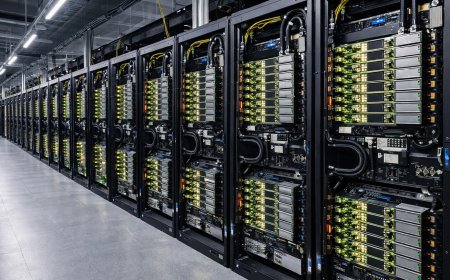
The download itself is substantial. The weights ship as 13 FP8 safetensors shards totalling about 129 GB, with the vision tower and some sensitive layers kept in higher precision. Ant's recommended setup for the full 256K context is four 141 GB-class GPUs, such as H200 or H20-3e cards, or eight 80 GB H100 cards — serious hardware, but within reach of a company server room rather than only a hyperscaler.
Open weights, with a catch
The MIT licence is the most permissive part of the release. It allows commercial use and modification without the usage caps or acceptable-use addenda that some open model licences carry. Anyone can download the weights, adapt them, and deploy them in a product.
There is one practical catch for now: no inference provider hosts the model yet, according to the model card, so self-hosting is the only way to run it today. Day-zero support in SGLang and vLLM should make that easier — inclusionAI ships a ready-made SGLang image with speculative decoding — but it still means provisioning GPUs rather than calling an API.
That trade-off is familiar from Ant's earlier open releases. The Ling family has been steadily opening up through inclusionAI, and Ling-3.2-air continues that pattern: a capable, efficiently activated model, given away with a permissive licence, aimed at the unglamorous work of reading documents and running workflows. If the benchmark gains hold up in real deployments, it could become a practical option for companies that want AI assistance without sending their documents to someone else's cloud.
Sources
- Hugging Face — inclusionAI/Ling-3.2-air model card
- Ant Ling (@AntLingAGI) — announcement post on X, 23 November 2026
- TechNode — "Ant releases Ling-3.2-air multimodal model under MIT license", 25 November 2026
- AI Weekly — "inclusionAI drops Ling-3.2-air, 124B MoE at 5.5B active"
- DeAI — "Ant Group ships Ling-3.2-air: 124B multimodal MoE under MIT"
- i10X News — "Ling-3.2-air: Ant's Open 124B Workflow Model"
What's Your Reaction?
 Like
0
 Dislike
0
 Love
0
 Funny
0
 Angry
0
 Sad
0
 Wow
0