










































Huawei Mate 90 Air Launches in China: 6.58mm Thin, 7-Inch Display, 6,500mAh Battery and Kirin 9020
Huawei has launched the Mate 90 Air in China, its thinnest Mate bar phone yet at 6.58mm, with a 7-inch 1.5K display, the Kirin 9020 chip, a 6,500mAh battery and a 50MP main camera. Prices start at CNY 4,999, with open sales from December 4.

Huawei Mate 90 Air Launches in China: 6.58mm Thin, 7-Inch Display, 6,500mAh Battery and Kirin 9020
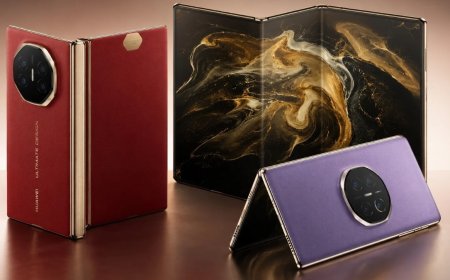
Huawei has officially launched the Mate 90 Air in China, and the headline figure is the one in its name: at 6.58mm thick, it is the thinnest bar-style phone the company has ever put in the Mate line. The phone debuted on November 24 at Huawei's Mate X8 and all-scenario event in China, alongside the new Mate X8 foldable, and it pairs that slim frame with a large 7-inch display and a 6,500mAh battery — a combination few phones this thin can claim.
The Mate 90 Air succeeds last year's Mate 70 Air, and Huawei has kept the formula deliberately familiar. The changes are small but pointed: a slightly thinner body, a new chip, a new colour and tougher water resistance. Everything else — the screen, the battery, the cameras and the price — is close to what the Mate 70 Air offered, which makes this launch less a reinvention than a careful refinement of an already unusual phone.
A 6.58mm body with a 7-inch screen
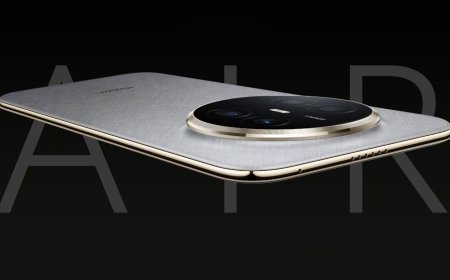
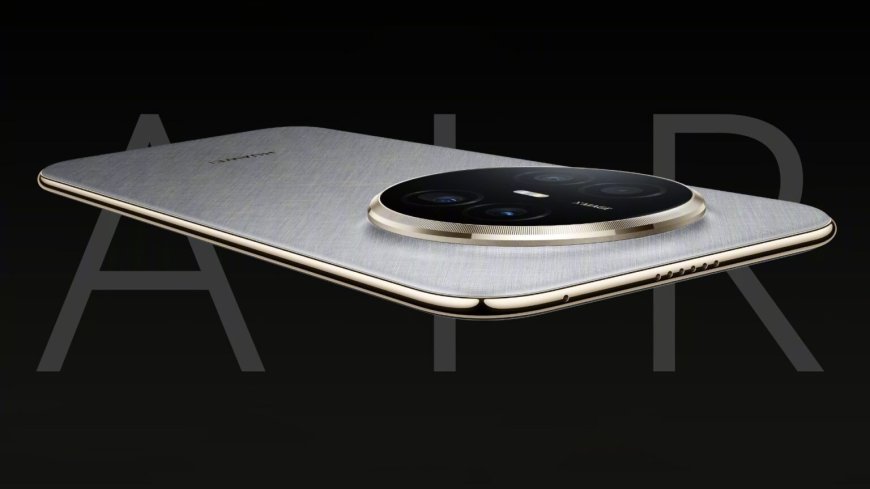
The Mate 90 Air measures 6.58mm thick, with the metal mid-frame narrowing to 3.7mm at its thinnest point, and it weighs 208 grams. That makes it 0.02mm thinner than the 6.6mm Mate 70 Air, and Huawei is calling it the thinnest Mate bar phone yet. For comparison, it sits just a millimetre thicker than Apple's iPhone Air, while carrying a considerably larger battery.
The front is a 7-inch quad-curved OLED display with 1.5K resolution, a 120Hz refresh rate, 4,000-nit peak brightness and 2,160Hz PWM dimming. It supports stylus input, with the stylus sold separately, and the panel uses LTPO technology for adaptive refresh rates. The phone is protected by Kunlun Glass and rated IP68 and IP69 for dust and water resistance.
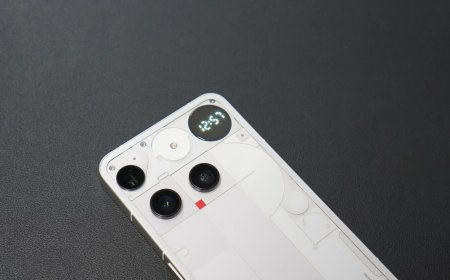
Huawei is selling the phone in three colours: Rose Gold, Moon Silver and Obsidian Black. The rear carries the Mate 90 series' large circular camera module with XMAGE branding, and the design uses a dual-tone finish with a shock-resistant structure and a nylon fibre material.
Kirin 9020 brings claimed gains over the Mate 70 Air
Inside, the Mate 90 Air runs Huawei's Kirin 9020 chip, stepping in for the Kirin 9020A used in the Mate 70 Air. Huawei says the chip delivers 9 percent higher single-core performance, 36 percent higher multi-core performance and 18 percent higher GPU performance than its predecessor, with gaming performance up 30 percent. Those are Huawei's own figures, and they have not been independently verified.
The chip is paired with 12GB of RAM and either 256GB or 512GB of storage. Huawei says new memory technology makes the 12GB of RAM behave closer to 16GB for keeping apps alive in the background. The phone runs HarmonyOS 7, Huawei's latest operating system, and supports Wi-Fi 7, BeiDou satellite messaging and a side-mounted fingerprint sensor.
The honest reading of the upgrade is that the Mate 90 Air is a modest step forward. Notebookcheck noted that the specifications match the Mate 70 Air almost exactly, and the chip is from the same Kirin 9020 family as before rather than a brand-new generation of silicon. What buyers are really getting is the same slim, big-screen formula with a faster chip, a new colour and better sealing — not a new phone from the ground up.
Cameras and battery
The rear camera setup is led by a 50-megapixel main sensor with a large 1/1.3-inch sensor, an f/1.8 aperture and optical image stabilisation. It is joined by an 8-megapixel ultrawide macro lens at f/2.2, a 12-megapixel telephoto with 3x optical zoom and optical image stabilisation, and a dedicated Red Maple colour camera with 1.5 million multispectral channels for more accurate colour. A 10.7-megapixel camera in a centred punch-hole handles selfies.
The 6,500mAh battery is the other half of the phone's appeal. Packing that capacity into a 6.58mm body is the engineering trick the Air line exists to show off, and Huawei rates it for 23 hours of video playback. Charging is 66W wired over USB-C. Stereo speakers round out the hardware.
Price and availability
The Mate 90 Air is on sale in China only, and Huawei has not announced any plans for a global launch. The 12GB RAM and 256GB storage model costs CNY 4,999, around 750 US dollars, while the 12GB and 512GB model costs CNY 5,999, around 900 US dollars. Pre-sales opened on November 24 at 6:08 p.m. China time, with open sales starting at 10:08 a.m. on December 4 — the same morning as the Mate X8.
That makes the Mate 90 Air a China-only showcase for now, and its real test will be whether buyers outside China ever get the chance to buy one. For the moment, it stands as Huawei's answer to the slim-phone trend: thinner than its predecessor, with a battery its rivals at this thickness cannot match.
Sources
- GizmoChina — Huawei Mate 90 Air launches with a 6.58mm body, Kirin 9020, starts at CNY 4,999
- Notebookcheck — Huawei unveils Mate 90 Air with 6,500 mAh battery and 7-inch display in ultra-thin body
- Beebom — Huawei Mate 90 Air Goes Official as a Slim iPhone Air Rival with a 6,500mAh Battery
- TechJuice — Huawei Mate 90 Air Launches With Minimal Upgrades Over Its Predecessor
- Huawei Central — Huawei introduces Mate 90 Air with 6.58 mm slim design, 7-inch display
- GSMArena via HeadlinesBriefing — Huawei Mate 90 Air Launches With Minor Upgrades
Related Innopark IT coverage: Huawei Mate X8 Launches in China With a Near-Crease-Free 8.2-Inch Display and Kirin 9050 Pro
What's Your Reaction?
 Like
0
 Dislike
0
 Love
0
 Funny
0
 Angry
0
 Sad
0
 Wow
0