










































Sarvam-105B-1711: India's Open-Weight AI Model Now Fits on One GPU at $0.15 per Million Tokens
Bengaluru startup Sarvam AI has released Sarvam-105B-1711, a new open-weight checkpoint of its 105-billion-parameter model. The compressed 65 GB version runs on a single workstation GPU, and Sarvam says it matches Google's Gemini 3.5 Flash-Lite on conversational benchmarks at less than a fifth of the price.
Sarvam-105B-1711: India's Open-Weight AI Model Now Fits on One GPU at $0.15 per Million Tokens
Bengaluru-based Sarvam AI has released Sarvam-105B-1711, a new open-weight checkpoint of its flagship 105-billion-parameter model, and the headline claim is hard to ignore: a model of this size that runs on a single workstation graphics card, at a price Sarvam says undercuts Google's comparable model by more than five times.
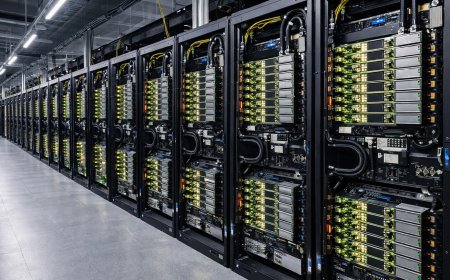
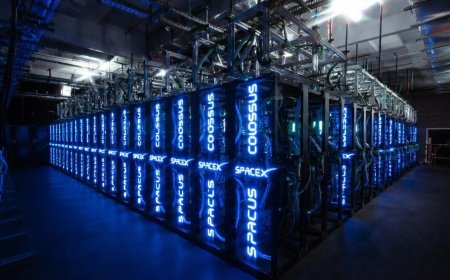
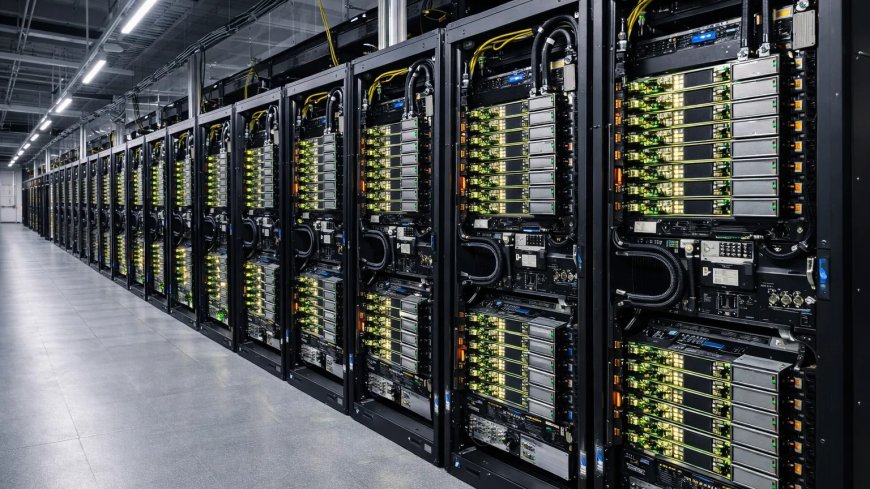
Featured image: a GPU server cluster in a data centre (illustrative photo).
The release, announced on November 22, 2026, is an upgraded version of the Sarvam 105B model the company first open-sourced in February. Sarvam describes it as a "Flash-Lite" class model — not a frontier reasoning system, but a fast, cheap workhorse built for high-volume jobs such as customer support, voice agents and agentic tasks that run millions of times a day.
What changed since February
According to Sarvam's release post, the new checkpoint was trained on the company's upgraded Nvidia B200 infrastructure and post-trained for instruction following, tool calling, agentic work and Indian languages. The improvements show up most clearly in the company's own test results: across eight conversational agent benchmarks, the average score rose from 42.6 for the February release to 73.9.
Instruction following jumped from 32.5 to 82.5 on the IFBench test, tool use in customer-service conversations rose from 46.2 to 85.5 on Tau2, and performance on Sarvam's Indian-language suite climbed from 30.1 to 79.1. The company also says the model is more consistent than its rivals at repeating a task correctly: it completed 69.5 percent of Tau2 customer-service tasks correctly in all four attempts, against 63.9 percent for Gemini 3.5 Flash-Lite and 62.1 percent for Gemma 4 31B.
All of these figures come from Sarvam's own evaluation setup and have not been independently verified, which matters when a company is grading its own homework. The comparison points are still striking, though: Sarvam puts its model at 73.9 on its eight-benchmark average, essentially level with Google's Gemini 3.5 Flash-Lite at 74.0, ahead of OpenAI's GPT-6 Luna at 66.3 and Google's Gemma 4 31B at 73.0.
A two-thirds price cut
The other half of the story is cost. Sarvam says inference optimisations on Blackwell hardware have cut the model's blended price by two-thirds, from $0.44 to $0.15 per million tokens. On its Token Factory API, the list price is ₹10 per million input tokens and ₹25 per million output tokens, with introductory pricing running through the end of 2026.
That puts the model well below the prices Sarvam cites for its rivals: $0.85 per million tokens for Gemini 3.5 Flash-Lite, $0.54 for Gemma 4 31B and $0.20 for GPT-6 Luna. For businesses running chatbots and voice agents at scale, where the same kinds of requests repeat millions of times a day, that gap is the difference between an experiment and a product that pays for itself.
One GPU, no data centre required
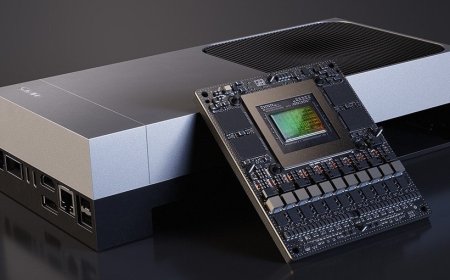
The weights are published on Hugging Face under the Apache 2.0 licence, which allows commercial use, in two formats: a full BF16 version of 198 GB, and a compressed 65 GB version in Nvidia's NVFP4 format, which stores most parameters in 4 bits instead of 16.
Sarvam says the 65 GB version fits on a single 96 GB Nvidia RTX PRO 6000 Blackwell workstation card, delivering 99 tokens per second per user. That is the detail aimed squarely at banks, government departments and other organisations with strict data rules: they can download the weights and run the model on their own premises, without sending sensitive documents to an outside cloud service.
There is a catch worth noting. The NVFP4 version needs Blackwell's FP4 tensor cores, so it will not run on older GPUs, and the RTX PRO 6000 is professional equipment rather than a consumer graphics card. The full 198 GB version still needs several cards. Even so, a 105-billion-parameter model that fits on one workstation card is a genuine shift from a year ago, when running a model of this size meant a multi-GPU cluster.
Longer context and real-world work
Sarvam also extended the model's context window to 160,000 tokens — roughly the length of a full novel — after long-context training on 512 GPUs that processed 330 billion tokens in a little over seven days. The company says it trained the model with reinforcement learning on realistic office tasks, such as summarising a month of shipments from a spreadsheet of purchase orders, using tools and running code in a sandbox.
Beyond chat, the model scores 89.7 on the AIME 26 maths benchmark without tools and 94.2 with them, and 85.2 on MMLU-Pro, according to Sarvam's published table. On agentic search and co-work tasks it trails Gemini 3.5 Flash-Lite — second on OpenAI's GDPval tasks and on Sarvam's internal co-work tests — which fits the positioning: this is a model built for routine conversational work at volume, not for frontier research.
The release also feeds Sarvam's own products. A voice fine-tune of the model powers Samvaad, the company's platform for enterprise voice agents across 12 Indian languages, scoring 68.7 on Sarvam's Samvaad bench. Its dictation product pairs the model with speech recognition to turn spoken words into finished text in English and 22 Indian languages.
Why it matters
Sarvam, founded in 2023, has positioned itself as India's answer to the big AI labs, building models tuned for Indian languages and for enterprises that cannot or will not send data abroad. This release is its clearest pitch yet to that audience: near-frontier conversational performance at a fraction of the running cost, with weights you can take home and run yourself.
Whether the benchmark numbers hold up in real deployments is a question only independent testing and actual use will answer. But the direction of travel is clear. Open-weight models keep getting cheaper to run and easier to host, and the gap between what needs a data centre and what fits on a desk keeps shrinking.
Sources
- Sarvam AI — "Sarvam-105B-1711: a new Sarvam 105B checkpoint", November 22, 2026
- Unite.ai — "Sarvam AI Releases Open-Weight 105B Checkpoint for Enterprise Agents"
- Tested Intelligence — "Sarvam-105B-1711 Review 2026: The Open-Weight Agent Model at $0.15 per Million Tokens"
- Gadgets Now (Times of India) — "Sarvam Launches New Open-Weight AI Model"
- alextech.ai — "Sarvam runs a 105B-parameter model on a single GPU, offline"
What's Your Reaction?
 Like
0
 Dislike
0
 Love
0
 Funny
0
 Angry
0
 Sad
0
 Wow
0