




















































XPENG's WorldGPT Teaches One AI Model to Think Across Cars, Drones and Humanoid Robots
XPENG has unveiled WorldGPT, a single AI world model that learns across cars, boats, drones and robots instead of training a separate system for each machine. Built as a cloud-based teacher model in the company's Turing World Model family, it combines perception, reasoning, prediction and action planning — and XPENG reports 12 first-place results across public benchmarks as of November 12, 2026.
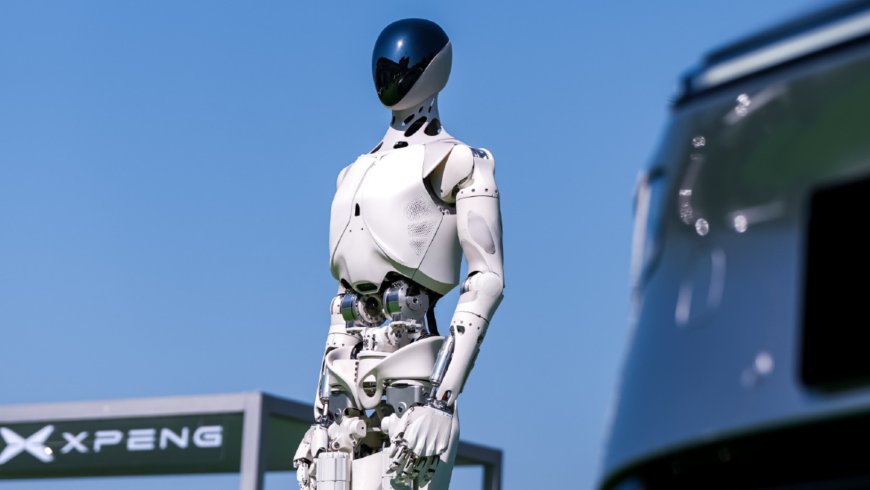
XPENG's WorldGPT Teaches One AI Model to Think Across Cars, Drones and Humanoid Robots
XPENG has unveiled WorldGPT, a single artificial intelligence model designed to learn from six very different kinds of machines — cars, boats, drones, single-arm robots, dual-arm robots and humanoid robots — and give them a shared understanding of the physical world. The Chinese company announced the model on November 24, 2026, in Guangzhou, positioning it as the next step in its Physical AI strategy.
Most AI systems for machines are built one at a time: one model for a self-driving car, another for a robotic arm, another for a drone. XPENG argues that much of what those machines need to learn is the same — judging distances, anticipating movement, understanding how objects behave — and that a shared model can learn it once and pass it on. WorldGPT is the company's attempt to do exactly that, as part of its Turing World Model family.
One model, six kinds of machine
WorldGPT brings perception, reasoning, prediction and action planning together in a single model. Given previous camera footage and a simple instruction, it can generate video showing how a scene might develop, plan the actions needed to complete a task, and explain its reasoning in natural language, according to XPENG.
The idea is illustrated by the company with a simple comparison: a car must judge distances and anticipate the movements of surrounding vehicles, while a robotic arm must identify an object's position and adjust its movements to pick it up. Both depend on understanding their surroundings, predicting what happens next and responding accordingly. WorldGPT is meant to learn those common principles once, from visual data gathered across all six machine types, rather than making each machine develop that understanding independently.
XPENG describes WorldGPT as the first world model to demonstrate both prediction and action-planning capabilities across all six types of machines. That "first" claim is the company's own — no independent body has verified it — but it frames how XPENG sees the model: not as a better driving model or a better robot model, but as a shared foundation for both.
A teacher in the cloud, students on the machines
WorldGPT is not the model that will run inside XPENG's cars or robots. It is built as a large cloud-based "teacher model" that learns shared knowledge from data across the different machines. That knowledge is then distilled into smaller, specialised models designed to run directly on individual machines.
The approach matters because bringing AI to a new type of machine has traditionally meant collecting specialised data, training a dedicated model and adapting it to that machine's hardware and movements. By starting from a shared foundation, XPENG says developers can focus on adapting the model to specific tasks and hardware instead of building from scratch — potentially cutting development costs, improving data efficiency and making it easier to extend AI capabilities to new machines.
It is worth being clear about what has actually been released. WorldGPT is a capability unveiling: XPENG has not announced public weights, an API, pricing or a general availability date, and the technical report on its project website is listed as "coming soon". For now, the model exists as a research and development foundation inside XPENG, not as a product developers can download or buy.
Twelve first-place benchmark results, according to XPENG
Alongside the announcement, XPENG reported that WorldGPT had achieved 12 first-place rankings across public benchmarks in four areas — autonomous driving, robotic manipulation, visual understanding and video generation — as of November 12, 2026. The figures are the company's own selection from public benchmarks, and the full comparison cannot yet be checked independently while the technical report is pending.
In autonomous driving, WorldGPT ranked first in four benchmark evaluations, including NAVSIM v2, where it led in both standard and challenging driving scenarios. In robotic manipulation, it achieved an average success rate of 95.2% across 50 single-arm manipulation tasks — the highest among the published models evaluated — and also ranked first in tests of adapting to unfamiliar tasks and changing environments.
In visual understanding, the model ranked first on CV-Bench and in two BLINK subtasks that assess spatial understanding and object relationships. In video generation, it achieved the highest overall score on VBench 2.0 and tied for first on WorldOlympiad, which evaluates long-horizon simulation. Together, XPENG says, the results show one shared model combining capabilities that are usually developed separately.
Part of a wider Physical AI push
WorldGPT sits inside XPENG's broader Physical AI strategy, which spans intelligent vehicles, humanoid robotics and autonomous mobility. The company has built a full-stack architecture around its in-house Turing AI chips, world foundation models and integrated software and hardware, and says its long-term goal is a shared foundation of physical intelligence that can be adapted across different kinds of machines.
The announcement came a day after XPENG introduced X-World 1.6, an upgrade to the in-house world model it uses to develop and test its driving technology, which turns recorded road environments into reusable virtual tests. The two announcements address complementary problems: WorldGPT aims to share physical knowledge across machines with very different controls, while X-World 1.6 gives driving AI a controlled environment in which decisions produce simulated consequences.
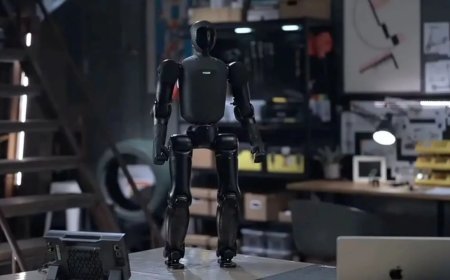
Whether WorldGPT's benchmark lead translates into better cars and robots will depend on what happens next — the technical report, and whether the distilled models show up in XPENG's driving software or its IRON humanoid robot. For now, the announcement signals how the company wants to build Physical AI: one shared brain, taught in the cloud, and then fitted to every machine it makes.
Related reading: XPENG's Land Aircraft Carrier flying car heads to Dubai
Sources
- XPENG — XPENG WorldGPT: One Model for Cars, Robots, Drones (press release, November 24, 2026)
- WorldGPT project website
- ai.info — XPENG says its WorldGPT model learns from cars, boats, drones and robots
- Dev.to — XPENG Unveils WorldGPT and X-World 1.6
- Self Drive News — XPENG WorldGPT World Model Spans Cars, Robots and Drones
- Pigeons News (Gasgoo) — XPENG Unveils WorldGPT, a World Action Model for Cross-Embodiment Physical AI
- Agenccy — XPeng's WorldGPT claims 12 first places, no report yet
What's Your Reaction?
 Like
0
 Dislike
0
 Love
0
 Funny
0
 Angry
0
 Sad
0
 Wow
0