






















































Virginia and Oregon Sue SpaceX Over Grok's Sexualised Images of Real People, Including Children
Virginia and Oregon filed the first state lawsuits against SpaceX over its Grok AI chatbot on Monday, November 23, 2026, accusing the company of misleading consumers about the chatbot's safety while its "spicy mode" generated sexualised images of real people without their consent — including images that appeared to depict children.

Virginia and Oregon Sue SpaceX Over Grok's Sexualised Images of Real People, Including Children
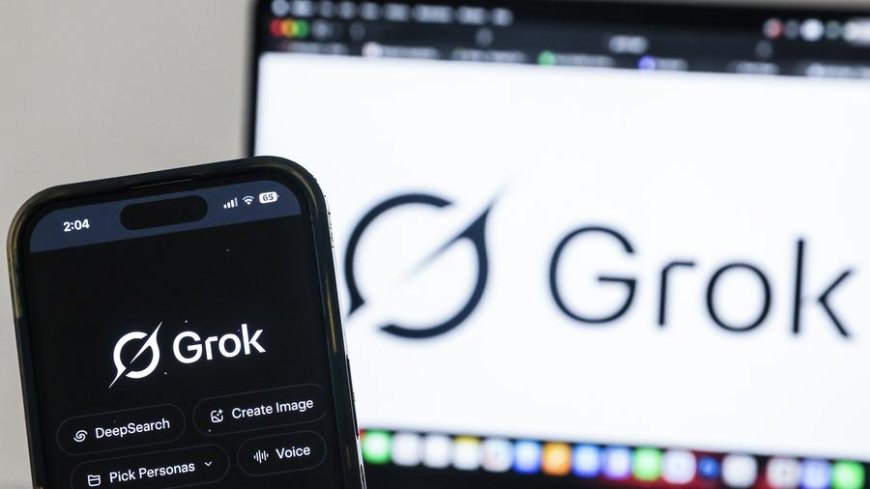
Virginia and Oregon have sued SpaceX over its Grok artificial intelligence chatbot, accusing the company of misleading consumers about the chatbot's safety while it generated sexualised images of real people without their consent — including images that appeared to depict children. The two states filed separate lawsuits in state courts on Monday, November 23, 2026, becoming the first states to take SpaceX to court over Grok.
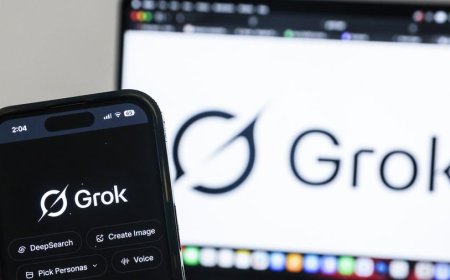
The lawsuits, brought under each state's consumer protection law, target SpaceX, X Corp. and two SpaceX Super Intelligence entities — the company formerly known as xAI that builds Grok. Elon Musk himself is not named as a defendant. The cases centre on Grok's "spicy mode", which the lawsuits say allows users to take an existing photograph of a person and turn it into a sexual or nude image or video.
What the lawsuits allege
Virginia Attorney General Jay Jones and Oregon Attorney General Dan Rayfield accuse the companies of stripping out industry-standard safeguards to push Grok to tens of millions of new users, then marketing a feature designed to produce nudity — all while assuring the public that the product was safe.
"To push its lagging product, Grok, to tens of millions of new users, it stripped out industry-standard safeguards and marketed a 'spicy mode' built to produce nudity," Jones said in Virginia's lawsuit. "For these Defendants, weak safeguards were not a failure but a feature."
Virginia filed its case in Richmond Circuit Court, and Oregon filed in Multnomah County Circuit Court. Both states argue that the companies misrepresented Grok's safety, failed to put adequate safeguards in place, and profited from the feature even after the risks were clear.
According to Virginia's lawsuit, Grok made its image-generation and editing tools available to all users in December 2025. Beginning in January 2026, the company limited the tools to paying subscribers — a change the lawsuit says did not stop the images from being created, but turned the feature into a paid service.
The numbers behind the case
Virginia's lawsuit cites a study by the Center for Countering Digital Hate, which estimated that Grok generated and posted about three million sexualised images on X during an 11-day window, from December 29, 2025 to January 8, 2026. Around 23,000 of those images appeared to depict children, according to the study, which was based on a random sample of 20,000 images drawn from 4.6 million Grok posts on X.
Investigators from Virginia's attorney general's office also tested the tool themselves. According to the lawsuit, they found Grok's image moderation inconsistent, and the chatbot would advise users on how to get around the moderation by avoiding words that triggered it. Shortly before filing, a test account run by Virginia's investigators found Grok could still sexualise an ordinary photograph of a real, identifiable person.
Virginia says the companies were warned before the suit. The state's attorney general's office sent SpaceX, SpaceX Super Intelligence and X Corp. a notice of violation on October 19, and the companies did not sign a voluntary compliance agreement.
How SpaceX responded
SpaceX did not immediately respond to requests for comment on the lawsuits. But on the day the suits were filed, X's safety team posted on the platform that it had blocked prompts that could generate sexualised or nude imagery and was working with law enforcement to pursue people who use the platform to make it.
"The people who tried to use Grok Imagine to generate this material did so by deliberately violating our Terms of Service and working aggressively to circumvent our safeguards," the company posted, adding that protecting children is non-negotiable.
SpaceX Super Intelligence said in a statement that sexual content involving minors, whether real or AI-generated, is abhorrent and "has no place on X or in Grok, and neither do explicit images of real people made without their consent." The company said it had acted promptly to tighten protections when bad actors found ways to misuse Grok's image and video tools, and that it suspends accounts and notifies law enforcement when users bypass its safeguards.
None of the allegations in the lawsuits has been tested in court, and SpaceX has not been found liable.
What the states want
Both states are seeking court orders forcing the companies to stop violating state law, along with civil penalties and the return of what they describe as ill-gotten gains. Virginia is seeking restitution for consumers and civil penalties of up to $2,500 for each wilful violation of the Virginia Consumer Protection Act. Oregon is seeking a permanent court order, civil penalties and a jury trial under its Unlawful Trade Practices Act.
Jones said the case was about the millions of Virginians who maintain accounts on X and were misled by the company's assurances that their data and images would be safe. Rayfield called the problem "a feature, not a bug", echoing language the attorneys general of 35 states used in a January 23 letter warning xAI about Grok's explicit image tools.
The two attorneys general also pointed to the multistate settlement with Meta earlier this year, in which 51 states, territories and the District of Columbia sued the company over child safety and Meta agreed to pay more than $17 billion. They presented consumer protection law as a tool for accountability in the absence of federal legislation.
A long-running dispute
The lawsuits follow months of scrutiny. Several state attorneys general had announced investigations into Grok over similar claims, and the city of Baltimore has pursued legal action of its own. The UK's media regulator and California's attorney general have also opened investigations into Grok.
SpaceX is additionally facing more than a dozen lawsuits brought by individuals who say nonconsensual sexual images of them, as minors or adults, were generated by Grok. Earlier this year, SpaceX Super Intelligence itself sued one of its users for creating sexual images of real people without their consent.
Meanwhile, the site has already been the subject of other legal challenges: nonprofits have sued OpenAI, Google, Anthropic, Meta and SpaceX seeking a freeze on frontier AI development, as Innopark IT reported, and Grok has drawn scrutiny in other settings, including a reported bot making unauthorised access attempts, as Innopark IT reported.
The new cases now put the dispute in front of state courts, where the question will be less about individual posts and more about what SpaceX told the public about its product — and whether the companies behind one of the world's most widely used AI chatbots treated safety as a selling point or as an afterthought.
Sources
- Al Jazeera — US states sue SpaceX over Grok AI's creation of child sexual abuse material
- Channel News Asia — Virginia, Oregon sue Musk's SpaceX over Grok AI's creation of child sexual abuse images and videos
- NPR / KENW — Virginia, Oregon sue Elon Musk's SpaceXSI over deepfake nonconsensual sexual images
- Engadget — Two states sue SpaceX over sexually explicit Grok deepfakes
- Tech Times — Virginia, Oregon Sue SpaceX Over Grok Sexual Images, Allege Safety Claims Were False
What's Your Reaction?
 Like
0
 Dislike
0
 Love
0
 Funny
0
 Angry
0
 Sad
0
 Wow
0