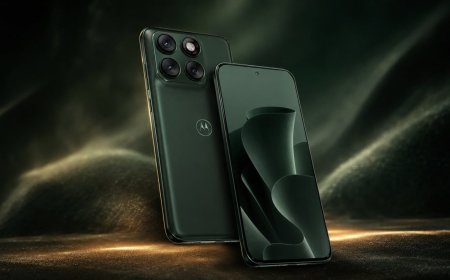


























































Poco X8 Pro Max Review: Record Battery Life and Flagship Power for $470
GSMArena's full review of the Poco X8 Pro Max finds a flagship killer built around a huge 8,500mAh battery, a bright 6.83-inch 120Hz AMOLED display and the new MediaTek Dimensity 9500s chipset — with 25 hours 22 minutes of active use, 100W charging and a capable 50MP main camera, all from $470.

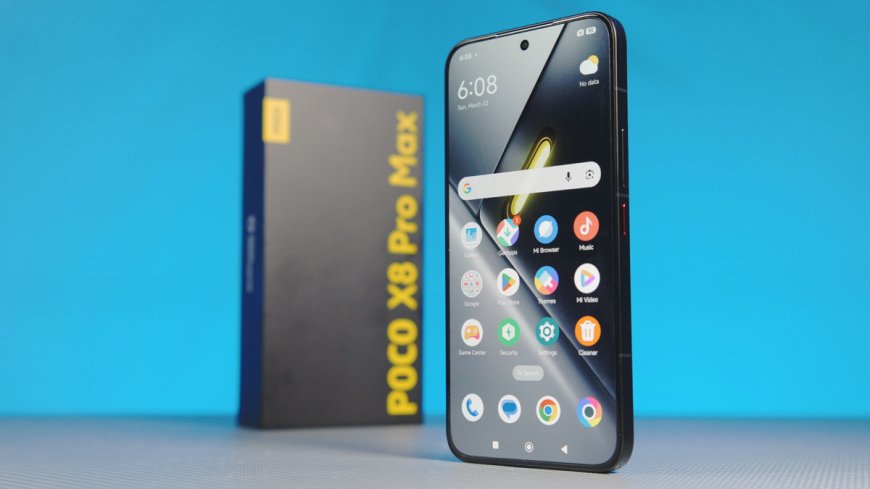
Poco X8 Pro Max Review: Record Battery Life and Flagship Power for $470
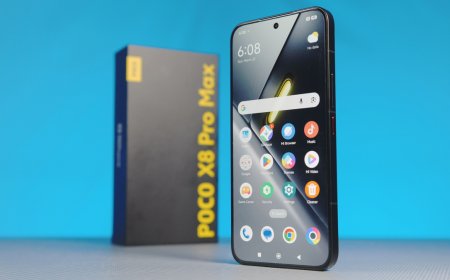
When most people hear Poco, they think value for money. The Poco X8 Pro Max keeps that promise, but it is not a budget phone in disguise. It is the global version of the China-only Redmi Turbo 5 Max, and it arrives with a brand-new MediaTek Dimensity 9500s chipset, a 6.83-inch AMOLED display and a battery so large it nearly tops GSMArena's all-time endurance chart. The base 12GB/256GB model retails for $470, with the 12GB/512GB version at $530. On paper, this is the classic flagship killer formula — and after weeks of testing, GSMArena's full review concludes the phone largely delivers on it.
Design and build: solid, sealed and a little flashy
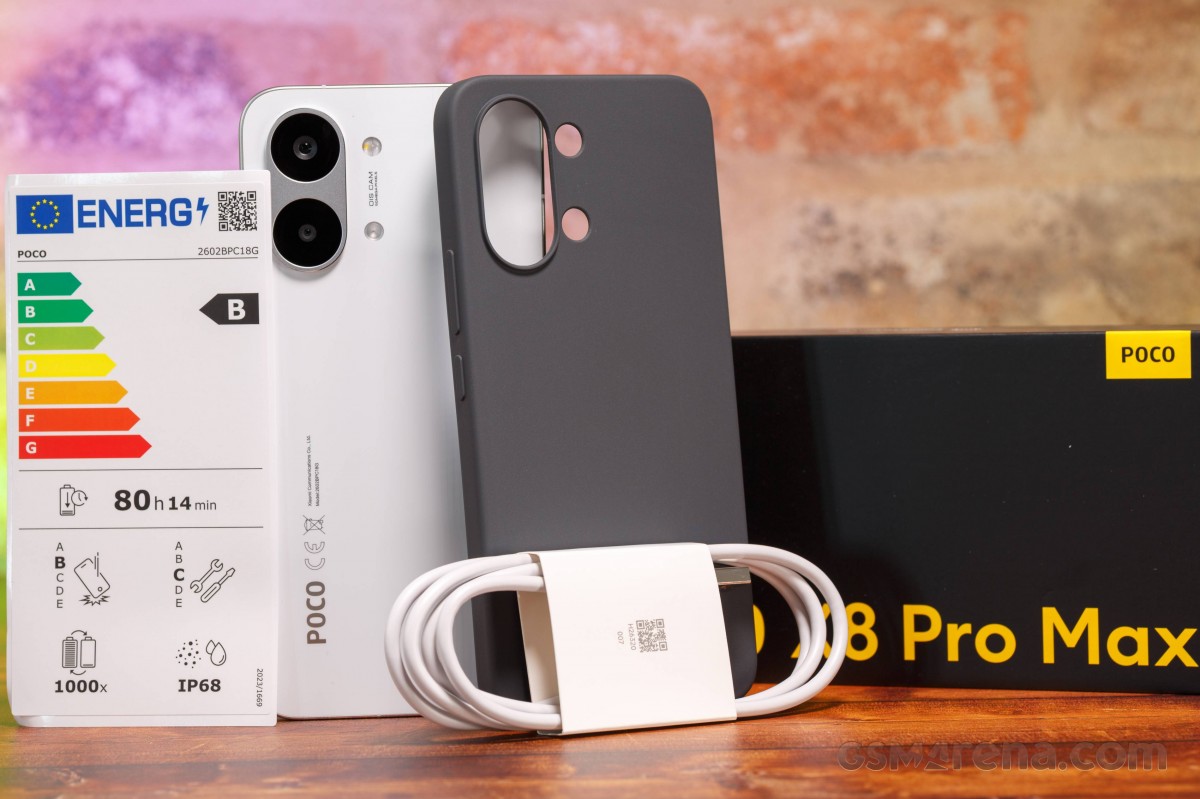
The X8 Pro Max measures 162.9 x 77.9 x 8.2mm and weighs 218g. That is a big, heavy phone, and the battery is the reason. The build itself is reassuring: a metal middle frame with visible antenna lines, a Gorilla Glass 7i front and a fiberglass back that shows practically no flex. It is sealed to IP68 in the EU, with IP69K certification in other markets, so high-pressure water jets and immersion are covered.
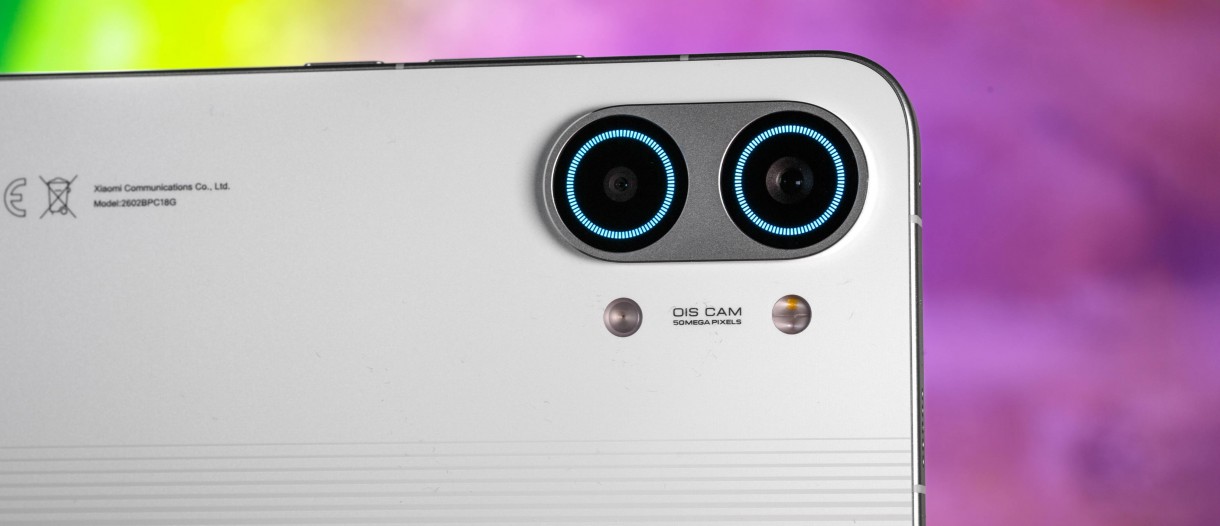
It comes in white, black and blue. GSMArena's white review unit carries a subtle vertical stripe pattern on the back that the other two colours skip. The camera island is small and unremarkable, but the two RGB LED light rings circling the cameras are a signature touch. They work as notification lights, a visual timer in the camera app and a colour-coded charging indicator — red below 20 percent, orange-yellow up to 50 percent, white above that and green when full.
The controls are standard and well placed: volume rocker and power button on the right, a clean front with slim bezels and a centred punch-hole selfie camera. An ultrasonic in-display fingerprint reader sits underneath the screen, and GSMArena found it accurate and fast, including with dirty or wet fingers.
Display: big, bright and HDR-ready
The 6.83-inch AMOLED panel runs at 1280 x 2772 pixels with a 120Hz refresh rate, Dolby Vision and HDR10+ support. Xiaomi rates it at 2,000 nits full-screen brightness and 3,500 nits peak. In GSMArena's lab tests it measured around 840 nits with the manual slider maxed out and the extra-brightness toggle on, and 1,114 nits in auto mode on a 75 percent window, rising to 3,527 nits on a small 10 percent window. Outdoor visibility was never a problem.
The panel also supports 3840Hz PWM dimming and carries TUV Rheinland certifications for low blue light and flicker-free viewing. It decodes Dolby Vision, HDR10, HDR10+ and HLG video, and the Widevine L1 certification means Netflix and similar apps can stream in Full HD. The 120Hz refresh rate is handled by an LTPS panel, so switching is not as granular as on LTPO screens, but most games GSMArena tested that can run above 60fps did so successfully.
Performance: Dimensity 9500s, a step below the flagship
The Dimensity 9500s is a fresh 3nm chip from MediaTek, built on TSMC's N3E process. Its CPU mirrors the Dimensity 9400+ layout — one Cortex-X925 core at up to 3.73GHz, three Cortex-X4 cores at up to 3.3GHz and four Cortex-A720 efficiency cores at up to 2.4GHz — paired with an Immortalis-G925 GPU. It is backed by 12GB of fast LPDDR5X RAM and UFS 4.1 storage in either 256GB or 512GB.
In benchmarks the chip lands close to the Dimensity 9400 and 9400+ rather than the full Dimensity 9500, which is exactly where Poco positions it. GSMArena found plenty of real-world headroom for demanding games and heavy multitasking. Under prolonged load the phone runs a little warm and sheds performance gradually, in a controlled way without sudden dips that would cause in-game stutter. The metal frame gets warm to the touch after sustained loads, but not uncomfortably so.
Battery life: the headline act
The 8,500mAh silicon-carbon battery is the star of this phone. In India the same handset gets an even larger 9,000mAh cell. GSMArena's tests produced an exceptional Active Use Score of 25 hours and 22 minutes — the second-best result in its all-time chart, sitting just below the Realme P4 Power and its 10,000mAh battery, and even beating that phone's video streaming runtime.
Charging is 100W wired via Xiaomi's HyperCharge, with 100W PPS and PD 3.0 support, plus 27W reverse wired charging. GSMArena measured 37 percent in 15 minutes, 65 percent in 30 minutes and a full charge in 52 minutes. Those percentages look modest until you remember how much battery is being filled. Battery-health options include an 80 percent charge cap or an intelligent system that decides when to top up to 100 percent.
Cameras: a strong main sensor, no telephoto
The camera system is practically the same as the standard X8 Pro, inherited in principle from last year's X7 series. The main camera is a 50MP unit with a Light Fusion 600 sensor, f/1.5 aperture and optical image stabilisation, joined by a basic 8MP ultrawide. The front camera is a familiar 20MP sensor, now paired with a wider 21mm lens instead of the 25mm of last year's models — a small change GSMArena welcomed for group selfies.
Daylight photos from the main camera are very good, with vibrant colours, strong dynamic range and plenty of detail, and the 2x zoom holds up well for close-ups thanks to a minimum focusing distance under 9cm. Night shots stay detailed and lively too. The ultrawide is less exciting but still captures good daylight shots. Video goes up to 4K60 from the main camera, with HDR10+ recording available across the cameras, and stabilisation is strong except for a little shake while walking.
The one clear omission is a dedicated telephoto camera. At this price that is an understandable trade-off, but it is the main thing separating the X8 Pro Max from pricier flagships on the camera front.
Software and extras
The phone runs HyperOS 3 on top of Android 16, with Xiaomi's Super Island as the most visible new addition. Connectivity is modern: 5G with dual SIM and eSIM, Wi-Fi 7, Bluetooth 6.0, NFC and an IR blaster. The symmetrical stereo speakers support Dolby Atmos and can be boosted to 400 percent volume, though GSMArena recommends staying at 100 percent for quality. There is no 3.5mm headphone jack, no microSD slot and no FM radio.
One practical note: the European box has no charger in it, though it does include the 6A USB cable needed for the fastest charging and a soft TPU case. Check with your local retailer whether a charger is bundled where you buy it.
Verdict: easy to recommend
GSMArena's verdict is that the Poco X8 Pro Max is exactly the kind of phone that built Poco's reputation: a well-rounded package with very few compromises and a handful of standout features, at a price far from full flagship territory. The battery life is chart-topping, the display is bright and sharp, performance is strong, and the main camera punches above its weight.
The trade-offs are honest ones — some heft, no telephoto, a basic ultrawide — and none of them undermines the package. For anyone looking for maximum value for money, GSMArena calls it a very easy phone to recommend. Readers comparing Xiaomi's own flagships can also read our Xiaomi 18 Pro Max review for the step up in camera hardware and price.
Pros
- Chart-topping battery life from an 8,500mAh battery
- Very bright and sharp 120Hz AMOLED display with Dolby Vision and HDR10+ support
- Strong performance from the Dimensity 9500s chipset
- Very capable main camera with good 2x zoom results
- Fast 100W charging and reverse charging support
- Ultrasonic fingerprint reader, Wi-Fi 7, Bluetooth 6.0, IR blaster
Cons
- Somewhat heavy
- No dedicated telephoto camera
- Ultrawide camera is fairly basic
Sources
What's Your Reaction?
 Like
0
 Dislike
0
 Love
0
 Funny
0
 Angry
0
 Sad
0
 Wow
0