

























































Xiaomi 17T Pro Review: Huge 7,000mAh Battery and Flagship Cameras, but the Launch Price Stings
GSMArena's full review of the Xiaomi 17T Pro finds a strong all-rounder: a MediaTek Dimensity 9500 chipset, a 7,000mAh battery with a 21-hour 41-minute Active Use Score, a 6.83-inch 144Hz OLED display and a Leica-tuned triple camera led by a 50MP main sensor and a 5x periscope telephoto. The verdict is held back mainly by the €900 launch price, which puts it against faster Snapdragon 8 Elite Gen 5 rivals — so the smart move may be to wait for the price to settle.

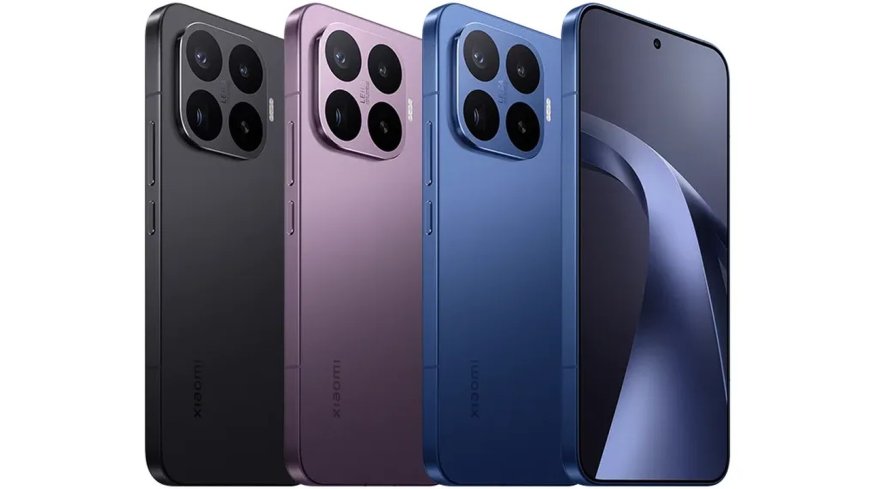
Xiaomi 17T Pro Review: Huge 7,000mAh Battery and Flagship Cameras, but the Launch Price Stings
Xiaomi's T series is back just eight months after its predecessor, and the 17T Pro is the one to watch. GSMArena's full review, published in early November 2026, puts the phone through its lab tests — and the result is a familiar story for this line: flagship-grade hardware in most areas, one clear weakness, and a launch price that makes the recommendation harder than it should be.
The headline upgrades over the Xiaomi 15T Pro are a new MediaTek Dimensity 9500 chipset and a much larger 7,000mAh silicon-carbon battery. The rest of the package is largely carried over: the same 6.83-inch OLED display, the same sturdy IP68 body, and the same versatile Leica camera setup with a 5x periscope telephoto. That is not necessarily a bad thing — last year's phone was already good — but it does mean the 17T Pro's case rests on battery life, performance and price.
Design and display: familiar, and still excellent
The 17T Pro measures 162.2 x 77.5 x 8.25mm and weighs 219g, with Gorilla Glass 7i on the front and back and an aluminum frame. It is dust-tight and water-resistant to IP68, rated for immersion up to 3 metres for 30 minutes. In the hand it feels like the premium device its price suggests.
The 6.83-inch AMOLED display is the same panel as last year, and it was plenty good to begin with: 1280 x 2772 resolution, 144Hz refresh rate, 12-bit colour, Dolby Vision and HDR10+ support, and high-frequency 3840Hz PWM dimming that should suit sensitive eyes. GSMArena measured a little over 1,000 nits on a large white surface in auto mode and nearly 3,500 nits on a 10% patch, so outdoor visibility and HDR punch are both strong. Minimum brightness drops to just 1 nit for use in the dark.
There is one oddity: the 144Hz refresh rate is almost never actually used. The review found the Default mode dials down to 60Hz when idle or watching video, and even forcing higher rates in apps like Chrome did not produce 144Hz in system apps or menus. It is a spec-sheet number more than a lived experience.
Performance: the Dimensity 9500 is fast, but it runs hot
Under the hood sits MediaTek's flagship Dimensity 9500, built on a 3nm process with an all-big-core CPU: one Arm C1-Ultra prime core at up to 4.21GHz, three C1-Premium cores and four C1-Pro cores, plus the Arm G1-Ultra GPU, a ninth-generation NPU and the Imagiq 1190 image processor. Memory is 12GB across the board, with 256GB, 512GB or 1TB of UFS 4.1 storage.
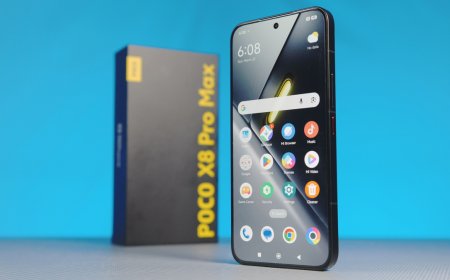
In benchmarks the phone easily outpaces most of its competitors and its predecessor in CPU, GPU and combined workloads. Notably, the Dimensity 9500 here is considerably faster than the down-clocked Dimensity 9500s in the Poco X8 Pro Max. Only two phones in the comparison beat it: the OnePlus 15 and the Realme GT 8 Pro, both running the top-tier Snapdragon 8 Elite Gen 5. For anyone who is not a heavy mobile gamer, that gap is unlikely to matter.
Sustained performance is less impressive. The Dimensity 9500 is hard to keep cool with its main cores ticking above 4.0GHz, and in the CPU stress test performance drops quickly within a few minutes before settling at around 50% of its theoretical peak. Expected for this class of chip, but worth knowing if you push the phone hard for long stretches.
Battery life and charging: the big win, with a small catch
The 7,000mAh battery is the single biggest upgrade, and it shows. GSMArena's tests gave the 17T Pro an Active Use Score of 21 hours 41 minutes — far better than last year's 15T Pro and better than most competitors, with a particularly strong showing in web browsing. Only phones with even larger batteries, like the OnePlus 15 and the Poco X8 Pro Max, last longer.
Charging is a mixed picture. The headline figure is up — 100W wired, from 90W — and 50W wireless charging remains, with a new 22.5W reverse wired charging mode added. But in practice the phone is slightly slower to charge than its predecessor, which GSMArena attributes to the new silicon-carbon battery chemistry. Peak power with the 100W HyperCharge brick reached about 83W briefly before settling around 40–60W. One genuine first for Xiaomi: the phone also supports 100W over compatible Power Delivery chargers with the right PPS profile, where it peaked around 75W. Long-term battery care options include disabling the fastest charging mode, capping charge at 80%, and a smart charging toggle that learns your routine.
Cameras: a proper flagship-level setup
The camera hardware is carried over from the 15T Pro, with a new main sensor. The 50MP main camera uses Xiaomi's Light Fusion 950 sensor — a large 1/1.3-inch imager with optical stabilisation and a 23mm f/1.67 lens — and it captures excellent daylight photos with plenty of detail, though the default Leica Vibrant style leans heavily into saturation, especially with greenery. The more restrained Leica Authentic style is there for anyone who prefers it. The 2x zoom from the main sensor is also very good, nearly matching the 1x shots for detail.
The 50MP telephoto is the star: a 5x periscope (115mm, f/3.0) that delivers proper flagship-level results, sharp and detailed even in dimmer scenes, and still good at 10x. The 13MP ultrawide (12MP effective) is the weakest of the three — decent sharpness and colour, but no autofocus, which limits close-up shooting. The 32MP selfie camera is acceptable rather than impressive, with good colours and dynamic range but less detail than its resolution suggests.
Video is extensive: up to 8K at 30fps or 4K at 120fps from the main camera, 4K60 from the telephoto, HDR10+ across most modes, a capable Pro mode with audio monitoring, a histogram and log recording — though there is no 24fps option. Stabilisation is good overall, with minor imperfections while walking. The ultrawide's low-light video is the weak spot.
Software: HyperOS 3 on Android 16
The phone runs HyperOS 3 on top of Android 16, with five major OS upgrades and six years of security patches promised — so it should reach Android 21. The most visible new feature is Super Island, Xiaomi's take on Apple's Dynamic Island, and there are new AI features plus wider connectivity, including syncing and sharing data with iPhones, iPads and Macs. The review found the interface slightly more refined than HyperOS 2 but essentially the same in daily use.
Alternatives and verdict
This is where the price matters. The 17T Pro launches at €900 for the base 12GB/256GB model — €100 more than last year. At that price it faces the OnePlus 15, Realme GT 8 Pro and Honor 600 Pro, all priced under €800, with faster Snapdragon chips and exceptional battery life. GSMArena's verdict is blunt: the launch price is what stops an outright recommendation.
There are cheaper in-house alternatives too. The Xiaomi 15T Pro offers largely the same hardware minus the bigger battery and newer chip, charges faster, and costs much less. The Poco X8 Pro Max sells for €450 with a toned-down Dimensity 9500s and even longer battery life, while the Poco F8 Ultra sits under €700 with a more powerful chip, similar cameras and better speakers. The Samsung Galaxy S25 FE, around €500, is considerably cheaper but gives up camera quality, battery size and charging speed.
Where the 17T Pro wins is cameras — especially that 5x zoom — plus its display, battery life, charging and build. GSMArena expects the price to fall within a few months of launch, as it usually does with this line. If you are not in a hurry, wait: at a lower price this becomes an excellent all-rounder with flagship-like features and hardware, without flagship-like pricing. If you need a phone now, Xiaomi's own cheaper alternatives deserve a look first. For context on how Xiaomi is positioning its newer flagships, see our earlier report on the Xiaomi 18 Pro's rear display apps.
Xiaomi 17T Pro: pros and cons
Pros
- Premium design with IP68 certification
- Large, bright OLED panel with Dolby Vision
- Excellent camera performance in stills and video, with an impressive telephoto
- Fast wired and wireless charging
- Excellent battery life — 21 hours 41 minutes Active Use Score
- Potent Dimensity 9500 chipset
- Feature-rich HyperOS 3 with five years of major OS updates
Cons
- No autofocus on the ultrawide; selfie camera is just okay
- The 144Hz refresh rate is almost never utilised
- Wired charging is slightly downgraded versus the predecessor
- Disappointing loudspeakers
- Pricey at launch — €900
Sources
- GSMArena — Xiaomi 17T Pro review (introduction, specs, pricing)
- GSMArena — Xiaomi 17T Pro review: lab tests — display, battery life, charging speed, speakers
- GSMArena — Xiaomi 17T Pro review: software and performance
- GSMArena — Xiaomi 17T Pro review: camera
- GSMArena — Xiaomi 17T Pro review: alternatives, pros and cons, verdict
What's Your Reaction?
 Like
0
 Dislike
0
 Love
0
 Funny
0
 Angry
0
 Sad
0
 Wow
0