

























































iPhone 17 Review: The 120Hz Display and 256GB Storage Make This the iPhone to Buy
Apple's base iPhone 17 finally gets the 120Hz ProMotion display, double the base storage and a new 18MP selfie camera, all at the same $799 starting price. GSMArena's full review calls it the easiest iPhone to recommend in the 2025 lineup — we break down the display, A19 performance, cameras, battery life and the few compromises that remain.

iPhone 17 Review: The 120Hz Display and 256GB Storage Make This the iPhone to Buy
For years, buying the standard iPhone meant accepting a compromise. The Pro models got the smooth display, the better cameras and the faster charging, while the base model made do with last year's screen and a storage tier that felt tight from day one. The iPhone 17 changes that bargain more than any vanilla iPhone before it — and, according to GSMArena's full review, it is now "by far the easiest iPhone to recommend in the 2025 lineup." Review roundups record GSMArena's verdict at 4.3 out of 5.
Apple announced the iPhone 17 on September 9, 2025, and it went on sale on September 19, 2025, starting at $799 in the US, €949 in Europe, £799 in the UK and ₹82,900 in India. The price is unchanged from the iPhone 16, but almost everything that matters has moved forward: a larger 6.3-inch display with 120Hz ProMotion, the new A19 chip, a much-improved selfie camera, faster charging and twice the base storage. The question is whether the few things Apple held back — a telephoto camera, serious cooling, fast USB data — are enough to spoil it. After working through the full review, the short answer is no.
Design: familiar, cleaner, and lighter than the Pro
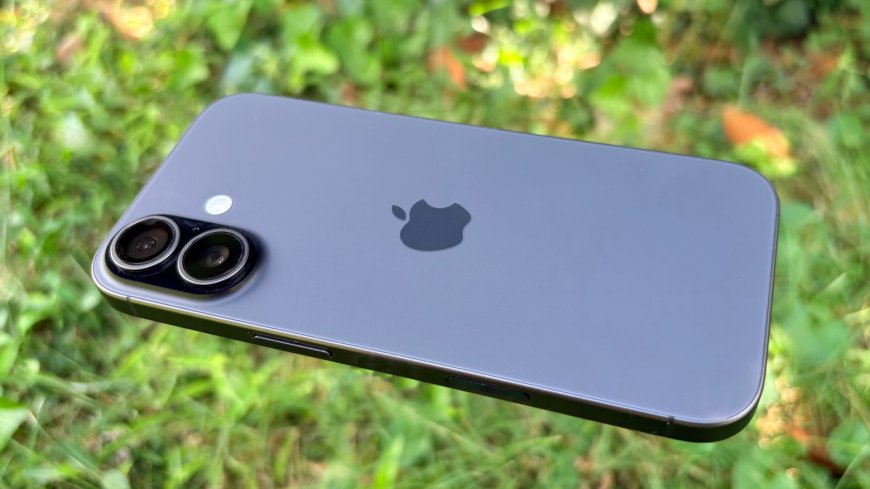
The iPhone 17 is the only member of the 2025 family that keeps last year's design. There is no new glass "window" insert on the back like the Pro models, and that turns out to be a quiet advantage: the all-glass rear with its aluminium frame looks cleaner, and it should be less prone to scratching than the Pro's two-tone back.
Apple refreshed the colours. Alongside the usual Black and White, the iPhone 17 comes in Mist Blue, Lavender and Sage — soft, pastel-like finishes rather than loud ones. The camera island picks up a slightly more intense version of the body colour, with a subtle gradient. The metal frame is colour-matched, the edges are pleasantly rounded, and the phone measures 149.6 x 71.5 x 8.0 mm and weighs 177 grams — just 7 grams more than the iPhone 16, and almost 30 grams lighter than the Pro with the same screen size.
The front and back are glass, with the new Ceramic Shield 2 on the front and a rear panel Apple says is four times more crack-resistant than before. Water resistance is rated IP68, good for immersion in up to six metres of fresh water for 30 minutes. The controls are the usual Apple set: Side button, Camera Control key and Action button, plus volume keys. There is still no fingerprint reader — Face ID remains the only biometric option.
One thing the iPhone 17 skips is the vapor chamber cooling Apple fitted to the Pro models this year. That decision matters under sustained load, as we will see. In the box, Apple includes a braided USB-C cable and a SIM ejector tool — and nothing else. The charger, as ever, is sold separately.
Display: the upgrade that changes everything
The display is the single biggest reason to buy this phone. The 6.3-inch LTPO Super Retina XDR OLED panel grows slightly from the iPhone 16's 6.1 inches, the bezels get thinner, and — at last — the base iPhone gets ProMotion. The refresh rate now adapts all the way from 1Hz up to 120Hz, which also enables an always-on display on the vanilla model for the first time.
Brightness is a more mixed story. Apple quotes a peak of 3,000 nits, and the panel supports HDR10 and Dolby Vision. But in GSMArena's lab tests, the phone sustained just over 1,000 nits in automatic mode, with 824 nits available from the manual slider. The panel can briefly push past 1,700 nits on a smaller window, but only holds it for about two seconds before settling back near 1,000 nits. In practice the reviewers found the screen perfectly usable outdoors, helped by an anti-reflective coating — though they note the iPhone 17 is far from an industry leader on brightness.
What matters in daily use is the smoothness. Scrolling, animations and gaming finally feel like a flagship, and the variable refresh rate means the always-on display sips power by dropping to 1Hz when idle. After years of 60Hz on the base model, this is the upgrade that makes the iPhone 17 feel like a genuinely premium phone.
Performance: the A19 is fast, but it runs hot
The iPhone 17 runs Apple's A19 chip, built on a 3nm process, with two performance cores running up to 4.26 GHz, a 5-core GPU and 8GB of RAM. It is the only 2025 iPhone to use the non-Pro version of the chip, and it sits a step below the A19 Pro models on graphics — but in everyday use, and even in demanding games, it is fast and fluid.
In benchmarks, GSMArena recorded a Geekbench 6 single-core score of 3,680 and a multi-core score of 9,360, comfortably ahead of rival chips on single-threaded responsiveness. Graphics benchmarks put the iPhone 17 behind the Pro duo, as expected, but ahead of the thinner iPhone Air, which shares the same GPU but struggles to cool it.
Cooling is the weak point. Without a vapor chamber, the A19 generates noticeable heat when its GPU is stressed, and the phone loses a significant chunk of performance to thermal throttling under sustained load. The drop is gradual rather than sudden, and GSMArena's retesting in late September 2025 found better sustained numbers than its first run — but the back of the phone still gets hot to the touch during long gaming sessions. For most people this will rarely matter; for heavy gamers, it is the one real performance caveat.
The storage upgrade is easier to celebrate. The base model now ships with 256GB of fast NVMe storage instead of 128GB, at the same starting price, with a 512GB option above it. RAM stays at 8GB, half of what the Pro models now carry, but it is enough for Apple Intelligence features and years of software support.
Cameras: two 48MP sensors and a genuinely new selfie camera
The iPhone 17 keeps a dual-camera system, but both sensors are now 48 megapixels. The main camera uses the same Sony IMX904 sensor as the iPhone 16 — a 1/1.56-inch, 48MP unit with an f/1.6 lens, sensor-shift stabilisation and dual-pixel autofocus. The ultrawide is new: a 48MP Sony IMX972 sensor with an f/2.2 lens, autofocus and macro capability, borrowed from the Pro models.
Photos from the main camera are captured at 24MP by default, and the quality is very good — plentiful detail, accurate colours and well-judged contrast, with occasional over-sharpening visible only when pixel-peeping. The one recurring complaint is dynamic range, which is narrower than the best rivals, with crushed shadows and clipped highlights in high-contrast scenes. A full 48MP mode adds a little extra fine detail for scenes that need it.
There is still no dedicated telephoto lens. The iPhone 17's 2x zoom is a 12MP crop from the centre of the main sensor, and while Apple markets it as optical-quality, it is digital zoom. To its credit, the results look excellent — detailed, with good colour — and for most people it covers the gap. But if zoom photography matters to you, the Pixel 10's 5x telephoto or the iPhone 16 Pro's periscope remain the better tools.
The ultrawide is a bigger step forward than its daylight photos suggest. At 24MP it is not dramatically sharper than the old 12MP unit, and it still struggles with fine detail and dynamic range. Switch to 48MP and the detail improves noticeably, and as a macro camera it excels, producing detailed, colourful close-ups. In low light the ultrawide needs Night mode to clean up noise, but the main camera is excellent after dark, with strong detail, well-preserved light sources and a reliable automatic Night mode.
The star of the camera system is the new 18MP selfie camera, which debuts across the whole iPhone 17 lineup. Its multi-aspect sensor captures full-resolution selfies in either portrait or landscape orientation while the phone is held vertically, and it brings autofocus and optical stabilisation to the front camera for the first time. Selfies are detailed, with natural skin tones and plenty of texture, and the camera records 4K video at 60 frames per second with Dolby Vision — as do all three cameras on the phone.
Video is where the iPhone 17 is hardest to fault. GSMArena calls the main camera's 4K video excellent, with impressive detail, wide and well-balanced dynamic range, accurate colours and superb stabilisation across all cameras. Low-light video is genuinely great, and the ultrawide holds up better in video than in stills. For anyone who shoots a lot of video, this is the strongest argument for the iPhone 17 over its Android rivals.
Battery life and charging: a solid day, finally faster top-ups
The 3,692mAh battery is only slightly larger than the iPhone 16's, and GSMArena's Active Use Score lands just under 15 hours — very close to its predecessor. The distribution has shifted a little: web browsing endurance dipped slightly, which the reviewers attribute to the new 120Hz display, while video streaming and gaming held up well. For a phone this size, that is great battery life, and it comfortably beats the thinner iPhone Air.
Charging finally improves. The iPhone 17 supports the newer AVS charging standard over USB Power Delivery, and Apple promises 50 percent in 20 minutes with its new 40W Dynamic Power Adapter. GSMArena's own tests with a compatible third-party AVS charger reached about 40 percent in 20 minutes and 63 percent in 30 minutes, with a full charge taking around 1 hour and 25 minutes — or about 1 hour and 14 minutes with Apple's own adapter. That is a clear step up from the iPhone 16, even if it still trails the fastest-charging Android phones.
Wireless charging is now up to 25W over MagSafe and Qi2 — 15W in China — with Apple promising 50 percent in 30 minutes on a compatible charger. Reverse wired charging at 4.5W is also supported, handy for topping up accessories.
Software: iOS 26 and the Liquid Glass gamble
The iPhone 17 ships with iOS 26, the biggest visual overhaul of Apple's mobile operating system in years. The new Liquid Glass design language gives the interface a translucent, crystal-like look, and system apps from Photos to Safari to the Camera app have been redesigned around it. There are genuinely useful additions too: Call Screening for spam calls, Hold Assist for phone queues, a dedicated Games app, Live Translation across Messages, Phone and FaceTime, and Visual Intelligence, Apple's answer to Circle to Search.
GSMArena's verdict on the software is mixed. The new features are welcome, but the Liquid Glass redesign "lacks polish" — some elements look chaotic, buttons and controls need rethinking, and the once-famous cleanliness of iOS has taken a hit. Apple is also still behind on AI, the reviewers note, and file management remains a weak spot. For existing iPhone users these are familiar frustrations rather than deal-breakers, and the OS remains stable and well supported — iOS 26 has already rolled out to iPhones as old as the iPhone 11.
How it stacks up against the competition
At $799, the iPhone 17 faces strong rivals. Samsung's Galaxy S25 is lighter and cheaper, with a 120Hz LTPO display, a 3x telephoto lens and DeX — but the iPhone answers with better battery life, stronger video and Apple's ecosystem extras like satellite messaging. Google's Pixel 10 brings a 5x telephoto and a cleaner Android experience with long support, winning on zoom and stills; the iPhone is the safer pick for video and battery life. The OnePlus 13s undercuts it on price with a Snapdragon 8 Elite chip and a 5,850mAh battery, but cannot match the iPhone's ultrawide, selfie camera or video. And within Apple's own lineup, the discounted iPhone 16 Pro offers a titanium build, LiDAR and a 5x periscope — but with a smaller battery, an older chip and half the base storage.
None of those alternatives makes the iPhone 17 look like a bad buy. It is the most balanced phone in Apple's 2025 lineup, and the reviewers expect it to be by far the most popular.
Verdict
Apple finally gave the base iPhone the two upgrades that matter most in daily use: a premium 120Hz LTPO display with thin bezels and usable base storage. Add a meaningfully better selfie camera, an upgraded 48MP ultrawide with macro, and real progress on charging speed, and this is the best-rounded vanilla iPhone Apple has ever made.
It is not flawless. There is no telephoto camera, the A19 heats up and throttles under sustained load, the display's brightness is capped at around 1,000 nits for sustained use, the speakers are slightly quieter than last year's, the USB-C port still runs at USB 2.0 speeds, and iOS 26's Liquid Glass needs polish. But as GSMArena concludes, none of the downsides are actually deal-breakers — and a phone with a Pro-grade screen, Pro-grade performance, a capable camera and usable storage has never been this cheap.
If you are buying an iPhone in 2025 and you do not need a telephoto lens or Pro video tools, this is the one to buy. Review roundups record GSMArena's verdict at 4.3 out of 5, with other major outlets rating it even higher — Tom's Guide and TechRadar both awarded it 4.5 out of 5.
Pros and cons
Pros
6.3-inch LTPO 120Hz OLED display with always-on, HDR10 and Dolby Vision; 256GB base storage at an unchanged starting price; faster wired and 25W wireless charging; light, comfortable build with thinner bezels and IP68 protection; great battery life for its size; excellent video quality across all cameras; dependable main and ultrawide cameras; outstanding 18MP selfie camera with autofocus and stabilisation; modern connectivity with Wi-Fi 7, ultra-wideband and satellite SOS.
Cons
No dedicated telephoto camera; gets hot and throttles under sustained load; display brightness is capped at around 1,000 nits for sustained use; speakers are slightly quieter than the iPhone 16; USB-C port still runs at USB 2.0 speeds; iOS 26's Liquid Glass design lacks polish.
Sources
GSMArena — Apple iPhone 17 review (full review, published September 26, 2025): https://www.gsmarena.com/apple_iphone_17-review-2886.php
Next Interrupt — Apple iPhone 17 review roundup (GSMArena 4.3/5; TechRadar and Tom's Guide 4.5/5; Geekbench 6 scores): https://www.nextinterrupt.com/hardware/products/apple-iphone-17-19219e8e
The Tech Scorecard — Apple iPhone 17 critic scores and review summaries: https://www.thetechscorecard.com/product/iphone-17/
What's Your Reaction?
 Like
0
 Dislike
0
 Love
0
 Funny
0
 Angry
0
 Sad
0
 Wow
0