























































AI Data Centers Are Building Their Own Natural Gas Plants as Grid Waits Stretch to a Decade
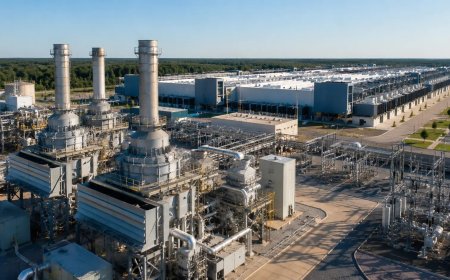
US data center developers have announced more than 100 behind-the-meter natural gas power plants totalling over 115 gigawatts, MIT Technology Review reports, as waits for a grid connection stretch up to a decade. Only 4.9 GW is operating so far, but if every announced plant is built, the rush could add 345 million tons of carbon dioxide a year.
AI Data Centers Are Building Their Own Natural Gas Plants as Grid Waits Stretch to a Decade
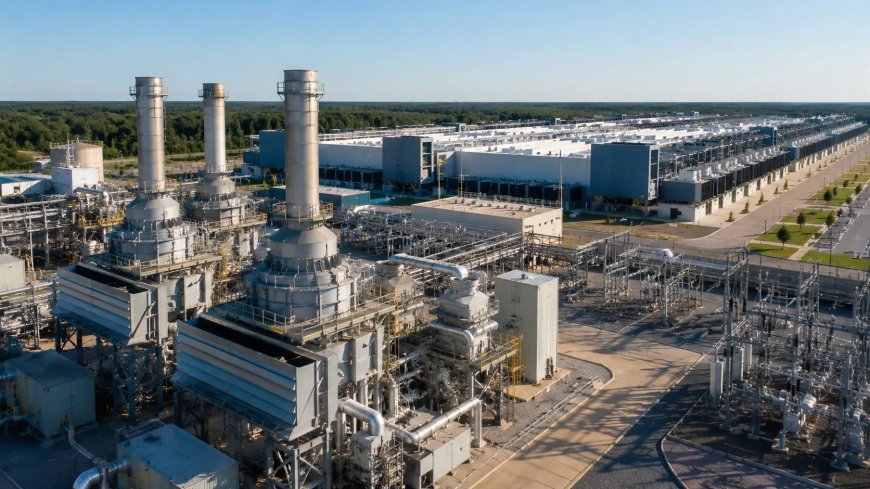
One of the biggest obstacles to opening a new data center is no longer land or chips. It is the wait to plug into the electric grid — a process that can drag on for as long as a decade. Rather than stand in line, a growing number of developers are building their own power plants instead, and most of them burn natural gas.
MIT Technology Review reported on 24 November 2026 that data center developers in the United States have announced plans for more than 100 of these off-grid, or behind-the-meter, gas power plants. Together they would add over 115 gigawatts of capacity — more than double the peak electricity demand of the whole state of California. The figures come from Cleanview, a market intelligence firm that tracks power infrastructure, and the vast majority of the announcements have arrived since the start of 2025.
It is a striking shift, and it is happening fast. But for now, the announced boom is mostly still on paper: as of October 2026, only 4.9 gigawatts of behind-the-meter gas capacity tied to data centers was actually operating, with another 15.8 gigawatts under construction, according to Cleanview's data.
Speed is the reason developers are going off-grid
Connecting a large new facility to the grid starts with a request to a local utility or a regional grid operator. That sets off years of studies into what the existing network can handle, followed by upgrades that can include new transmission lines and larger transformers — costs the developer may partly have to shoulder. Waiting that process out can take the better part of a decade.
Building a private power plant is generally the more expensive option. But for companies racing to bring AI computing online, time has become worth more than the extra cost. "The biggest motivator for on-site power right now from data centers is speed," Musfika Mishi, an associate at energy consultancy BloombergNEF, told MIT Technology Review.
The facilities are called behind-the-meter because they sit on the customer's side of a utility meter, feeding the building directly instead of drawing power through a grid hookup. That does not always mean cutting the cord entirely. Some operators plan to run their own plants only until a grid connection finally arrives, using them as backup afterwards.
"It's really just a very expensive way to bridge that maybe five-to-seven-year timeline gap until these data centers can get a grid connection," said Brendan Pierpont, director of electricity at the think tank Energy Innovation, in the same report.
The best-known example started in Memphis
The most famous case is Elon Musk's xAI campus in Memphis, Tennessee, which has run dozens of natural gas turbines since 2024, some of them reportedly without permits. At the time it was a rarity that drew scrutiny from regulators, and it remains the subject of ongoing legal battles. Two years on, what looked like an exception has become a pattern.
The trend reaches well beyond one company. Bloomberg News reported in August that projects in BloombergNEF's data are spread across 22 states, with more than a third in Texas, and that OpenAI and Anthropic are among the backers. The same reporting described a site in Pecos County, Texas, that Cleanview identified as being developed by Amazon, and a gas plant Chevron is building for Microsoft nearby. Anthropic has separately committed billions of dollars to gas generators for its own AI data centers, as previously reported on Innopark IT.
The climate cost could be enormous
The shift raises serious questions about emissions — and about how long these plants will keep running once they exist. Even when a gas plant is pitched as a temporary bridge, the money spent building it creates an incentive to keep using it.
"Even though data centers say that it is a grid-bridging solution, the probability that it is going to be in use much longer is a real risk, and that leads to fossil fuel lock-in," Mishi said.
BloombergNEF is tracking 181 gigawatts of announced on-site natural gas projects at data centers worldwide, with 90 percent of that capacity in the United States. Its analysis found that if every announced behind-the-meter gas plant for US data centers were built and run, they would emit about 345 million metric tons of carbon dioxide equivalent a year by 2035. That is 152 million metric tons more than if those data centers drew power from the grid instead — a difference larger than the total annual emissions of the Netherlands.
There is another wrinkle. Large grid-scale gas plants generally use combined-cycle turbines, which capture waste heat to generate extra electricity. Very few of the planned behind-the-meter facilities will use them, Mishi said, which means these off-grid plants will probably produce more greenhouse gas per unit of electricity than other gas generation.
The pressure is already showing up in the tech giants' own climate numbers. Meta's emissions rose 45 percent over the previous year, according to the company's recently released 2026 Sustainability Report, and the company said it is reevaluating its 2030 net-zero goal. Plans for Meta's data center in Louisiana have expanded so much that the local utility went from three planned natural gas plants to 10, MIT Technology Review noted in its climate newsletter, and Meta said that when the grid cannot deliver power "on the necessary timeline," it will consider building its own on-site generation.
Going off-grid does not protect everyone else's bills
It might seem logical that data centers supplying their own power would take pressure off the grid and off household energy bills. The researchers MIT Technology Review spoke to say it does not work that way. More demand for natural gas can push gas prices higher, which can raise costs for the roughly 60 percent of American households that use gas for heating and cooking — and the effect can spill over into electricity prices too.
"These data centers want a lot of power, and they want it fast, and the grid is not well equipped to provide that," said Matthias Fripp, director of global policy research at Energy Innovation. "There are potentially good solutions and bad solutions … Rushing off the grid and putting in your own behind-the-meter gas is probably a bad way, because it's still going to raise other people's bills, and it's not great for the environment."
There are ways to soften the impact. Pairing gas plants with on-site renewables or energy storage could limit how often the gas units need to fire up, Mishi said, although the economics of building several energy sources at once can be tricky. Fripp's team has also found in a recent study that building renewables and storage to meet rising electricity demand could be reliable and cheaper than relying on fossil fuels.
None of that changes the immediate picture. The grid is struggling to keep pace with AI's appetite for power, and developers have decided they would rather build their own supply than wait. Whether the 115 gigawatts of announced gas plants all get built is far from certain — but the direction of travel is now clear, and it will shape the grid, and its climate impact, for decades.
Sources
What's Your Reaction?
 Like
0
 Dislike
0
 Love
0
 Funny
0
 Angry
0
 Sad
0
 Wow
0