































































Microsoft Perception Is Now Generally Available, Bringing AI Agent Teams to Security Operations
Microsoft has made Perception, its agentic security platform, generally available at Ignite 2026. The system coordinates red, blue and green teams of AI agents inside Microsoft Defender, with its Triage Agent able to handle about 80 percent of alerts in a typical Defender queue.
Microsoft Perception Is Now Generally Available, Bringing AI Agent Teams to Security Operations
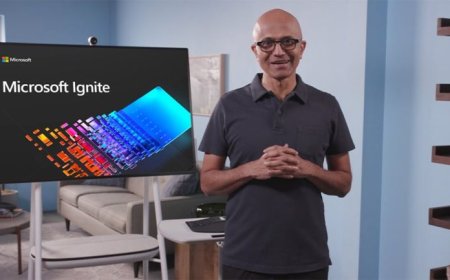
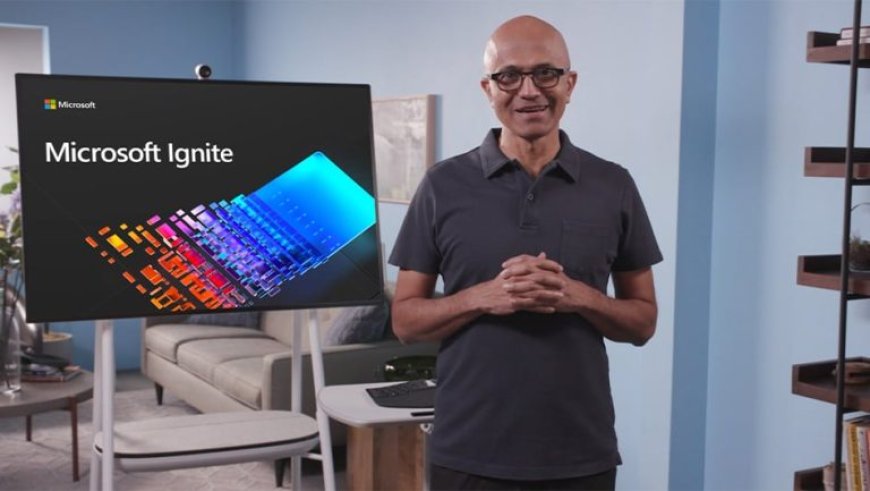
Microsoft has moved its agentic security platform out of preview. At Ignite 2026 in San Francisco on 17 November, the company announced that Project Perception is now Microsoft Perception and is generally available, giving security teams a coordinated team of AI agents that works inside Microsoft Defender.
The announcement, delivered by chief executive Satya Nadella, is one of the headline security moves from this year's Ignite conference. Perception was first unveiled in July 2026 and had been running in public preview inside Defender since August. In under four months it has gone from a concept to a generally available product, a pace that reflects how quickly Microsoft is pushing AI into security operations.
What Microsoft Perception actually does
Perception is built around a simple idea: instead of individual AI features bolted onto existing tools, teams of specialised agents work together across the whole security lifecycle, guided by playbooks that target a specific outcome. Security teams set the priorities and approve critical actions, while the agents do the investigation and coordination.
The agents are organised the way security teams already think about defence. Red team agents find and validate potential paths to compromise. Blue team agents triage alerts, investigate attacks and turn threat intelligence into detections. Green team agents identify the exposures that matter most and coordinate remediation. Together they connect discovery, investigation and action in a continuous cycle, with people staying in control.
The Triage Agent and the alert problem
The most eye-catching claim from the announcement concerns alert volume. Microsoft says its Triage Agent can now triage about 80 percent of alerts in a typical Microsoft Defender queue, reaching a verdict and explaining its reasoning so analysts can review the evidence and act quickly. The figure comes from Microsoft's analysis of approximately eight million alerts across its Defender workloads, and the company stresses it is an aggregate figure, not a guaranteed rate for any individual customer.
For teams drowning in alerts, that matters. A phishing campaign powered by the EvilTokens phishing-as-a-service kit took roughly fourteen days to run its course a year ago; more recently, Microsoft Threat Intelligence observed comparable activity unfold in just 85 minutes, expanding from 10 targeted users to 3,000. Attackers are using AI to move faster and operate in parallel, and the Triage Agent is Microsoft's answer to that speed.
Karsten Bode, enterprise IT security architect at TÜV SÜD, said the agent gives analysts a helpful foundation for faster, more effective decisions. Once triage narrows the focus to a smaller set of confirmed threats, the Attack Investigation Agent takes over, reasoning across endpoints, identities, email, Active Directory and cloud resources to reconstruct the attack timeline, identify what was compromised and recommend a prioritised response, such as containing an account or isolating a device.
Four blue team agents generally available
Four blue team agents are now generally available: Alert Triage, Attack Investigation, Detection Authoring and Threat Intelligence. The Threat Intelligence Agent can turn external threat articles into structured findings, extracting attacker behaviours, techniques and indicators. A Detect emerging threats playbook then lets the Detection Authoring Agent translate that intelligence into tenant-aware detection recommendations, tested against historical tenant data to estimate alert volume before anything is switched on.
Perception also reaches beyond Microsoft's own stack. The Attack Investigation, Detection Authoring and Triage Agents can now reason across signals from specific third-party vendors, including Okta, AWS and Salesforce, with support for more vendors coming in the months ahead.
Red team testing and exposure management
On the offensive side, the Recon Agent is generally available, while the Web App Pen Test Agent has entered preview. The pen test agent examines an authorised web application from an attacker's perspective, covering authentication, APIs, injection and business logic, and provides evidence, affected endpoints, severity and proofs of concept for each weakness it confirms.
In an independent benchmark conducted with Incalmo, the Web App Pen Test Agent achieved a 31.0 percent average task solve rate, about twice OpenAI Codex's 15.2 percent, while staying within specified testing boundaries in 91 percent of safety-constrained tests. The Protect web app playbook then extends the workflow from finding weaknesses to reducing exposure, with the Risk Reduction Agent recommending targeted remediations such as web application firewall rule changes in Azure Front Door.
Exposure management gets its own focus too. The Posture Prioritization agent is generally available, and a Reduce exposure risk playbook lets the Risk Reduction Agent assess the available paths for reducing risk and recommend the right response, coordinating patching through Microsoft Intune when a permanent fix is ready, or shielding vulnerabilities with targeted protection while teams work towards one.
Code scanning, AI agent risk and the wider Ignite security picture
Perception also draws on Codename MDASH, Microsoft's multi-model system for finding deep vulnerabilities in source code. At Ignite, MDASH can scan larger repositories more efficiently, and expanded support for the MAI-Cyber model family, including MAI-Cyber-1.1-Flash and MAI-Cyber-2 in preview, is intended to improve efficiency while maintaining the quality of findings. Teams can run MDASH from the Defender portal and command line, or inside CI/CD workflows such as GitHub Actions and Azure DevOps.
Microsoft is also extending agentic security to the AI agents themselves. Together with Microsoft 365 E7, Perception brings signals, context and registry data into a consistent view of the agent landscape, helping teams investigate an agent's access and behaviour and identify the changes that reduce the most risk. New AI Readiness Initiatives in Perception, in preview in January 2027, will turn Secure Now guidance into actionable plans with shared progress tracking.
For day-to-day operations, defenders can start Perception playbooks from ITSM, SIEM or SOAR tools through APIs and Model Context Protocol support, and bring agent sessions and artefacts back into those workflows. New usage dashboards and a cost calculator provide visibility into agent activity and spending. The integrated security operations centre in Microsoft Defender is also generally available for its core capabilities, bringing SIEM, user and entity behaviour analytics, threat intelligence and threat protection together in one place.
Why this matters
Security operations centres have spent years adding automation to a workflow that was still fundamentally human-paced: one alert, one investigation, one response at a time. Perception is Microsoft's bet that the next step is not faster alerts but a workforce of agents that can triage, investigate and remediate in parallel, with analysts supervising outcomes rather than processing queues.
Whether that bet pays off will depend on how much security teams trust agents to close alerts and recommend fixes without asking first. Microsoft's answer is transparency: the Triage Agent explains its reasoning, detections are tested before deployment, and critical actions stay subject to human approval. One point worth noting is that some of Microsoft's own product pages still described Perception as a preview in the days after the Ignite announcement, so organisations planning a rollout should confirm the latest status in the Defender portal.
For readers following Ignite 2026, Perception sits alongside the company's other major announcements from the event, including the MAI Code 2 coding models now generally available in GitHub Copilot. Read our coverage of that launch here: Microsoft Unveils MAI Code 2 Coding Models and Expands Copilot Fusion at Ignite 2026.
Sources
- Microsoft Tech Community — What's new with Microsoft Perception at Ignite 2026
- Microsoft Security Blog — Security for the agentic era, powered by Microsoft Perception
- SecurityWeek — Microsoft Takes Perception Agentic Security Platform Out of Preview
- Microsoft News — Microsoft Ignite 2026: Empowering human ambition, intelligence and trust
What's Your Reaction?
 Like
0
 Dislike
0
 Love
0
 Funny
0
 Angry
0
 Sad
0
 Wow
0