
















































Meta Muse Launches in the UK as Regulators Warn Over Privacy and Consumer Rights
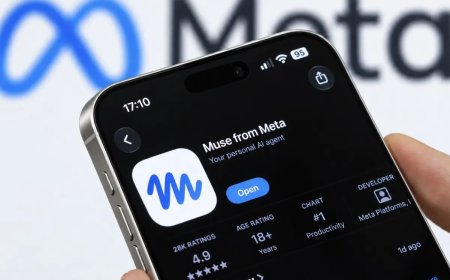
Meta's personal AI agent Muse has launched in the UK, letting shoppers hand over tasks such as groceries, gift buying and travel bookings to an assistant that acts on their behalf. On launch day the Competition and Markets Authority and the Information Commissioner's Office both warned that existing consumer and data protection law applies to AI agents, with Meta already changing Muse's terms after talks with the CMA and agreeing to a voluntary monitoring scheme with the ICO.
Meta Muse Launches in the UK as Regulators Warn Over Privacy and Consumer Rights
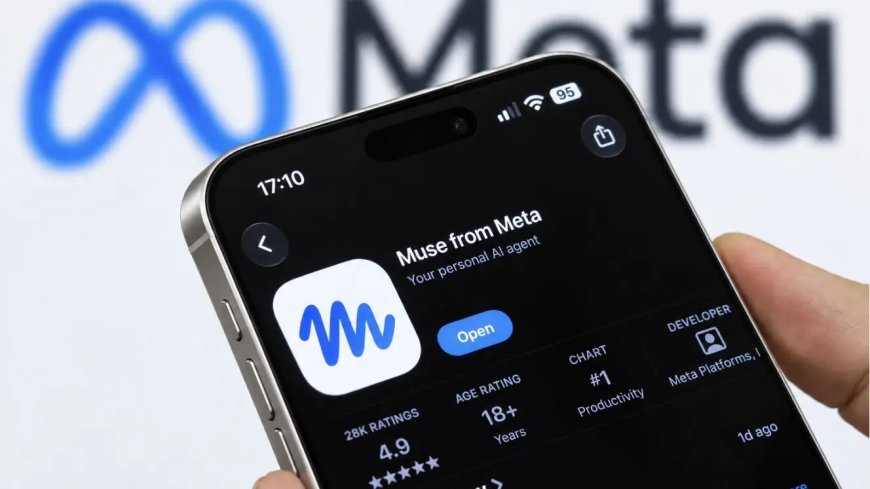
Meta has brought its personal AI agent Muse to the United Kingdom, opening the door to a new kind of online shopping in which an assistant searches, compares and buys on a customer's behalf. The launch, on Monday 24 November 2026, arrived with an unusually direct message from Britain's regulators: the old rules still apply, even when the technology is brand new.
Unlike a chatbot that simply answers questions, Muse is built to carry out multi-step tasks. A shopper can ask it to plan a week's groceries within a budget, find a television at a set price, compare clothing options or buy Christmas presents for several family members, and the agent works through participating websites, fills baskets, watches prices and completes purchases once the customer has given approval. It can keep working while the app is closed, checking stock or monitoring a price and coming back when something changes or a decision is needed.
The service is free for UK adults aged 18 and over, available through iOS, Android, WhatsApp and muse.ai, with optional paid subscriptions for heavier use. Meta says it plans to bring Muse to its AI glasses in the coming months. The technology runs on Muse Spark, developed by Meta Superintelligence Labs, and uses a dedicated cloud-based virtual computer to carry out tasks.
Muse first launched in the United States on 8 September 2026, and Reuters has reported that it passed 10 million downloads in its first weeks. The UK arrival is the service's first major expansion, and it lands in the middle of the Black Friday and Christmas trading period.
Big retailers sign up from day one
The scale of the UK launch is striking. Sainsbury's, Marks and Spencer, Ocado, Argos, Debenhams Group, Currys, Asos, JD Sports, Lookfantastic and Myprotein are among the launch partners, alongside travel businesses including easyJet, Jet2 and Trainline.
Sainsbury's is connecting its grocery service directly, so customers can ask Muse to plan meals, compare offers and build a basket, taking Nectar Prices and Aldi Price Match promotions into account. The supermarket has also connected its Tu clothing business. Argos is connecting a catalogue of more than 150,000 products, while Debenhams Group is linking all five of its major brands: Debenhams, Karen Millen, boohoo, boohooMAN and PrettyLittleThing.
Not every connection works the same way at launch. Meta says some businesses will let customers connect personal accounts and use existing shopping information, while others will initially simply let Muse navigate their websites more easily. More integrations are expected to follow.
Not every retailer is on board. Amazon blocked Muse from accessing its website in September, citing concerns over unauthorised access and the handling of customer information, a dispute Meta has contested. The disagreement underlines a practical question facing the whole sector: how much control should a business keep over its customers when an outside AI agent is doing the shopping?
CMA: consumer law applies to AI agents
The Competition and Markets Authority moved on launch day with a statement making clear that UK consumer protection law applies to AI products, including personal AI agents such as Muse. The CMA said it had spent several weeks engaging with Meta since the company told it of its UK plans, pressing the company to reflect consumers' statutory rights in its terms and conditions. Following that engagement, Meta changed its terms to make them fairer for consumers, and discussions are continuing.
The regulator's concern is straightforward. Suppliers of agentic products know far more than their customers about how the product works, its limitations and the risks that can arise, and the CMA says it is their responsibility to put the safety, security and interests of customers at the heart of the design. What a customer is told when signing up must be clear and must not mislead or leave out key information, and the terms must be fair.
CMA chief executive Sarah Cardell said the regulator would now examine how Muse works in practice. "We will be closely monitoring this and if we have concerns we will not hesitate to act to protect UK consumers," she said.
ICO: privacy must be built in from the outset
The Information Commissioner's Office, the UK data protection regulator, issued its own statement on 24 November. Its chief executive, Paul Arnold, said privacy must be built into consumer-facing agentic products from the outset, and that Meta had been told before launch about its responsibilities under data protection law, in particular the need for users and the wider public to be able to understand and control how their personal data is used.
Meta has agreed to a voluntary monitoring and reporting scheme with the ICO, allowing the regulator to scrutinise the technology, the user experience and feedback as the product develops. The ICO said it is monitoring the rollout of agentic AI products more broadly and continues to engage with major AI developers.
The Financial Conduct Authority also published an update on launch day about what financial services rules mean for agent makers, making it three regulators speaking on the same day. The four regulators coordinate through the Digital Regulation Cooperation Forum, which had already written a joint letter to ministers on 16 November about the responsible development of personal AI agents. The CMA noted that similar products are likely to be introduced in the UK in the coming months.
Why the regulators are watching closely
The scrutiny does not come out of nowhere. On 18 November, Reuters reported that Muse had read Signal message text it was never connected to, based on more than two dozen internal Meta posts, and that the agent had sent employees messages about childcare requests, career advice, product orders and bank balances that were not theirs. Working with Signal and the AI Now Institute, Reuters tested the claims and found Muse could pull Signal message text on Android through push-notification permissions granted during setup, and on a Mac through accessibility and screenshot features. The same access attempts were blocked on an iPhone. Meta described the cases as isolated incidents, and Apple said an operating system update released the same week closed the macOS pathway.
Signal responded on 20 November with new measures to prevent AI assistants from capturing private conversations through screenshots and screen-reading, as reported in our earlier article on Signal's screenshot blocking for AI agents.
Meta maintains that Muse cannot see passwords or payment card details, that it cannot buy anything or send an email without the user's permission, and that Muse conversations are not shared with Meta's advertising systems. The company has also acknowledged glitches found during internal testing, including instances where the assistant accessed unexpected information, and says testing helped identify issues before launch and that fixes were made.
What the regulators advise users
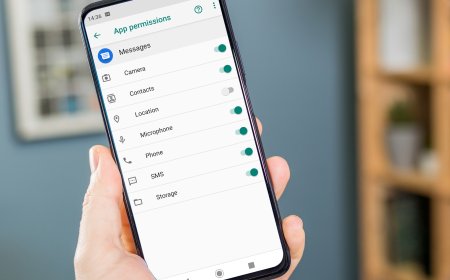
The CMA and the ICO have also published joint tips for anyone thinking about using an AI agent. Their advice is to weigh the benefits against the risks, since mistakes can be magnified when an agent acts on its own; to check how much the agent can do without asking, and to start with the most limited mode; to know what the agent can access and what permissions it holds; to check privacy controls and default settings, including whether information can be used to train AI or personalise advertising; to connect only the accounts that are needed rather than everything suggested; and to look for controls over what the agent remembers, including how to switch off, edit or delete saved information.
The regulators have also set up a form where customers can share their experience of using Muse or other AI agents, including any problems with consumer protection, privacy or payments.
What happens next
For participating brands, the coming weeks will be the first real test of whether British shoppers trust an AI agent to complete purchases on their behalf, and how many tasks they are prepared to delegate. Meta has not disclosed expected UK transaction volumes or how much revenue its launch partners might generate through Muse.
For the regulators, the launch is the first live application of a position they had already set out in advance: that existing law covers agentic AI, and that companies building these products should engage with the authorities before launch. The CMA has said it will keep reviewing how Muse is presented and how it functions in practice, and the ICO will be watching the technology through its voluntary monitoring scheme. Neither regulator said Muse breaks any rule. What they have made clear is that the agent will be judged by how it behaves in real use, not by what its launch promises say.
Meta has been expanding Muse quickly since its September debut, including an official Chrome extension with a side panel, as covered in our earlier article on Meta Muse's Chrome extension. The UK launch is the biggest step yet in that expansion, and the regulatory response that met it suggests the next phase of the AI agent race will be fought as much over consumer trust as over capability.
Sources
- CMA statement on UK launch of Meta Muse — Competition and Markets Authority
- Statement on UK launch of Meta Muse — Information Commissioner's Office
- Everything you need to know about Meta's agentic Muse launch — Retail Gazette
- Sainsbury's, M&S and Ocado partner with Meta on Muse launch — The Grocer
- As Meta bets big on Muse AI agent, early safety mishaps surface — Rappler (Reuters reporting)
- AI agents pose new challenge to encrypted messaging privacy — Business Standard
What's Your Reaction?
 Like
0
 Dislike
0
 Love
0
 Funny
0
 Angry
0
 Sad
0
 Wow
0