











































US Lawmakers Blast Jensen Huang's Return to Nvidia as "Reckless" and Demand Answers on China Chips
Lawmakers from both parties have sharply criticised Nvidia's decision to reinstate Jensen Huang as chief executive, calling the move reckless and a national security risk, and vowing tougher export controls and a round of congressional hearings. President Donald Trump, who said he personally urged the board to bring Huang back, defended the decision — but even many of his fellow Republicans are not buying it.

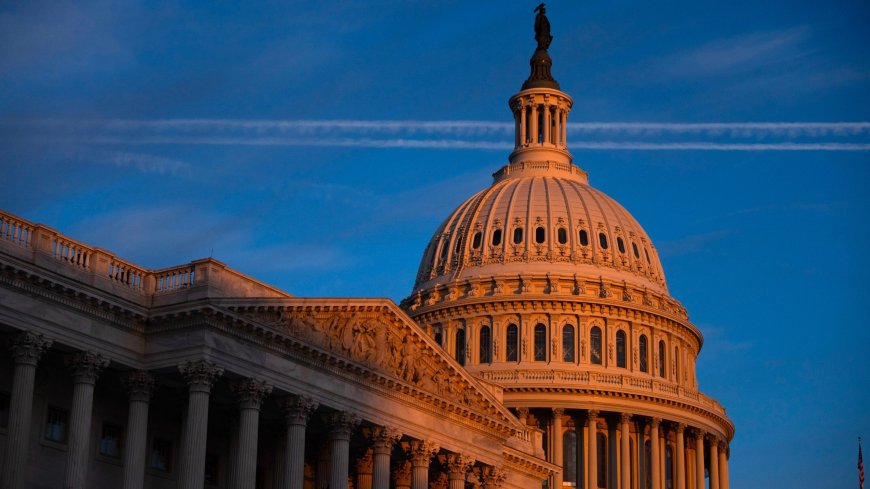
US Lawmakers Blast Jensen Huang's Return to Nvidia as "Reckless" and Demand Answers on China Chips
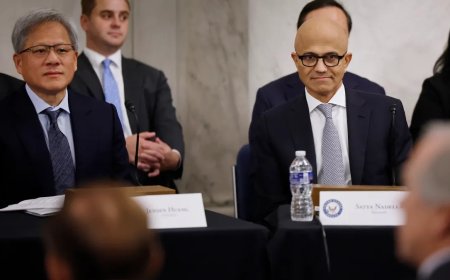
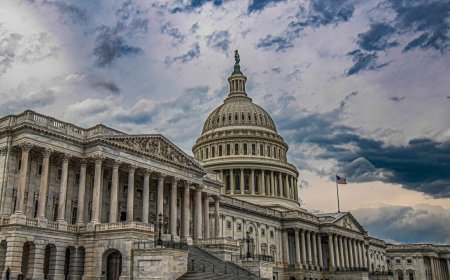
Jensen Huang is back at the top of Nvidia, just 11 days after resigning as chief executive. But the welcome he received in Washington could hardly have been colder. Lawmakers from both parties spent Tuesday denouncing his reinstatement, questioning the Trump administration's role in it, and promising a wave of hearings and tougher laws to choke off China's access to advanced American chips.
President Donald Trump, who said he personally spoke to Nvidia's board to encourage Huang's return, has defended the decision as the right one. On Capitol Hill, even many of his fellow Republicans disagree — and they are saying so loudly.
A stunning reversal, 11 days later
Huang resigned on November 12, after reports of extramarital affairs, including one with Alice Huang, a former executive at Singapore-based cloud firm Megaspeed who has been accused of having ties to Chinese intelligence. China has denied that Alice Huang is a spy, and Megaspeed has said she formally left the company in August 2025.
On Monday, Nvidia's board reversed course and reinstated Huang, saying it had "received input from senior levels of the United States government" and was confident that his return "poses no national security risk." The board also said it was "satisfied with respect to Mr. Huang's candor and ability to lead NVIDIA" — even though its own independent committee is still investigating reports that Huang was targeted by a foreign intelligence effort. Reuters also reported, citing a source, that Huang told the board he had violated the company's code of conduct.
Trump took credit for the turnaround in a long interview with CNBC on Monday, calling Huang a "national treasure" and saying the board had asked the administration whether there was a national security problem. "And after a lot of research ... we said, 'No, it's not a problem,'" he said. Reuters reported that Trump and Vice President JD Vance intervened in part because they viewed Huang as a protector of US-made open-weight AI models, and that Attorney General Todd Blanche told them over the weekend that Huang did not pose a national security risk.
The market cheered the news at first — Nvidia shares surged on Monday — then fell back more than 7 percent on Tuesday as the political backlash gathered force.
"Reckless" — Democrats demand answers
Senator Elizabeth Warren of Massachusetts, the top Democrat on the Senate Banking Committee, called the decision "reckless" and said Huang, Nvidia's executives and its board still owed Congress answers about the company's compliance with US export controls. "The Trump Administration also needs to explain to Congress what 'input' was given and by which senior officials in the United States government to support his reinstatement," she wrote.
Senate Minority Leader Chuck Schumer went further on Tuesday, accusing Huang of violating the law. In a post on X, Schumer said Huang "shipped extremely advanced chips to China, violating US export control law, in what amounts to the equivalent of selling rocket engines to the Soviets during the Space Race." Nvidia did not immediately respond to the accusation, Reuters reported. Schumer also said there had been an "unfathomable failure of enforcement by the Trump administration."
Senator Ron Wyden, the top Democrat on the Senate Intelligence Committee, said Huang's reinstatement showed that under the Trump administration, national security was "up for sale to the highest bidder." Democrats have said they will open further investigations when they take control of Congress next year.
Republicans break with Trump
The sharpest criticism, however, came from Trump's own party. Senate Intelligence Committee Chairman Tom Cotton, a Republican from Arkansas, wrote that he had warned the administration "from the start about Communist China obtaining our most advanced chips through both smuggling and remote access."
"The controversy with Nvidia and Megaspeed is just the tip of the iceberg, and it's not resolved because Jensen Huang has his job back," Cotton wrote, vowing to pass legislation stopping evasion of export-control restrictions.
Senator Pete Ricketts of Nebraska, a member of the Senate Banking Committee, said Huang's "behavior does not support reinstatement" and that the decision does not excuse him from testifying before Congress. "It also doesn't absolve Nvidia of answering for national security concerns and unaccounted-for chips," he said.
Senator John Kennedy of Louisiana, also on the banking committee, told the Wall Street Journal the affair was a national security matter. "If Mr. Huang has an affair or cheats on Mrs. Huang with a Chinese spy, that is my business. I'm not saying he did that. That's why we're going to have a hearing," he said. Kennedy said he expected Huang to invoke his Fifth Amendment right against self-incrimination at the hearing.
Senator Kevin Cramer of North Dakota said Congress would have to put "stronger guardrails" in place. "We might even have to put a babysitter on Jensen Huang, for crying out loud," he said on CNBC.
Representative Don Bacon of Nebraska said Nvidia "should have moved on without Huang and ignored President Trump," and alleged that the Nvidia chief had been "compromised and exploited by a Chinese spy." House Foreign Affairs Committee Chairman Brian Mast called the reports of Huang's alleged affair with a Chinese intelligence asset "extremely concerning." Senator John Cornyn of Texas questioned the administration's assessment directly: "No national security risk? Based on what?"
Representative Pat Harrigan, a Republican from North Carolina, called the reinstatement "a mistake" and warned of the precedent it set. "We sent a signal that one man's financial impact on our economy outweighs the importance of good governance, good citizenship, and adherence to the law. That is a dangerous precedent to set," he said.
Germany's foreign minister, Johann Wadephul, also weighed in on Tuesday, saying he was "shocked" by Trump's intervention to pressure the board, and questioning whether political power interfering in a company's decisions was "a very good model for the future."
Hearings ahead: December 1 and December 3
Huang's return has made his already-scheduled appearances before Congress considerably more important. He is due to be interviewed privately by three House committees on December 1, before appearing at a public Senate Banking Committee hearing on December 3 at 10 a.m. ET, where he will be the sole witness. The December 3 hearing was scheduled before his reinstatement, and the banking panel's chair, Tim Scott, confirmed on Monday that it would go ahead.
Nvidia's general counsel, Tim Teter, is also due to appear privately before the House committees, and Commerce Secretary Howard Lutnick has agreed to testify before the banking committee the following week. Ricketts said the December 3 hearing was only the beginning of what he expects to be a long investigation that could expand to other administration and Nvidia officials — and that if Huang does not show up, he would support issuing a subpoena to compel him to appear.
Investigations and blacklists continue
Huang's reinstatement has not slowed the investigations around him. Nvidia faces inquiries including from the US Securities and Exchange Commission and the Justice Department, over issues ranging from its accounting to alleged chip smuggling, Reuters reported. A full explainer on the federal and state probes facing Nvidia and Huang is available on Innopark IT.
The Commerce Department on Monday added Megaspeed and several other firms to its trade blacklist, barring US companies from selling them chips and other technology. The list includes Apex Enterprise Solutions, the Singapore subsidiary of Alibaba, and Swiftdata, the entity to which Alice Huang transferred her ownership of Megaspeed in late 2023. The move followed a Commerce Department rule issued last week requiring US export licences for advanced chip shipments to Singapore, Thailand, Malaysia, Indonesia and Brazil.
Governance experts also questioned the board's independence, noting that it effectively vouched for Huang's candor and fitness to lead before its own investigation was complete. New York City Comptroller Mark Levine, whose office helps manage retirement funds holding about five million Nvidia shares, told Reuters the board had done "a total 180 without any explanation, or any indication that concerns about legal and other liabilities have been resolved." The board has created a new chief compliance officer position as part of its response.
Tighter chip curbs on the table
The fight is now shifting to legislation. Three bills making their way through Congress would further tighten China's access to semiconductors: the AI Overwatch Act, which would give Congress power over advanced chip exports; the Chip Security Act, which would require businesses to track their chips to combat smuggling; and the Match Act, which would push US allies to restrict chipmaking equipment. Lawmakers are trying to attach several of the measures to the annual defense-spending package. Congress began pushing the new curbs in the days after Huang's resignation.
Analysts doubt that Huang's return will soften Washington's approach. "I think it's going to lead to a tightening," Aaron Friedberg, a professor of politics and international affairs at Princeton University, told Reuters. "There's going to be a lot of pressure from the Congress to tighten the existing restrictions."
The administration's stance has been complicated by its own record. Trump last December gave the green light to sales of Nvidia's advanced H200 AI chips to China, drawing criticism from both sides of the aisle. Nvidia said last week it had stopped shipping previously licensed AI chips to China, after generating 2.4 billion dollars in sales of such products in its latest quarter.
What happens next
For now, the central question is what Huang will say when he faces Congress next week — and whether the board's confidence in him survives the scrutiny. The December 3 hearing will be televised, and half a dozen Republicans on the panel have made clear they do not plan to pull their punches. With Democrats set to control large majorities in both chambers after January 3, and with the administration's own Commerce Department still tightening the rules, the pressure on Nvidia is unlikely to ease even though its chief executive is back in his chair. As Cotton put it, the controversy is "just the tip of the iceberg."
Read our earlier report on Huang's reinstatement and the market reaction.
Sources
- Reuters — "Jensen Huang's return to Nvidia fuels Washington fight over China's chip access," November 25, 2026
- Reuters — "Schumer accuses Nvidia CEO of violating US export control law," November 24, 2026
- Reuters — "Nvidia board's Huang reversal raises doubts about independence, critics say," November 24, 2026
- Reuters — "Nvidia's Huang returns to cheers in China, but political hurdles mount," November 24, 2026
- The Wall Street Journal — "Jensen Huang's Comeback Collides With Furious Lawmakers Demanding Answers," November 25, 2026
- The Wall Street Journal — "Jensen Huang's Return to Nvidia Draws Heavy Fire From Lawmakers," November 24, 2026
- MoneyControl — "'Huge win for entire AI industry': How tech, political leaders reacted to Jensen Huang's Nvidia return," November 24, 2026
What's Your Reaction?
 Like
0
 Dislike
0
 Love
0
 Funny
0
 Angry
0
 Sad
0
 Wow
0