













































Micromax and Karbonn Plot an India Comeback as Budget Chinese Phones Retreat
Indian phone brands Micromax and Karbonn are preparing a return to India's smartphone market as Chinese rivals pull back from budget phones. Karbonn is already back on sale with its Rebel series, while Micromax co-founder Rajesh Agarwal has signalled a relaunch — though analysts warn the opening may last only a year or two.

Micromax and Karbonn Plot an India Comeback as Budget Chinese Phones Retreat
Two of the names that once defined India's smartphone market are preparing to come back. Micromax and Karbonn, the homegrown brands that led the country's budget phone segment a decade ago, are working on a return as Chinese manufacturers scale back their presence in affordable phones, according to a report by Moneycontrol published on November 23 and updated on November 25.
The comeback is not happening on nostalgia alone. It is being driven by a real shift in the market: rising memory costs and thinning margins have pushed Chinese brands towards higher-priced devices, leaving the sub-Rs 20,000 segment — long the heart of India's phone market — with fewer choices. For Indian brands that were priced out of the segment years ago, that gap looks like an opening. The question is whether they can hold it.
Karbonn is already back on sale
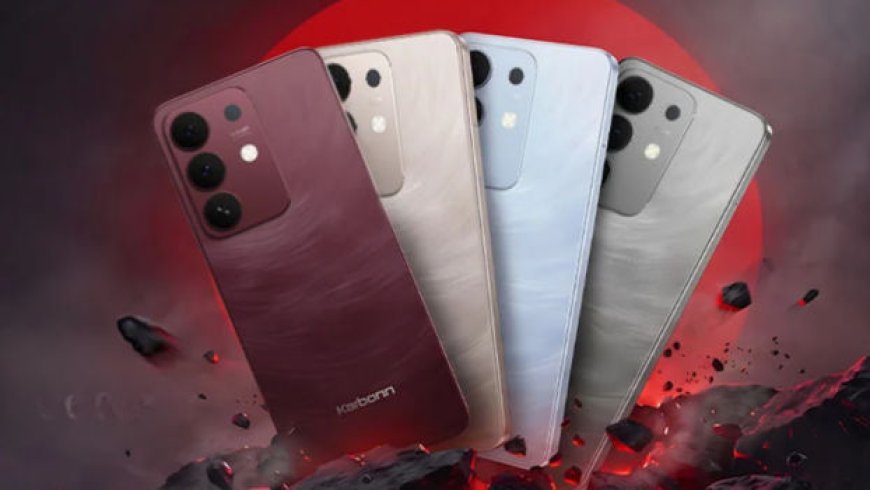
Of the two brands, Karbonn has moved first. Its parent company, Jaina Group, has revived the brand with two 4G smartphones, the Karbonn Rebel and the Karbonn Rebel Pro, which went on sale in India on November 4 through Amazon. After a Rs 1,000 bank discount, the effective prices are Rs 10,999 and Rs 11,499 respectively.
Both phones ship with Android 16, which Karbonn says offers a bloatware-free experience, and the company promises two years of operating system upgrades and two years of security updates for the series. Battery is a headline feature, with up to 7,000mAh capacity on offer. The Rebel comes in Blue, Gold and Silver, while the Rebel Pro adds Cherry Red and Gray to the range.
Jaina Group says 5G devices will follow soon. A Rebel 5G model has been reported with a Unisoc T8200 chipset and a price between Rs 15,000 and Rs 17,000, but Karbonn has not confirmed its specifications or pricing, so those details should be treated as reports rather than facts. Jaina Group chief executive Pradeep Jain framed the return around buyers being squeezed out of the market, telling Moneycontrol that India's phone market has climbed in price while the number of buyers has flatlined.
Micromax: an intention, not a launch yet
Micromax's return is less advanced. Co-founder Rajesh Agarwal has said he wants to revive the brand, while continuing to pursue opportunities in electronics manufacturing services. "Both opportunities are equally lucrative... but if you ask me where my heart lies, my heart lies in launching Micromax again," he said, speaking at the Network18 Rising Bharat Summit in Lucknow on November 17.
There is no confirmed model, launch date or price for a new Micromax phone yet. That distinction matters, because the brand has tried this before: its 2020 comeback with the IN series failed to regain significant market share. Intex, the third Indian brand named in the Moneycontrol report, is also said to be preparing a return, though no concrete plans have been disclosed for it either.
Why the opening exists now
The opportunity comes from a sharp change in the competitive landscape. According to Counterpoint Research, Chinese brands' share of smartphones priced below Rs 10,000 has fallen to zero, and their presence in the below-Rs 15,000 segment is now in single digits. "The segment that they used to play in is completely vacated or going to be vacated by Chinese brands," Counterpoint research director Tarun Pathak said.
The Rs 9,300 to Rs 18,600 price band, roughly 100 to 200 dollars, remains the largest smartphone segment in India at 40.6 percent of the market, even though shipments in that band fell 21.3 percent year on year. The contraction has been far sharper at the very bottom: shipments below Rs 9,300 plunged 90.9 percent to 0.7 million units, cutting the segment's share from 16.2 percent to 1.9 percent.
Government policy is adding momentum. The Rs 62,500-crore Mobile Phone Manufacturing Scheme offers eligible brands a 5 percent sales incentive, with a further 3 percent for investments in design and research and development. Domestic brands can also lean on partnerships with original design manufacturers and original equipment manufacturers for product development, manufacturing and component procurement.
Other Indian brands are already moving into the same space. Lava, AI+, Mivi and Boltt recorded growth in the third quarter on affordable 4G and 5G smartphones, though their volumes remain too small to influence the overall market — smaller brands together accounted for 8.2 percent of shipments. Lava's recent Smart 4 Pro, launched at Rs 10,999 with a 7,000mAh battery, shows the kind of value-first pitch the returning brands will have to match.
The hurdles: memory prices, scale and a short window
The same forces creating the opening also make it hard to exploit. Elevated memory prices are the biggest problem: launching affordable devices is difficult when the cost of the memory inside them keeps climbing, and analysts say access to supplies and scale will be make or break for new entrants.
Upasana Joshi, senior research manager at IDC Asia Pacific, said returning brands can gain market share if they secure component supplies early and price phones competitively, but most are likely to remain small players with limited launches. Supply shortages or higher costs could delay their entry further, allowing Chinese brands and Samsung to keep their hold on the affordable segment.
Ajay Sharma, an industry veteran and former head of Micromax's smartphone business, pointed to Lava's experience as a warning: distribution strength and dominance in feature phones did not translate into meaningful smartphone share. He said Micromax and Bhagwati Products' partnership with Chinese original design manufacturer Huaquin could provide access to product design and manufacturing, but would not guarantee priority access to memory components, where procurement depends on volumes.
Industry executives quoted by Moneycontrol believe the window will last only another one to two years, because most domestic brands are concentrated in the 4G market, which has a limited growth runway. Returning brands will also have to rebuild credibility and relationships with distributors and retailers, and one industry executive noted that Micromax had struggled even to sell feature phones under its brand — a reminder that affordability alone will not be enough. Product quality, user experience, brand perception and pricing will all have to improve.
One emerging workaround is refurbished memory. Industry sources said manufacturers in China and India are increasingly exploring such components to keep 4G and entry-level 5G devices affordable, with refurbished memory's contribution expected to rise from 2 to 3 percent in 2026 to 7 to 9 percent in 2027. Concerns over the quality and reliability of refurbished parts have prompted calls for the Bureau of Indian Standards to introduce quality checks and mandatory disclosures.
A shrinking market adds to the pressure
The comeback attempt also lands in a contracting market. IDC expects smartphone shipments to fall more than 25 percent year on year in the December quarter, taking full-year 2026 volumes down 16 to 18 percent to 125 to 127 million units, and the market could contract further in 2027. Shipments fell 23.3 percent year on year to 36.8 million units in the third quarter, the steepest contraction since the fourth quarter of 2022, while higher memory costs pushed average selling prices up 26.1 percent to around Rs 34,470.
That combination — fewer buyers, higher prices — is exactly what squeezed the budget segment in the first place. The brands hoping to fill the gap will need to prove they can build phones people want at prices people can pay, and do it before the window closes. Karbonn has made its first move. Micromax, for now, has only said it wants to.
Sources
- Moneycontrol — Micromax and Karbonn return: Retreat of budget Chinese brands an opportunity but challenges remain
- Moneycontrol — Micromax co-founder Rajesh Agarwal signals brand relaunch amid renewed push for Indian smartphone makers
- Gadgets 360 — Karbonn Rebel Pro and Rebel Launched in India With Up to 7,000mAh Battery, Marking Firm's Comeback: Price, Specifications
- Communications Today — Memory costs set the terms for India's homegrown handset revival
What's Your Reaction?
 Like
0
 Dislike
0
 Love
0
 Funny
0
 Angry
0
 Sad
0
 Wow
0