























































Nvidia Has Stopped Shipping Licensed Hopper Chips to China, Interim CEO Says
Nvidia has stopped shipping its licensed Hopper AI chips to China, interim chief executive Colette Kress told analysts on the company's earnings call on Tuesday, November 17. The halt ends a licensing arrangement that generated $2.4 billion in sales last quarter, and it comes as Jensen Huang returns as chief executive to a far tighter political environment in Washington and Beijing.

Nvidia Has Stopped Shipping Licensed Hopper Chips to China, Interim CEO Says
Nvidia has stopped shipping its licensed Hopper artificial intelligence chips to China, ending a short-lived licensing arrangement that brought in $2.4 billion in sales last quarter. Interim chief executive Colette Kress disclosed the halt on the company's earnings call on Tuesday, November 17, telling analysts that Nvidia's outlook for the current quarter contains no revenue from the licensed chips at all.
"Our guidance does not have any licensed Hopper data center products included, and we are no longer shipping licensed Hopper data center products to China," Kress said. She gave no reason for the decision and said nothing about whether the halt is permanent.
A $2.4 billion line, now closed
In the quarter that ended October 25, Nvidia sold $2.4 billion worth of licensed Hopper data centre products to China, Kress said — just over 2 percent of the revenue in its core data centre business. The company's guidance for the current quarter assumes no data centre compute revenue from China whatsoever.
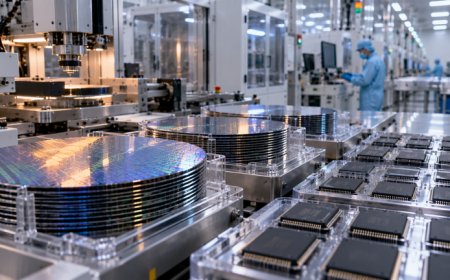
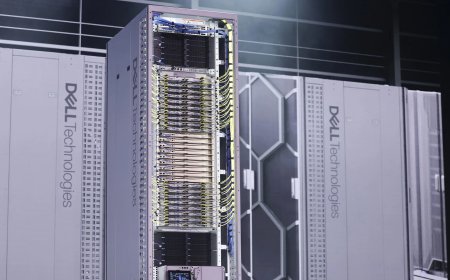
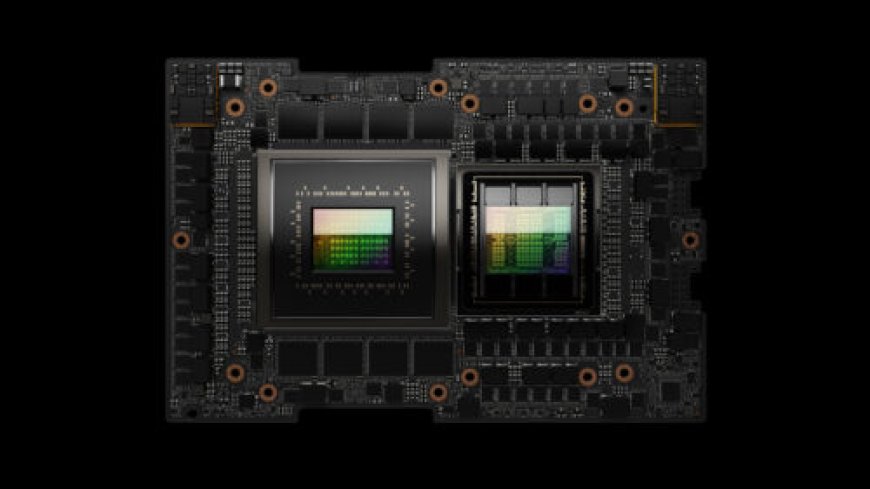
The halt covers the Hopper generation of chips, including the H200, a powerful processor used to train and run advanced AI models. Under a licensing policy the United States eased in January 2026, Nvidia was allowed to ship the H200 and the less powerful H20 to vetted Chinese-owned firms, with export applications reviewed individually and subject to security conditions, and a 25 percent tariff applied to eligible chips. Its more powerful Blackwell and Rubin chips were never permitted for export to China.
Overall, Nvidia reported third-quarter revenue of $115.8 billion, up 103 percent from a year earlier, and guided the current quarter to $130 billion, plus or minus 3 percent. The China halt, in other words, barely dents the company's finances. Its significance is political.
Huang's project, ended without him
The licensing arrangement was, above all, Jensen Huang's project. The former chief executive had lobbied Washington for months to open the door to H200 sales in China, arguing that keeping American chips in Chinese data centres served US interests. He stepped down as chief executive on November 12, after revelations of extramarital affairs, including one with Alice Huang, a Chinese businesswoman whom some US officials suspect of links to Beijing's intelligence services. Alice Huang formerly led Megaspeed International, a Singapore cloud computing firm now under investigation over alleged chip diversion.
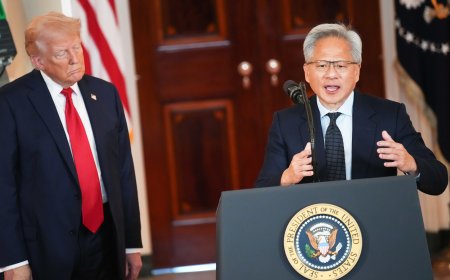
Huang was reinstated as chief executive on Monday, November 23, after only 11 days away, following intervention by US President Donald Trump. Investors cheered: Nvidia shares surged 31.5 percent on Monday, adding more than $952 billion in market value. But the rally faded fast. The stock fell 5.2 percent in premarket trading on Tuesday to $156.40, and it remains almost 31 percent below its October 6 record high.
A narrower room for manoeuvre
Huang returns to a far more restrictive business environment than the one he left. On the same day he was reinstated, Washington added Megaspeed and a Singapore subsidiary of Chinese technology group Alibaba to its trade blacklist. The move followed a Commerce Department rule issued the previous week that requires US export licences for advanced chip shipments to Singapore, Thailand, Malaysia, Indonesia and Brazil — a step aimed at closing the third-country routes through which Nvidia chips are believed to have reached China.
Senate Democratic leader Chuck Schumer vowed on Monday to investigate Huang, other Nvidia executives and the Trump administration when Democrats take control of Congress in January. Huang faces an early test of his political influence on December 3, when he is due to testify before the Senate Banking Committee at a hearing on US export controls. Nvidia has also established a committee of independent directors to oversee export-control compliance and national security risks.
In Beijing, the mood was cautious. China's state-backed Global Times newspaper cautioned in an editorial on Tuesday against interpreting Huang's return as a sign that Washington would ease chip restrictions, stressing the need for China to strengthen semiconductor self-reliance. Chinese stocks lagged a global rally on Tuesday, as investors bet that the bridging role Huang once played between China and the United States had diminished.
What happens next
Whether the halt is a pause or a full stop remains unanswered. Kress offered no timeline, and Huang has said nothing publicly about the shipments since his return. The December 3 Senate hearing is the next fixed point: lawmakers are expected to press him on the licensing arrangement he championed, on the diversion of Nvidia chips through third countries, and on what, if anything, he knew about the networks now under investigation. Until then, the $2.4 billion-a-quarter channel that Huang spent months building stays closed.
For readers following the story: Jensen Huang's resignation and Colette Kress's appointment as interim chief executive; a profile of Colette Kress, the interim chief executive; the US Justice Department probe into Alice Huang and Super Micro servers; and Reuters' report that Huang misled Nvidia's top lawyer over the affair.
Sources
- Reuters — "Nvidia's Huang returns to cheers in China, but political hurdles mount" (November 24, 2026)
- Reuters — "Nvidia slips as investors assess risks surrounding Huang's return as CEO" (November 24, 2026)
- The Indian Express — "Nvidia stops shipping AI chips to China as pressure mounts over US export controls" (November 19, 2026)
- Business Standard — "Nvidia stops shipping Hopper AI chips to China despite US approval" (November 18, 2026)
- CNN — "Four takeaways from Nvidia's first earnings report after Jensen Huang scandal" (November 18, 2026)
- Moneycontrol — "Nvidia stops selling AI chips to China despite US approval" (November 19, 2026)
- The Daily Star — "Nvidia says no longer shipping 'Hopper' AI chips to China" (November 19, 2026)
What's Your Reaction?
 Like
0
 Dislike
0
 Love
0
 Funny
0
 Angry
0
 Sad
0
 Wow
0