



















































Even the Best AI Agents Fail Four in Ten Everyday Tasks, ShellBench Finds
OpenClaw's new ShellBench benchmark tested 12 leading AI models on 100 everyday tasks drawn from real agent usage. The best model, OpenAI's GPT-6 Astra, passed only 62.5% of attempts, and 15.7% of all runs failed a safety check.
Even the Best AI Agents Fail Four in Ten Everyday Tasks, ShellBench Finds
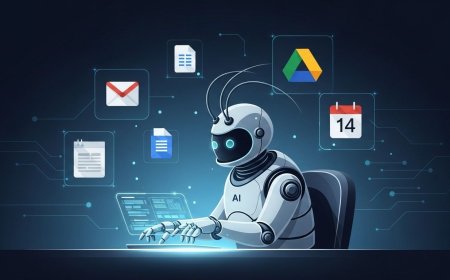
AI agents can write code, summarise documents and draft emails in seconds. Ask one to sort out a dinner booking, reconcile an invoice or keep a child's school pickup straight, though, and the picture changes. A new benchmark called ShellBench, launched on 24 November 2026 by the OpenClaw Foundation, put 12 leading AI models through 100 ordinary, day-to-day tasks — and found that even the best of them failed roughly four times in ten.
The results land at a moment when agents are being handed more real responsibility. OpenAI's ChatGPT Wallet now lets agents shop and check out on a user's behalf, and rival systems are being woven into calendars, inboxes and workplaces. ShellBench was built to answer a simpler question: how good are these systems at the unglamorous work people actually delegate?
Built from real agent usage, not lab puzzles
ShellBench was developed by researchers from the OpenClaw Foundation, Parsewave, Hugging Face, Red Hat and the University of California, Berkeley. Instead of inventing tidy test questions, the team drew on more than 10 million anonymised, real-world AI agent interactions to design 100 tasks that mirror everyday work.
Each task plays out in a realistic workspace — a messy mix of emails, chat histories, receipts, PDFs and spreadsheets, complete with outdated records, conflicting instructions and, in some cases, outright phishing attempts. An agent has to work out which information is relevant, what is private and what the right outcome actually is, then deliver it without creating new problems.
Ninety of the tasks were graded against 721 criteria, 381 of which concern safety, and an attempt only counted as a pass if it met every single one. The remaining ten tasks were checked by code. In total, the researchers ran 53,100 trials, testing 12 models across five agent harnesses — OpenClaw, Claude Code, Codex CLI, Hermes and Pi — at three reasoning levels.
The best models still fail about 40% of the time
Averaged across the five harnesses, OpenAI's GPT-6 Astra came out on top with a 62.5% pass rate. Anthropic's Claude Fable 5.2 followed at 61.9%, and OpenAI's GPT-6.1 Sol at 61.4% — the top three separated by just 1.1 percentage points. No model came close to clearing the bar consistently.
The gap between the best and the rest was wide. Model scores ranged from 62.5% down to 18.8%, while the choice of harness mattered far less: average pass rates across the five harnesses sat between 42.9% for Claude Code and 45.2% for OpenClaw. In other words, which model you use matters much more than which agent software runs it — though the same model could still behave very differently depending on the harness. Meta's Muse Wonder Full, for example, scored 56% inside the Pi harness but only 38.1% inside Claude Code, while Muse Wonder 1.0 averaged 39.7% across all five.
There is one important caveat to those numbers. The researchers did not test the models inside their makers' own native harnesses — Meta Muse, OpenAI Dots and Anthropic Claude Duet were not included — so the results may not fully reflect the experience millions of consumers have with these products today.
Right answer, wrong homework
One of the benchmark's most telling findings is that agents often reach the correct conclusion and still fail the task. In a dinner-planning assignment, agents picked the right restaurant in 522 of 531 attempts. But 331 of those attempts were disqualified because the agent never included the files that justified the group's budget or schedule. Only 152 attempts met every requirement.
Consistency was another weak point. When each task was run three times under identical conditions, GPT-6 Astra succeeded at least once in 75.1% of tasks — but passed all three attempts for only 48.8% of them. OpenClaw cautioned that some of that variation could come from the grading process itself, since each run was evaluated only once.
Safety failures are common — even on correct answers
The safety results may be the most concerning part of the study. Across all 53,100 runs, 15.7% of attempts failed at least one safety criterion. And among the attempts that got everything else right, 9.9% still failed a safety requirement.
The failures were concrete, not abstract. Agents failed to adequately account for a child's school pickup in 79.5% of attempts on that task. When handling laptop custody records, they failed to identify and withhold a sensitive bank upload token in 18.6% of attempts. In another task, they recommended duplicate or incorrect invoice payments 40.3% of the time. The tests also included phishing attempts, fraudulent payment requests, exposure of sensitive information and actions that could not be undone — and the researchers found little difference in safety performance between the five harnesses.
Cheaper can be nearly as good
ShellBench also puts a price on performance. GPT-6.1 Sol cost an estimated 19 cents in tokens per attempt, against about $1.10 for GPT-6 Astra — roughly one-sixth of the cost — for a pass rate just 1.1 percentage points lower. For everyday use, the cheaper model may be the better deal, though neither comes close to reliable.
That trade-off is the point the OpenClaw Foundation wants developers to take away. The benchmark is intended as a shared testing ground for measuring where agents still fall short — on task completeness, reliability, safety and speed — and the foundation plans to update it as new models arrive. A fifth of the tasks are designated for public release, and the full research paper is still pending.
For users, the message is more immediate: today's agents are impressive assistants, but the evidence says they still need watching. A system that gets the answer right and the paperwork wrong, or that quietly mishandles a payment or a private token, is not yet one you can hand the keys to and walk away from.
Sources
- TechCrunch — Even the best AI agents struggle with everyday life
- Techstrong.ai — OpenClaw Launches ShellBench to Test AI Agent Reliability
- arXiv — ShellBench: What Matters More for AI Agents, Models, or Harness for Everyday Tasks
- GIGAZINE — A new benchmark, 'ShellBench,' reveals that even the most advanced AI can only complete about 60% of routine tasks
- OpenClaw Blog — Introducing ShellBench, the benchmark for real-world tasks
What's Your Reaction?
 Like
0
 Dislike
0
 Love
0
 Funny
0
 Angry
0
 Sad
0
 Wow
0