

















































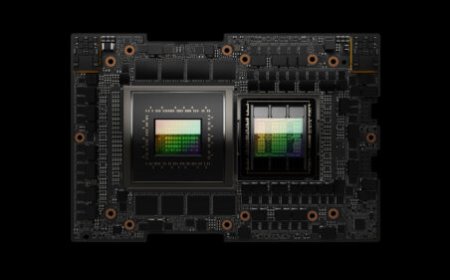

Nvidia Shares Fall 6% as Historic Rally Fades and Investors Weigh Huang's Return
Nvidia shares fell about 6% to $155.38 on Tuesday, November 24, 2026, giving back part of Monday's historic 31.5% surge, as investors refocused on the political and governance risks surrounding Jensen Huang's return as chief executive.

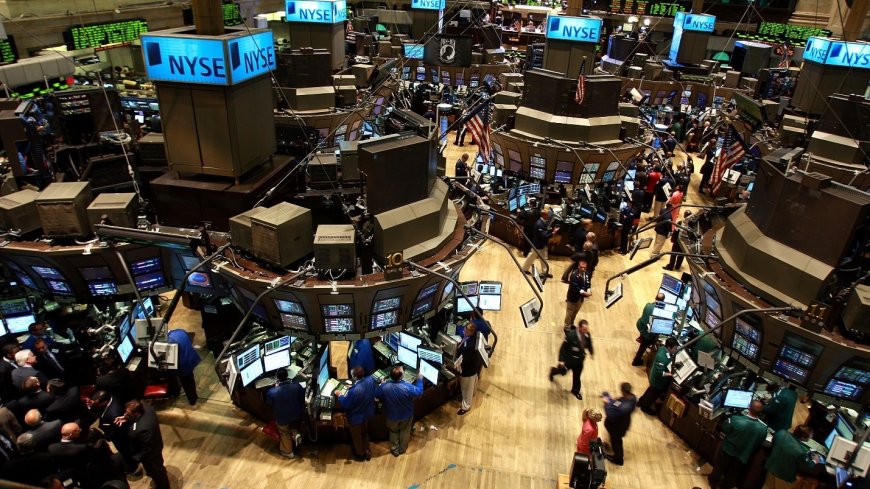
Nvidia Shares Fall 6% as Historic Rally Fades and Investors Weigh Huang's Return
Nvidia shares fell sharply on Tuesday, November 24, 2026, giving back a large part of the previous day's historic rally, as investors turned their attention back to the political and governance risks hanging over Jensen Huang's return as chief executive.
The stock closed down 5.9% at $155.38, according to the Financial Express, after opening the session lower and sliding through the day. Reuters put the decline at 6%. The pullback came a day after Nvidia surged 31.5% on Monday to close at $165.05, its biggest one-day percentage gain in 23 years, adding more than $952 billion in market value and restoring the company to second place among the world's most valuable companies, behind Apple.
Even after Monday's surge, the stock remains far below its October 6 record high. Reuters noted on Tuesday that Nvidia was still down around 37% from that peak, with roughly $2 trillion of shareholder value wiped out in less than two months.
A day after the biggest gain in 23 years
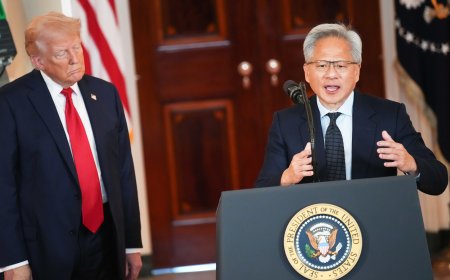
Monday's rally was driven by relief that Nvidia's leadership crisis was over. Under pressure from US President Donald Trump, the company's board reinstated Huang as president and chief executive on Monday, less than two weeks after he resigned on November 12 following revelations of extramarital affairs, including one with Alice Huang, a former executive at Singapore-based Megaspeed who US officials have said is suspected of having ties to Chinese intelligence.
The board voted unanimously to bring him back after discussions with Huang and, in its own words, "input from senior levels of the United States government". The Wall Street Journal reported on Tuesday that Huang had disclosed additional affairs to directors during a marathon meeting on Sunday before the vote.
By Tuesday, the mood had shifted. Investors who had cheered the end of the leadership vacuum began weighing what the return does not fix. "The immediate business risks for Nvidia may have diminished, but the political and legal risks could prove more enduring," Charu Chanana, chief investment strategist at Saxo, told Reuters. "The circumstances surrounding Jensen's reinstatement raise uncomfortable questions about board independence, political interference in corporate governance and the rule of law."
John Belton, a portfolio manager at Gabelli Funds, was blunter. "Near term, there's no doubt this company is going to get dragged through the mud," he told MarketWatch. "We still don't know all the revelations that may or may not come out of the various investigations that are out there."
The wider AI trade cools too
Nvidia was not alone. The wider artificial intelligence trade lost steam on Tuesday, with Advanced Micro Devices down 9%, Micron Technology down 11% and Intel down 8%, according to MarketWatch. Anthropic, the AI company that listed on the Nasdaq only days earlier, slipped below its $83 initial public offering price.
The tech-heavy Nasdaq Composite fell 1.45% to 23,740.52, and the S&P 500 slipped 0.48% to 7,202.45. The Dow Jones Industrial Average went the other way, rising 0.87% to 50,028.79, as money rotated away from technology and into other sectors. Eight of the S&P 500's eleven sectors fell, while healthcare rose 2.9%.
The reversal was a reminder of how much of Monday's move was about one man rather than the business. The S&P 500 had added more than $2.8 trillion in market value on Monday as AI stocks surged, according to Reuters, but the underlying questions about the cost of the AI buildout, the financing of massive data-centre projects and the sustainability of demand for Nvidia's chips did not go away with Huang's reinstatement.
"How will these massive buildouts be financed, especially if rates move higher?" asked Hendi Susanto, a portfolio manager at Gabelli Funds, pointing to the questions investors are now asking about the AI infrastructure boom.
The questions Huang's return does not answer
Huang's comeback has not ended the scrutiny in Washington. The board has formed a committee to investigate whether foreign intelligence efforts targeted Huang, and a second committee focused on national security and export controls, Reuters reported. Nvidia and its board have not disclosed details of any discussions with President Trump about the reinstatement.
Lawmakers from both parties have objected to the decision and called on Congress to pass the Chip Security Act, a bill that seeks to stop legally exported advanced chips from being diverted to China, where their sales are restricted. On Tuesday, Democratic Senate leader Chuck Schumer accused Huang of violating federal law limiting exports of advanced technology to China.
On Monday, the Commerce Department added Megaspeed and several other firms to a trade blacklist, barring US companies from selling them chips and other technology. William Blair analyst Sebastien Naji wrote that one question facing Nvidia is how the US government will approach its policies on chip exports to Southeast Asia, given the company's reliance on that market. While Huang's reinstatement was backed by the Trump administration, which might suggest a "more favorable regulatory outlook", Naji added, the broader regulatory questions "could have lasting implications for the company's competitive position".
Huang is due to appear before the House intelligence committee in a closed-door session on December 1 and at a public hearing of the Senate banking committee on December 3, titled "Protecting America's AI Advantage: Oversight of U.S. Export Controls". He had already agreed to testify publicly before his reinstatement, as Innopark IT reported earlier.
What happens next
For now, the market is left with a company whose shares can swing by a third in two sessions on the fate of a single executive. Reuters' Trading Day column put it plainly on Tuesday: the AI trade has been resuscitated, but it remains in a fragile condition, and the issues afflicting Nvidia before Huang's departure are still there after his return.
Investors will get a breather this week. US markets are closed on Thursday for Thanksgiving and have a shortened trading day on Friday, and attention turns to two big economic releases on Wednesday: October inflation figures and the second reading of third-quarter GDP. But the questions around Nvidia — the investigations, the December hearings and the future of US chip policy towards China — will still be waiting when trading resumes.
For background on how the scandal unfolded, see our report on Huang misleading Nvidia's top lawyer and the fallout for Southeast Asia's AI boom.
Sources
- Reuters — "Nvidia slips as investors assess risks surrounding Huang's return as CEO", November 24, 2026
- Reuters — "Trading Day: Nvidia bounce fades", November 24, 2026
- MarketWatch via Morningstar — "Nvidia's stock drops as these major questions loom over Jensen Huang's return", November 24, 2026
- Financial Express — "AI sell-off returns: Nvidia drops 6%, Anthropic slips below $83 IPO price", November 25, 2026
- New York Post — "Nvidia shares tumble as Jensen Huang comeback rally fizzles, legal troubles mount", November 24, 2026
- The Economic Times — "Nasdaq, S&P 500 end lower as investors assess Jensen Huang's return to Nvidia", November 24, 2026
What's Your Reaction?
 Like
0
 Dislike
0
 Love
0
 Funny
0
 Angry
0
 Sad
0
 Wow
0