

























































Nvidia's China Business at Risk as Customers Cancel Orders After Huang Exit — Then He Returns as CEO
Nvidia rebuilt its China business to 11.05 billion dollars in a single quarter by selling less powerful chips and software — but after Jensen Huang's abrupt resignation, some Chinese customers began cancelling orders over fears the RTX PRO 5500 may never reach them. Then, on Monday, November 23, Nvidia reinstated Huang as chief executive, sending its shares up more than 31 percent.

Nvidia's China Business at Risk as Customers Cancel Orders After Huang Exit — Then He Returns as CEO
Nvidia spent the past year rebuilding a business in China that Washington's export controls had nearly wiped out. By selling less powerful chips and software that stay inside the rules, the company turned a trickle of sales into a flood. Now that recovery is under strain — and the man at the centre of the storm is back in charge.
A Reuters investigation published on November 23 found that some Chinese customers have started cancelling orders, or holding off on placing them, after the abrupt resignation of co-founder and chief executive Jensen Huang. The customers fear that the RTX PRO 5500, a graphics card built for professional computers that can also run artificial intelligence models, may not be allowed into China. Reuters could not determine how many orders had been cancelled, or whether the United States or China would restrict shipments.
The timing could hardly be worse for Nvidia. Revenue from customers headquartered in China and Hong Kong had more than tripled year over year, rising from 2.97 billion dollars in the October 2025 quarter to 11.05 billion dollars in the quarter ended October 25, 2026, according to the company's own financial results. That growth came even as Huang publicly said Washington's restrictions had decimated Nvidia's chip business in China and driven its share of the country's AI chip market to zero.
The card at the centre of the uncertainty
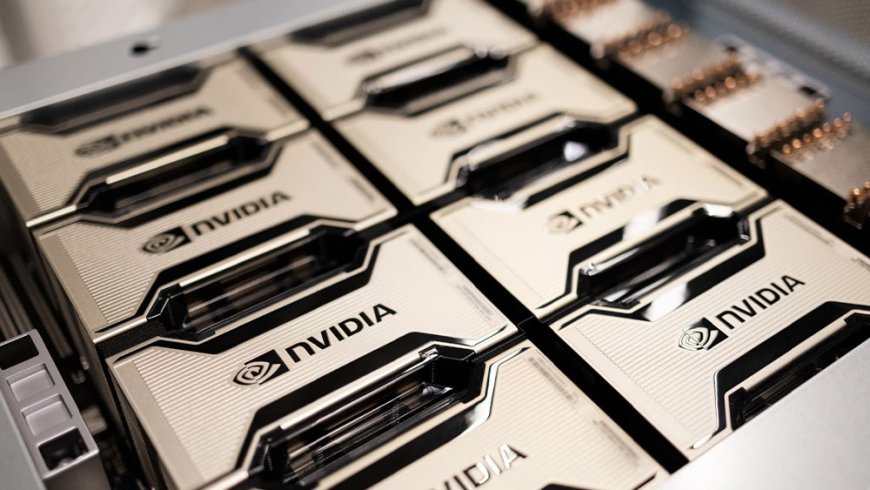
The RTX PRO 5500 is the product Chinese buyers want most. Before Huang's departure, Chinese companies had sought more than 6 million units of the card, worth nearly 70 billion dollars at listed prices, Reuters reported in October. That demand is more than twice the company's expected worldwide production of up to 3 million units next year.
Priced at about 11,400 dollars, the card was developed to meet Chinese demand, according to a person familiar with Nvidia's planning. Nvidia had told some customers to expect samples in December, with deliveries beginning in early 2027, and had asked Taiwan Semiconductor Manufacturing Co to shift some manufacturing capacity from its gaming cards to the new product.
The card's appeal is easy to understand. Unlike Nvidia's most powerful chips, which are used in vast data centres to train advanced AI models, the RTX PRO 5500 is designed for professional computers that run existing models — generating images and video, analysing business data, and helping robots respond to their surroundings. Cloud providers, technology companies, manufacturers and universities across China have been buying them as AI computing power in the country grows scarce.
Large purchases of the chip by internet companies such as ByteDance and Alibaba could require approval from the Chinese government, according to two people familiar with the matter. Beijing has also been pushing domestic chips, adding another layer of uncertainty to Nvidia's plans.
A comeback built on weaker chips
Nvidia's China recovery was never straightforward. When Washington began restricting the company's most powerful AI processors in 2022, Nvidia developed weaker alternatives to comply with the rules. The first such chips drew strong demand but were soon banned by new US curbs.
One later product, the RTX PRO 6000D, drew lukewarm demand from major Chinese technology companies after its introduction last year. That changed early this year as AI computing power in China grew scarce. Companies began using AI models across their businesses rather than simply developing them, while domestic chipmakers struggled to keep pace.
Even Huawei, Nvidia's leading Chinese rival, acknowledged in September that it could not produce enough AI computing equipment to meet domestic demand. Huawei and Cambricon raised prices for some AI chips by 20 to 50 percent in recent months, Reuters reported in September. Developers have also spent years building software around Nvidia's technology, making switching expensive, while shortages of advanced memory have pushed up domestic chip prices.
Nvidia also observed Chinese companies obtaining its RTX 5090 gaming cards through unofficial channels and combining them into servers to run AI services. Although designed for high-end gaming computers, the RTX 5090 is powerful enough to exceed US export limits, and it cannot be sold in China because the restrictions apply to a chip's capabilities rather than whether it is marketed for gaming or AI.
Robots depend on Nvidia too
Nvidia's influence in China reaches well beyond data centres into the country's fast-growing humanoid robot industry. Its Jetson processors allow robots to interpret information from cameras and sensors and respond in real time, while its Isaac software helps engineers develop and test robots in virtual environments.
An analysis by the Jamestown Foundation, a US think tank, identified at least 14 Chinese companies using parts of Nvidia's robotics platform, including Unitree, XPeng Robotics, AgiBot and Fourier Intelligence. A former Unitree employee said the company's AI development relied heavily on Nvidia's Jetson Nano and Orin processors, despite its emphasis on domestic innovation, and that replacing them with Chinese alternatives such as Rockchip would be difficult because of their limited computing capabilities.
Without Nvidia, the computing power is so limited that it is impossible to produce effective autonomous features, the former employee said.
Washington's next target
The controversy around Huang has also deeply unsettled Chinese suppliers, customers and other partners whose businesses depend on Nvidia, according to two people familiar with the matter. They fear heightened scrutiny could extend to Nvidia's remaining legal chip sales in China.
That fear is not unfounded. Some US agencies, including the National Security Council and the Federal Communications Commission, are examining whether US technology restrictions on China should extend beyond the powerful chips used to develop AI models. Possible additional restrictions could cover Nvidia's Jetson processors, which are also used in robots, drones and other autonomous machines, according to a person familiar with the discussions. Lawmakers on Capitol Hill have also raised the Jetson processors in discussions about tighter restrictions.
The scrutiny may intensify after Democrats routed President Donald Trump's Republican Party in the November 3 midterm elections, winning control of the US House and Senate from January. Mike Kuiken, vice chair of the US-China Economic and Security Review Commission, a bipartisan body that advises Congress, said Congress would press hard on chips and chipmaking capabilities after two years of close to zero oversight.
In an October proposal governing American investment in Chinese technology, the US Treasury Department argued that measuring how much computing power was needed to train an AI model was no longer a reliable way to judge its sophistication, because advances in software now allow models to perform more calculations when answering questions. Reva Goujon, a director at research firm Rhodium Group, said the proposal offered a clue to how Washington could tighten restrictions on Nvidia products used to operate AI systems.
Huang returns — and the market roars
Hours after the Reuters investigation was published, the story changed again. On Monday, November 23, Nvidia said it was reinstating Huang as chief executive, president and a member of the board, effective immediately — just 11 days after he resigned following revelations of extramarital affairs, including one with a businesswoman suspected by US authorities of spying for China. The board said it had voted unanimously and was satisfied with his candour and leadership ability, and that it saw no national security risk.
President Trump welcomed the decision and said it posed no national security risk. Nvidia shares surged more than 31 percent on Monday, their best one-day gain since 2003, adding roughly 950 billion dollars in market value. The Nasdaq jumped 6.5 percent and the S and P 500 rose 4.7 percent.
Huang's return removes one source of uncertainty for Nvidia's Chinese customers — the man who had been the company's most vigorous defender of chip sales to China, and one of the industry's most influential voices in Washington, is back. But the questions that froze those orders have not gone away. The RTX PRO 5500 still awaits clarity on whether it can be shipped, Washington's scrutiny of Nvidia's lower-powered products is still growing, and Beijing is still promoting domestic alternatives. The China comeback Nvidia spent a year rebuilding now depends on whether the man who built it can keep it.
For background on how the scandal unfolded, see our earlier reporting on China's 3.2 billion dollars of Nvidia-powered AI projects at risk after Huang's exit and Colette Kress, the interim chief executive who steadied Nvidia during the crisis.
Sources
What's Your Reaction?
 Like
0
 Dislike
0
 Love
0
 Funny
0
 Angry
0
 Sad
0
 Wow
0