



















































Records Show Alice Huang-Linked Firms Raised Financing on $270 Million of AI Servers in China
A Reuters review of Chinese central-bank credit records found companies linked to Alice Huang and her family raised financing against up to 764 AI servers and modules valued at $270 million, plus $31 million in networking gear, much of it listed at a Shanghai data centre. The records do not show the servers held chips barred from export to China, or how the equipment entered the country.

Records Show Alice Huang-Linked Firms Raised Financing on $270 Million of AI Servers in China
Companies connected to Alice Huang, the Chinese businesswoman whose affair with Nvidia chief executive Jensen Huang set off his brief exit from the company, raised financing against powerful computing equipment for major artificial intelligence data centres in China, according to previously unreported records reviewed by Reuters.
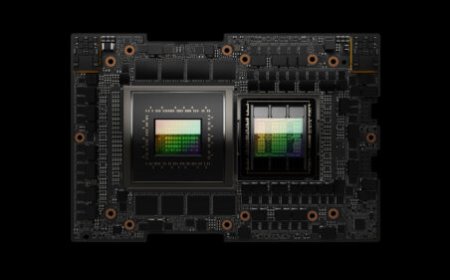
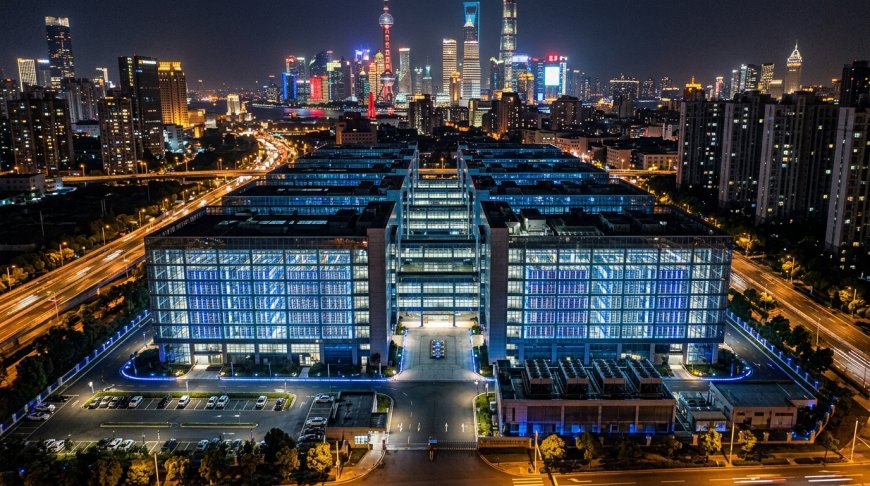
The filings, drawn from a Chinese central-bank credit registry that tracks equipment used to secure loans and other financing, identify up to 764 AI servers and computing modules valued at $270 million, along with $31 million of equipment used to link them into large computing networks. Much of the hardware was listed as located at a sprawling data centre in Shanghai.
The findings add a financial dimension to a scandal that has already reshaped Nvidia's leadership and drawn in US export-control investigators. But they come with an important limit, which Reuters itself stresses: the records do not establish that the servers contained chips prohibited from export to China, or show how and when the equipment entered the country.
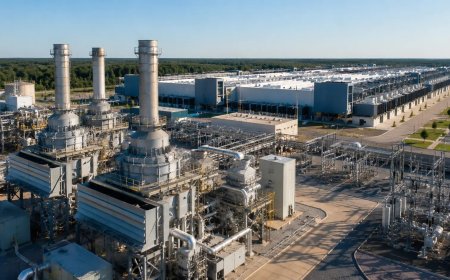
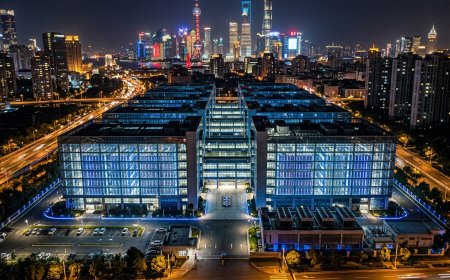
The Shanghai data centre at the centre of the records
Four of the financing arrangements listed equipment at the Yangtze River Delta AI supercomputing centre in Shanghai, part of a $6.3 billion complex developed by gaming company Century Huatong, which counts Tencent as a roughly 10 percent shareholder. Tencent and Shanghai's Songjiang district government announced a strategic partnership to develop the AI centre in 2020.
Tencent pushed back on any suggestion it was involved. A spokesperson told Reuters the company never owned or operated the Yangtze River Delta Data Center Cluster Project, that its name and trademarks had previously been used without authorisation, and that it has never had any commercial relationship with Megaspeed or any of its subsidiaries. The spokesperson added that Tencent's investment in Century Huatong was for the gaming business and that it uses data centre hosting providers to support its services. The records, Reuters notes, do not establish that Tencent bought, rented or operated the particular servers it identified.
Century Litong and the leasing deals
The business at the centre of the financing was Century Litong, an Nvidia preferred cloud partner that rents powerful servers to customers needing large amounts of computing capacity. Financial records show five leasing arrangements covering up to 512 servers with a declared value of 1.42 billion yuan, about $200 million, between May and December 2024.
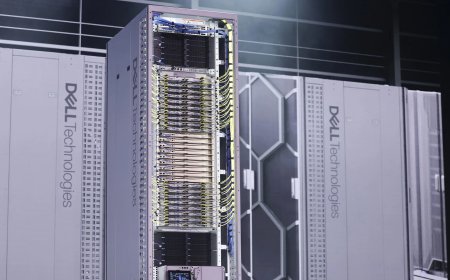
One deal described 128 servers located at the Shanghai data centre, each containing eight graphics processors, or 1,024 chips in total, with computing power of 989 PFLOPs and valued at up to $450,000 apiece. Another transaction involved 128 servers worth $57 million, financed by an arm of AVIC, a Chinese state-backed aviation and defence conglomerate, and leased to Century Litong. Such arrangements let businesses obtain expensive computers without paying the full purchase price upfront.
A separate inventory listed more than 10,000 Nvidia ConnectX-7 networking cards and 730 BlueField-3 units at the Shanghai facility, equipment used to connect large numbers of computers for AI work.
Manufacturer Jiangsu Lettall Electronic invested in Century Litong in 2023 and took full ownership by mid-2024, according to company disclosures. A 2023 disclosure from Lettall identified the Shanghai centre as a location for Century Litong's server-rental business. Nvidia, Century Litong, Century Huatong, Lettall and AVIC did not respond to Reuters' requests for comment.
Family and business connections
Corporate records connect Century Litong, Century Longteng and Century Huatong to Alice Huang's sister, Huang Yu, and to Kang Wei, an investment executive who is Alice Huang's husband. Alice Huang, Huang Yu and Kang Wei could not be reached for comment, Reuters reported.
Century Litong was initially established in 2023 as a subsidiary of Shanghai Century Longteng. The latter is now wholly controlled by Century Huatong, but a Shanghai state-backed investment fund and an investment company linked to Huang Yu and Kang previously held shares in it. Kang was identified as Century Longteng's executive director in a 2022 government announcement.
Century Huatong also owns 70 percent of a company where Alice Huang previously served as a director, and holds a stake in gaming firm 7Road Holdings, whose former overseas subsidiary was renamed Megaspeed in 2023, corporate records show.
The network also developed a large data centre in Wuhu, about 300 kilometres inland from Shanghai. Wuhu Century Longteng, majority-owned by Huang Yu through investment vehicles until early 2026, pledged another 252 powerful AI computing modules to Ping An Bank as collateral for a $70 million loan in April 2026. The documents did not disclose where those servers were located.
One caution applies to all the figures: the dollar amounts reflect the value of assets covered by financing arrangements, not necessarily new spending or distinct purchases.
Why the records matter
The arrangements illustrate how companies can finance access to the costly computing infrastructure underpinning China's AI ambitions, at a time when US restrictions on advanced processors have made securing the hardware a growing challenge for Chinese technology businesses.
They surfaced as US authorities investigate whether Megaspeed, the Singapore-based company Alice Huang formerly controlled and a major overseas buyer of Nvidia processors, helped Chinese customers obtain restricted Nvidia technology. On Monday, the US Commerce Department added Megaspeed to its trade blacklist. Megaspeed has denied wrongdoing and said Alice Huang left the company in August 2025.
The affair itself has already had extraordinary consequences. Jensen Huang resigned as Nvidia's chief executive earlier this month before being reinstated to his post 11 days later, after his relationship with Alice Huang came to light. What the new records do not do is answer the central export-control question: whether any of the equipment they describe actually contained restricted chips. That question remains for investigators, not the financing paperwork, to settle.
Sources
- Reuters — Alice Huang-linked firms listed $270 million in AI servers in China, records show (25 November 2026)
- Business Standard — Alice Huang-linked firms listed $270 million in AI servers in China (25 November 2026)
- Innopark IT — US Blacklists Megaspeed, the Firm at the Centre of the Nvidia Scandal, in Export Crackdown
- Innopark IT — Alice Huang Stayed in Contact With a Chinese Spy Agency Officer During Affair With Ex-Nvidia CEO, NYT Reports
What's Your Reaction?
 Like
0
 Dislike
0
 Love
0
 Funny
0
 Angry
0
 Sad
0
 Wow
0