














































Nvidia's AA Credit Rating Faces Downgrade as S&P Questions Governance After Huang's Return
S&P Global Ratings has put Nvidia's AA credit rating on watch for a possible downgrade, saying the boardroom turmoil around Jensen Huang's resignation and return exposed weaknesses in the chipmaker's governance. A cut to AA- could come within 90 days and raise borrowing costs across the AI infrastructure boom Nvidia helps finance.

Nvidia's AA Credit Rating Faces Downgrade as S&P Questions Governance After Huang's Return
S&P Global Ratings has placed Nvidia's credit rating on watch for a possible downgrade, warning that the boardroom saga around chief executive Jensen Huang's resignation and rapid return exposed weaknesses in how the world's most valuable chipmaker is governed.
The agency said on Wednesday, November 25, that it had put Nvidia's AA issuer credit rating, and the AA rating on its senior unsecured debt, on CreditWatch with negative implications. It expects to complete its review within 90 days and could cut the ratings by one notch, to AA-, if its concerns are not resolved.
Nvidia would keep its investment-grade status even after such a cut. But a downgrade would still matter: it could raise the company's borrowing costs at a moment when Nvidia is helping to finance hundreds of billions of dollars of artificial intelligence infrastructure, much of it through partners with far weaker credit of their own.
What S&P said about Nvidia's governance
Despite Nvidia's strong financial performance, S&P said recent events had undermined its view of the company's management and governance framework. The agency pointed to what it called weak executive oversight and a lack of succession planning, and to "key man risk" — the company's heavy reliance on Huang for its future success.
"News regarding the CEO and questions regarding potential export control violations have exposed vulnerabilities in Nvidia's management and governance framework, especially in regard to its board structure, composition, and effectiveness," S&P said, according to reports of its statement.
The agency raised several specific concerns. It said the long tenure of certain board members may have compromised their independence, and that the company's governance practices may not have kept pace with Nvidia's rapid growth. It also questioned whether the board had properly enforced its code of conduct for executives during Huang's departure and return, and raised questions about internal controls and the handling of export-control risks tied to China.
Andrew Chang, an analyst at S&P Global Ratings, wrote that the agency was "unaware of any remedial action enacted by the board," according to Business Insider. S&P said it planned to meet with Nvidia's board and management to discuss steps to strengthen director independence, improve oversight of executives, and develop a credible succession plan.
From resignation to reinstatement in less than two weeks
Huang announced his resignation on November 12, after admitting to extramarital affairs, including at least one with a subordinate. Another relationship was with a woman the United States government has investigated over suspected spying on behalf of China, according to earlier reporting.
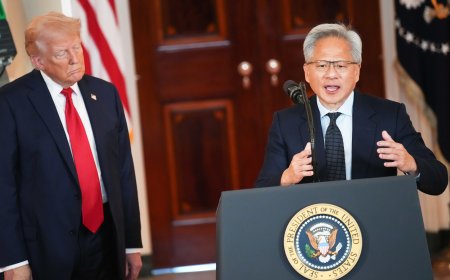
On Monday, November 23, the board voted unanimously to bring Huang back as chief executive, president and director, less than two weeks after he left, after receiving input from senior United States government officials. Colette Kress, Nvidia's chief financial officer, had stepped in as interim chief executive after Huang's resignation. President Donald Trump had publicly pushed for Huang's return, saying his management did not represent a threat to national security.
Huang has apologised to employees and said he was in therapy. Nvidia said an independent board committee would continue investigating reports that Huang had been targeted by a foreign intelligence effort. The company also said it had formed a separate committee of independent directors to oversee export controls and national security risks, and had begun searching for a chief compliance officer.
Even so, S&P said the quick exit and abrupt reinstatement did not settle its concerns about executive conduct or the board's response. The return has drawn criticism as a departure from customary corporate governance practice in the United States.
Why a one-notch cut would still sting
S&P said it expected any downgrade to be limited to one notch, unless the company's future business prospects were harmed. A deeper cut could follow if investigations or new disclosures point to damage to Nvidia's reputation or its business, according to reports of the agency's position.
The financial stakes go beyond Nvidia's own balance sheet. In August, Nvidia announced plans to arrange 500 billion dollars in financing for AI infrastructure with six financial institutions, including Goldman Sachs, Apollo and Blackstone. Under the original terms, Nvidia would guarantee 25 percent of the loans, but lenders had already been demanding larger guarantees even before Huang's ouster and return, Bloomberg reported. A downgrade would likely prompt them to demand even more.
Because Nvidia backstops neocloud companies and other infrastructure firms that lack strong credit on their own, a lower rating could make their debt costlier or force them to post more collateral. The bond market reacted quickly: the cost of protecting Nvidia's debt against default for five years rose as much as 6 basis points to 147.27 basis points a year on Wednesday, an intraday record, according to ICE Data Services, as concerns about AI industry debt compounded the governance controversy.
Moody's moved first, and the scrutiny is not over
S&P is the second major agency to act. Moody's Ratings lowered its outlook on Nvidia to stable from positive on November 18, shortly after Huang stepped down, also citing governance concerns. On Wednesday, Moody's kept its outlook unchanged, saying governance and regulatory uncertainty remained following Huang's return.
The scrutiny facing Nvidia is far from over. Huang is scheduled to appear for a closed-door inquiry before three United States House committees on December 1 and to testify at a public hearing of the Senate Banking Committee on December 3, according to reports. Congressional Democrats have already opened inquiries into the company's China chip sales and its export-control compliance.
For now, S&P's 90-day clock is running. If Nvidia's board can show it has strengthened oversight, independence and succession planning, the rating may survive untouched. If it cannot, the world's leading AI chipmaker will borrow at a higher price, and the companies building the infrastructure around it will feel it too.
Sources
- TechCrunch — S&P considers Nvidia credit downgrade over governance and 'key man' risks
- Business Standard — S&P mulls cutting Nvidia's rating by a notch over governance concerns
- Anadolu Agency — Nvidia faces possible S&P rating downgrade over board independence, succession risks
- ChosunBiz — S&P warns of Nvidia downgrade as AI credit risks rise
- Economy Media — S&P Puts Nvidia's AA Rating on Downgrade Watch Over Governance
What's Your Reaction?
 Like
0
 Dislike
0
 Love
0
 Funny
0
 Angry
0
 Sad
0
 Wow
0