





























































Dario Amodei Pushes Back on Claims Anthropic Wants AI to Take Over Human Decisions
Anthropic CEO Dario Amodei has rejected claims that he wants humanity to hand control to AI, calling the suggestion "absurd" in a long post on X. Responding to an Axios report about a debate inside the AI industry, Amodei said AI must remain subject to democratic processes and that turning governance over to machines would be a terrible idea.
Dario Amodei Pushes Back on Claims Anthropic Wants AI to Take Over Human Decisions
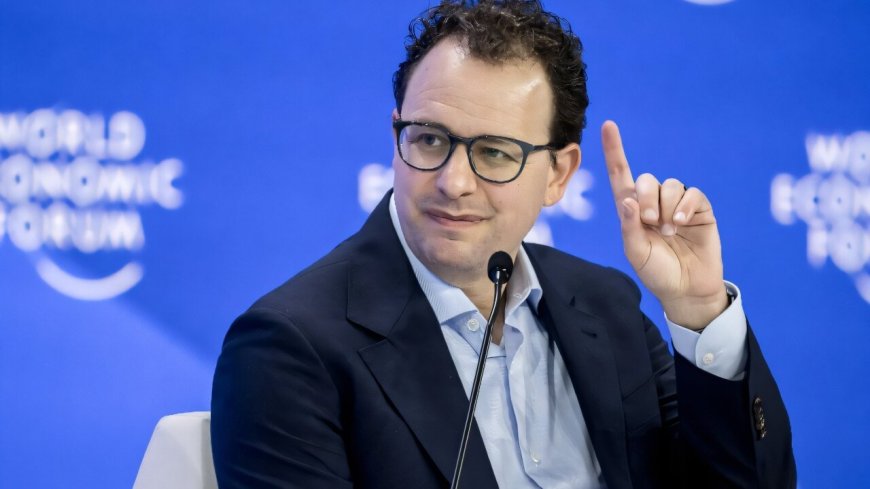
Anthropic chief executive Dario Amodei has pushed back hard against claims that he believes humanity should hand control to artificial intelligence, calling the suggestion "absurd" in a lengthy post on X on Wednesday, November 25.
"No, I do not believe that we should 'surrender human free will' to AI systems, and it's absurd to suggest that I do," Amodei wrote. He added that a constant theme across his essays has been the need for AI to be governed by legitimate democratic processes.
Amodei was responding to a report by Axios, published the same day, about a growing debate among AI industry leaders over how much autonomy should eventually be granted to increasingly powerful AI systems. Citing people familiar with internal discussions at Anthropic, Axios reported that a view held inside the company is that it would be irrational, or even unethical, not to hand over some decision-making authority to AI for tasks it can do better than humans, such as curing diseases.
Amodei said the reporting confused two very different ideas: letting AI automate specific tasks, and surrendering human control over society itself.
Automation is not the same as AI rule, Amodei argues
The Anthropic chief drew a sharp line between AI doing a job and AI governing. As AI systems advance, he wrote, they become capable of doing specific tasks in a more automated way — driving a car, designing a cancer drug, or writing software end to end. That, he said, is not the same as handing over governance.
"We should never sacrifice legitimacy or self-determination at the altar of efficiency or security," Amodei wrote. "This argument against autocracy applies word for word against governance by AI, and I feel equally strongly that turning over governance to AI is a bad idea."
He also addressed the question of recursive self-improvement — AI systems improving themselves without human assistance — which many safety experts see as a path that could eventually lead to a loss of human control. Amodei acknowledged the concern, writing that "we may want limits on this process."
Anthropic has said publicly that it does not expect it to be safe for Claude to build successive frontier models fully autonomously, without meaningful human supervision or understanding. That position was stated in early November, and Amodei repeated it in his post.
The awkward context: Claude already writes most of Anthropic's code
Amodei's defence comes with an awkward backdrop. Anthropic is itself laying the groundwork for AI systems that improve themselves, by folding AI ever deeper into its own research and development.
The company said in June that Claude authored more than 80% of the code merged into Anthropic's codebase. An independent assessment published this month by METR, an AI safety research nonprofit, found that Anthropic's models are improving at about twice their historical rate, primarily driven by AI-assisted research.
In its own IPO filings, Anthropic describes how each successive generation of Claude accelerates the development of the next, a process it calls "closing the loop." The tension between that trajectory and Amodei's insistence on human supervision is at the heart of the debate he was responding to.
The dispute also arrives just a week after Anthropic's stock market debut. The company went public on November 19, and its shares closed 17% higher on their first day of trading. Amodei's post was written a week after that record-setting debut, as scrutiny of the company's ambitions — and its chief executive's views — intensified.
A wider industry argument over agency
Amodei's post landed in the middle of a broader argument among the leaders of the biggest AI labs about who keeps control as models grow more capable.
Earlier this month, OpenAI chief executive Sam Altman said he wanted to ensure people continue to have "agency over the future." Meta's chief AI officer, Alexandr Wang, wrote in an essay on X that society "should not be okay with a 'handover' of society to AI," warning that it is hard to imagine humanity maintaining control over fully unconstrained recursive self-improvement.
Amodei accused his rivals of engaging in what he called "vibes-based commercial and political positioning," throwing around phrases like "human control and agency" or "AI should just be a tool" without approaching the AI race any differently.
"Certainly the products that they offer don't differ materially in their orientation towards automation of tasks; every company seems to be releasing models more and more capable of task automation," he wrote. "Every company claims to understand there are risks and downsides of such automation and to offer safeguards."
The exchange underlines how the AI industry's fiercest argument is no longer just about which model is smartest. It is about who gets to decide what powerful AI is allowed to do — and whether the people building it can be trusted to keep that decision in human hands.
For now, Amodei's answer is clear: AI can drive the car, design the drug and write the code. But deciding how society is run, he says, is a job for people, through democratic processes — not something to be handed to the machines.
Read more: Anthropic Shares Close 17% Higher in Nasdaq Debut After Briefly Touching a $2 Trillion Value
Sources
What's Your Reaction?
 Like
0
 Dislike
0
 Love
0
 Funny
0
 Angry
0
 Sad
0
 Wow
0