



















































Neuralink Gets FDA Go-Ahead for First US Pivotal Brain-Implant Trial in ALS Patients
Neuralink has received FDA approval to launch LINK, the first pivotal trial in the United States for an implantable brain-computer interface. The study will test the company's N1 implant in adults with severe paralysis caused by ALS, building on work with more than 30 participants so far. Enrollment is now open.
Neuralink Gets FDA Go-Ahead for First US Pivotal Brain-Implant Trial in ALS Patients
Neuralink has cleared one of the biggest hurdles on the road from laboratory curiosity to real medical treatment. The company announced on November 25, 2026 that the US Food and Drug Administration has approved its LINK Pivotal Study, the first pivotal clinical trial in the United States for an implantable brain-computer interface. The study will test whether Neuralink's N1 implant can safely and reliably help adults living with severe paralysis caused by ALS to control digital devices with their thoughts alone.
Enrollment is now open. Neuralink says the trial builds on its work with more than 30 participants who have already received its implants through earlier feasibility studies in the United States, Canada and the United Kingdom.
What the LINK study will test
A pivotal trial is the stage of clinical research where a device must prove, at scale, that it is both safe and effective enough to support a future application for marketing approval. For Neuralink, that means moving beyond the early feasibility work of the past few years and putting its system through a formal, protocol-driven evaluation.
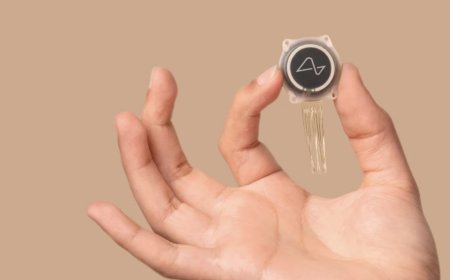
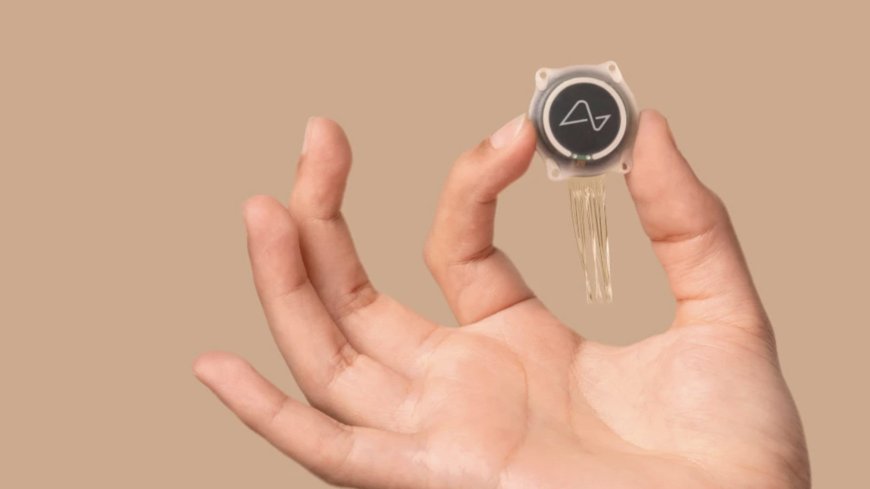
The study will enroll a limited number of adults in the US with severe paralysis caused by amyotrophic lateral sclerosis, or ALS, a progressive neurodegenerative disorder that damages the nerve cells controlling voluntary muscle movement. Participants will receive the N1 implant, a coin-sized device placed in the skull by Neuralink's R1 surgical robot, which inserts 64 ultra-fine electrode threads carrying 1,024 electrodes into the brain's motor cortex, the region associated with movement.
Once implanted, the system records neural activity linked to intended movement and software translates those signals into commands for computers and other digital devices. The trial will measure how well participants can use that control in everyday life, with a focus on functional outcomes that improve independence, such as communicating and operating devices without a keyboard or other physical controls. It will also assess the system's long-term safety and reliability, with participants followed for about 24 months after implantation, according to Donga Science.
Building on more than 30 implants
Neuralink's case for a pivotal trial rests on the participants who have already lived with its implants. The company says more than 30 people have received the device through its ongoing early feasibility studies, and last year it revealed that its first participant with ALS, Bradford Smith, was able to communicate using brain signals alone.
"Neuralink has given me freedom, hope, and faster communication. It has improved my life so much. I'm so happy to be involved in something big that will help many people," Smith said at the time.
The company's implants have also been used by people with paralysis from other causes. Earlier this month, a Neuralink participant was shown steering a household robot around his home using only his thoughts, a demonstration of how far the technology has moved from the laboratory bench toward practical daily use. Read more: He Steered a Robot With His Thoughts: How a Neuralink Patient Drove a Vacuum Around His Home.
What the approval does and does not mean
The distinction matters, and Neuralink's announcement is careful about it. The FDA has approved the company to run the LINK trial under an approved clinical protocol. It has not approved the implant itself for general medical use, and the device remains investigational, available only through authorized clinical research. The authorization was granted on an experimental basis, and the company did not disclose its target enrollment, the study's anticipated duration or the participating clinical sites in its announcement.
That framing is standard for this stage of medical device development, but it also sets the timeline. If the trial shows the system is safe and effective, Neuralink could then apply for marketing authorization, the step that would allow the device to reach patients outside of clinical studies. Donga Science reported that the company is internally aiming for final FDA marketing authorization in 2029. For now, the immediate next step is recruitment: people with ALS who may be eligible can apply through Neuralink's patient registry.
Why ALS is the first focus
ALS, also known as Lou Gehrig's disease, progressively robs people of the ability to move, speak and eventually breathe on their own, while in many cases leaving cognition intact. That combination makes it one of the most compelling early applications for a brain-computer interface: a person who can no longer move a hand or speak could still, in principle, direct a cursor, type a message or operate a device directly from the brain's motor signals.
Neuralink is not the only company working on implantable brain-computer interfaces, but the LINK study is the first pivotal trial of its kind in the United States, and its results will be watched well beyond the company itself. If the system proves safe and reliable in people with ALS, the same approach could eventually be extended to other forms of severe paralysis. For the patients enrolling now, though, the stakes are more immediate: a chance to regain a measure of independence that ALS has taken away.
Sources
- Neuralink, announcement on X, November 25, 2026
- Engadget, "Neuralink receives FDA approval for 'pivotal' brain implant trial in ALS patients", November 26, 2026
- MobiHealthNews, "Neuralink receives FDA approval to launch pivotal brain implant trial for ALS", November 2026
- Interesting Engineering, "Neuralink gets FDA approval for first pivotal brain implant trial", November 2026
- Donga Science, "Neuralink wins FDA approval for pivotal implantable BCI trial", November 2026
What's Your Reaction?
 Like
0
 Dislike
0
 Love
0
 Funny
0
 Angry
0
 Sad
0
 Wow
0