













































AI Uses Less Water Per Dollar Than Almond Milk or a Round of Golf, Enverus Finds
A new Enverus Intelligence Research analysis puts $25 of monthly frontier AI inference at about 1.9 gallons of water, far below almond milk at 308 gallons and golf green fees at 679 gallons for the same spend — with about 90 percent of AI's water footprint traced to power plants rather than data centers.
AI Uses Less Water Per Dollar Than Almond Milk or a Round of Golf, Enverus Finds
Artificial intelligence consumes far less water per dollar spent than almond milk or a round of golf, according to a new analysis from Enverus Intelligence Research, reframing a debate that has followed the AI boom into towns and council chambers wherever data centers are proposed.
The report, Data Center Water Use | Setting the Record Straight, released on November 24, 2026, measures water consumption against a consistent monthly spending benchmark instead of per prompt or per query. On that basis, $25 a month of frontier large language model inference corresponds to about 1.9 gallons of water consumed, including the water used to generate the electricity that powers the data centers.
The same $25 buys a very different water bill elsewhere. Household electricity on an all-natural-gas grid accounts for about 31 gallons. Pure almond milk takes 308 gallons. Public golf course green fees take 679 gallons.
The comparison, per $25 of monthly spending
The figures below are Enverus Intelligence Research's base-case estimates, all measured on the same $25 monthly spending benchmark:
- Frontier LLM inference: about 1.9 gallons of water
- Household electricity (all-natural-gas grid): about 31 gallons
- Almond milk: about 308 gallons
- Public golf course green fees: about 679 gallons
Put another way, the research finds that skipping one almond latte saves more water than spending $100 on AI inference, and skipping one round of golf saves more water than $16,000 worth of it.
Most of the water is used at the power plant, not the data center
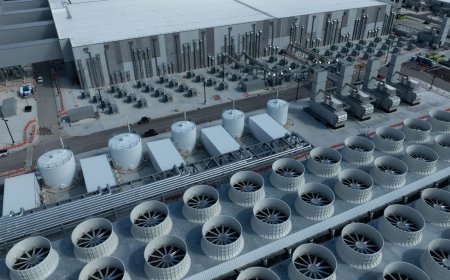
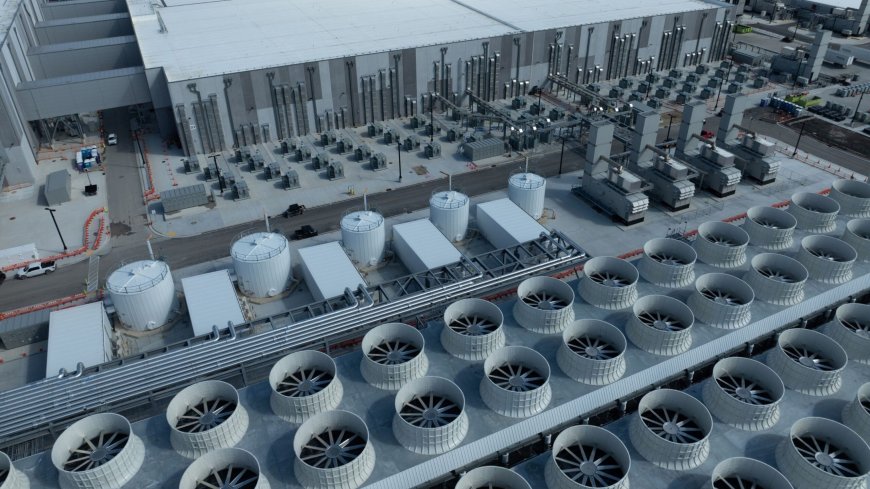
The report's most surprising finding may be where the water actually goes. About 90 percent of the water attributed to AI inference is consumed at the power plant that generates the electricity, rather than at the data center itself, where cooling towers draw most of the attention.
"Water use is a real factor in data center siting, but the numbers people quote rarely have a consistent basis," said Ryan Luther, director of Energy Transition Research at Enverus Intelligence Research. "If a typical consumer is worried about their water footprint, skipping one almond latte a week does more than giving up AI chatbots entirely."
The distinction matters because the public debate has focused heavily on the water drawn by data center cooling systems on site, while the larger share of the footprint sits upstream, in how the electricity is made. A data center running on a grid with more wind and solar, or on power that uses less water to generate, would carry a smaller modeled footprint than one on a gas-heavy grid.
How a data center campus compares per acre
Enverus also compared land-based water use. A modern hyperscale data center campus consumes about 32,100 gallons of water per acre per month, according to the report. That is less than irrigated rice, almonds and alfalfa, and roughly in line with an average U.S. golf course.
The per-acre comparison is aimed at the zoning and permitting fights that have followed AI infrastructure across the United States, where residents and local officials have raised concerns about strain on local water supplies. Enverus argues that, acre for acre, a data center campus is not an unusually thirsty neighbour.
What the numbers do and do not prove
The analysis has clear limits, and they are worth stating plainly. The full report is available only to Enverus Intelligence Research subscribers, so the underlying model and inputs have not been independently checked. The figures are modeled estimates from an energy-data firm, not a peer-reviewed hydrology study, and the spending benchmark is a consumer metaphor: a $25 subscription does not measure how often someone actually uses an AI service.
Nor does a per-dollar comparison settle the local question. A data center campus uses the same amount of water wherever it sits, and in a water-stressed region that local draw is what residents feel, whatever the national average looks like. Governments are already responding to that local pressure: Norway, for example, has moved to rein in its data center industry as AI demand strains the power grid, a reminder that water and energy siting rules are tightening even as the industry grows. See also: Norway Reins in Data Centre Industry as AI Boom Strains the Power Grid.
Even so, the report adds a useful dose of scale to a debate often argued in anecdotes. The question is no longer only how much water AI uses in absolute terms, but how that use compares with the everyday activities people rarely think of as water-intensive at all.
Sources
- Enverus — EIR Finds AI Inference Uses 1.9 Gallons of Water per $25
- Channel News Asia — AI consumes less water per dollar spent than almond milk or golf, Enverus report says
- World Oil — Most of AI's water footprint comes from the power plant, not the data center, Enverus says
- Dataconomy — AI Water Use Far Below Almond Milk And Golf, Enverus Finds
What's Your Reaction?
 Like
0
 Dislike
0
 Love
0
 Funny
0
 Angry
0
 Sad
0
 Wow
0