






















































Motorola Edge 70 Review: The Slim Phone That Refuses to Compromise
Motorola's Edge 70 packs a 4,800mAh battery, a trio of 50MP cameras and a superb OLED display into a 6mm, 159g body. GSMArena's full review gave it 4.2 out of 5 — here is what the lab tests actually found, from battery life and charging speed to camera quality and the Snapdragon 7 Gen 4's performance.

Motorola Edge 70 Review: The Slim Phone That Refuses to Compromise
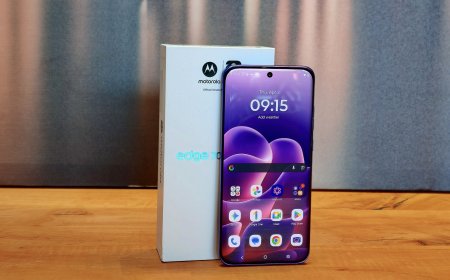
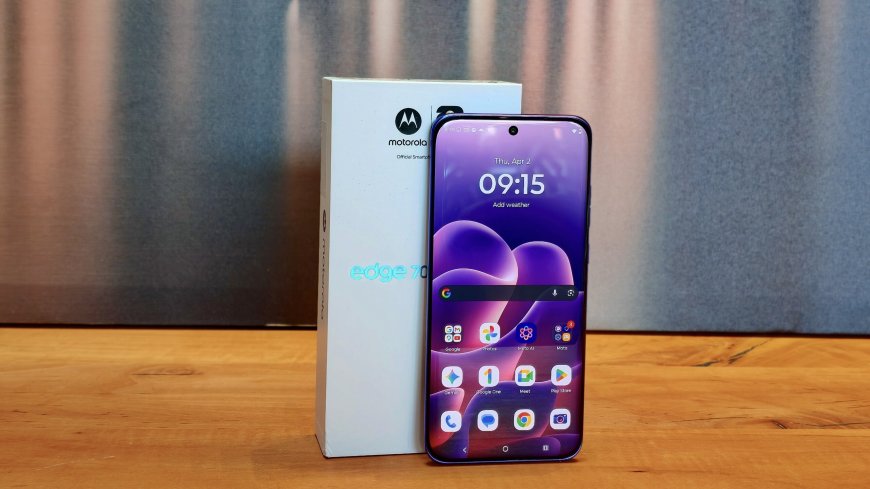
Motorola has joined the race for the thinnest and lightest smartphone, and the Edge 70 is its entry — the global version of the China-only Moto X70 Air. On paper it reads like a contradiction: a 6mm thin, 159g phone with a 4,800mAh battery, a trio of 50MP cameras and full IP68 and IP69 protection. GSMArena put the phone through its full lab review on 24 November 2025 and scored it 4.2 out of 5. This review looks at what those tests actually found, and whether the thinnest Motorola yet is worth your money.
Design and build: thin, light and genuinely grippy
The Edge 70 measures 159.9 x 74 x 6.0mm and weighs just 159 grams. That makes it the lightest of the current ultra-slim trio — lighter than the Galaxy S25 Edge and the iPhone Air — though not technically the thinnest, since the iPhone Air measures 5.6mm and the Galaxy 5.8mm. In practice, GSMArena found the difference academic: the Edge 70 is, in its words, the most natural-feeling of the new thin phones to hold.
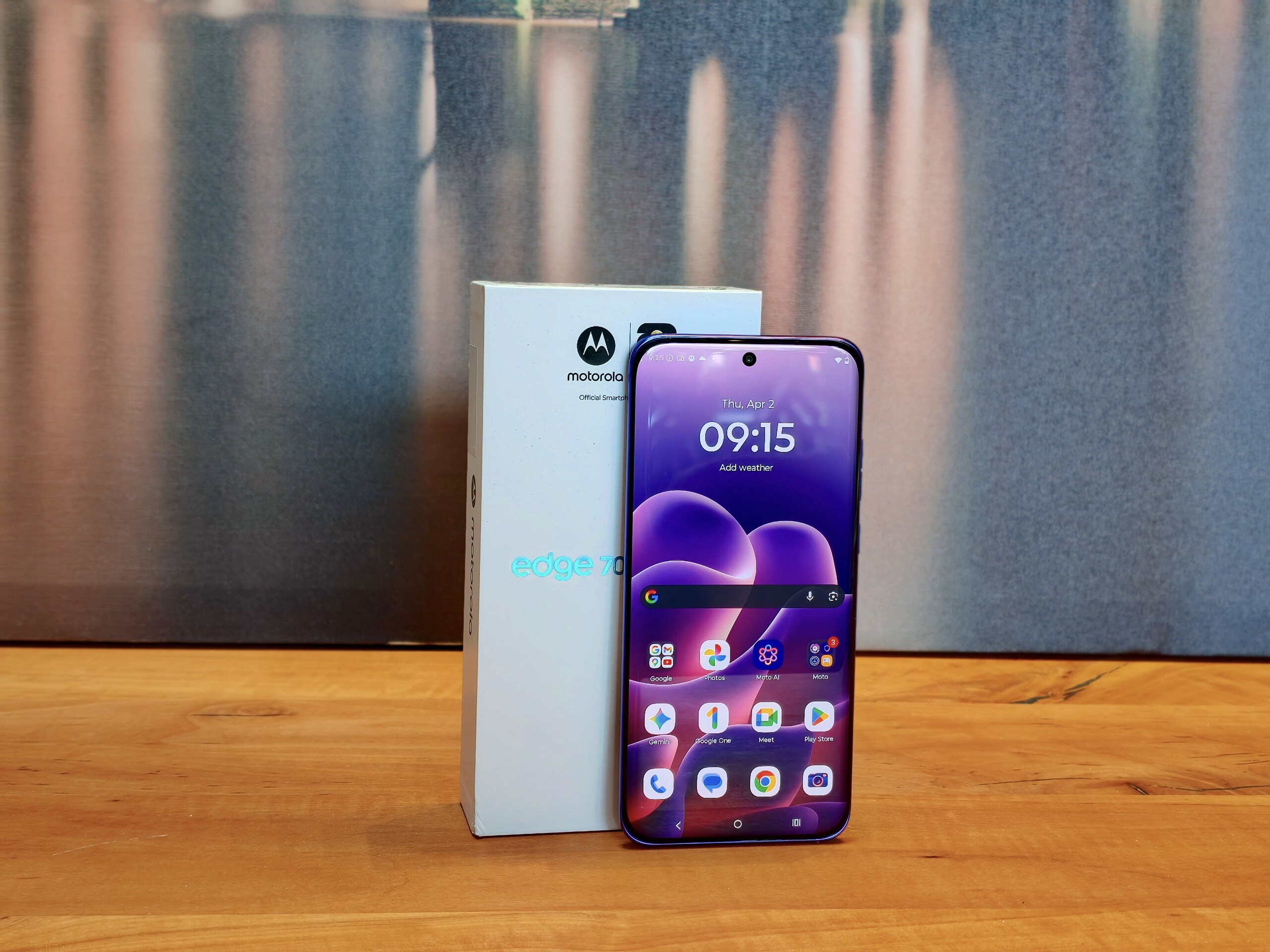
The build is a flat Gorilla Glass 7i front, a brushed aluminium frame with subtle chamfers, and a textured back panel that resists fingerprints and smudges while adding grip. The colours come courtesy of Pantone — Gadget Gray, Lily Pad and Bronze Green. The camera island protrudes noticeably, but the back panel transitions gradually up to it, and of its four rings one is decorative, there only for symmetry.
Durability has not been sacrificed for thinness. The Edge 70 is rated IP68 and IP69 for dust, water and high-pressure water jets, and it meets a number of MIL-STD-810H standards covering humidity, temperature swings, shock and scratch resistance. An optical fingerprint scanner sits under the display, there is a dedicated AI button on the left side, and the box includes a transparent MagSafe-ready case for wireless charging and accessories.
Display: bright, sharp and smooth
The 6.7-inch P-OLED panel runs at 1220 x 2712 pixels with a 120Hz refresh rate, 10-bit colour and HDR10+ support. Motorola advertises up to 4,500 nits of peak brightness. GSMArena measured 486 nits of maximum manual brightness and 1,458 nits in automatic mode, with a minimum of 2.8 nits — strong numbers, though the advertised peak would only be reachable with specific HDR content on a tiny part of the screen.
The refresh rate offers three modes: Smart, Hyper Smooth and Efficiency First. The first two render the interface at 120fps and drop to 60Hz for static content and video, while Efficiency First locks the screen to 60Hz. One caveat from the review: at the time of testing, Netflix had not added the device to its HDR allowlist, so it served 1080p content in standard dynamic range only.
Performance and software: solid mid-range, clean Android
Power comes from Qualcomm's Snapdragon 7 Gen 4, built on a 4nm process, paired with 12GB of LPDDR5X RAM and 256GB or 512GB of UFS 3.1 storage. Qualcomm claims 27 percent faster CPU performance than the Snapdragon 7 Gen 3, a 30 percent GPU boost, and 65 percent faster AI tasks from the updated Hexagon NPU.
In GSMArena's benchmarks the chip proved a good mid-range performer — a step up from the 7 Gen 3 in the Edge 50 Pro, but well short of the flagship silicon in the Galaxy S25 Edge. Sustained performance was a pleasant surprise: the phone kept 86 percent of its CPU performance after an hour of stress testing and 64 percent of its GPU performance after 20 minutes of 3DMark. It got warm around the frame during stress tests, but never unpleasantly so. The verdict: reliable everyday performance, but anyone prioritising raw speed will find cheaper phones with stronger chips.
Software is Android 16 with Motorola's Hello UI, and the experience is clean and close to stock. Motorola promises four years of Android OS upgrades and six years of security updates. Moto AI is accessible from the dedicated AI key, a double tap on the back, or a floating bubble, and it sits alongside Google Gemini — with Copilot Vision integration and an Explore with Perplexity option. Catch Me Up summarises notifications, Image Studio generates images and stickers, Pay Attention transcribes and summarises audio, and Playlist Studio builds playlists from a prompt. Smart Connect handles links to PCs, tablets and displays, and the usual Moto gestures — chop for the flashlight, twist for the camera — are all present.
Battery life and charging: the headline act
The silicon-carbon 4,800mAh battery is the Edge 70's party trick, and it delivers. GSMArena's lab tests gave it an Active Use score of 13 hours and 36 minutes — ahead of both the iPhone Air and the Galaxy S25 Edge in web browsing, and better than the Galaxy in streaming and gaming. For a 6mm phone, that is genuinely impressive.
Charging is quick too. The 68W wired charger took the battery from 0 to 48 percent in 15 minutes, 85 percent at the 30-minute mark, and a full charge in 41 minutes. Wireless charging runs at up to 15W, though reaching that speed needs a magnetic charger and the bundled magnet-equipped case. A charge limit and smart overnight charging are available in settings.
Cameras: three 50MP sensors, no telephoto
All three cameras are 50MP: a main wide camera with a Samsung GNJ sensor, optical image stabilisation and 2x lossless zoom; an ultrawide with autofocus that doubles as a macro camera down to 10cm; and a 50MP selfie camera. There is no dedicated telephoto lens, and all three cameras record up to 4K30 video, with the main camera reaching 4K60.
Daylight photos from the main camera are detailed and true to life, with accurate white balance, wide dynamic range and no visible noise. The 2x zoom holds up nearly as well, with only a minor drop in fine detail. Portraits are a strength — facial detail, skin tones and exposure all impressed the reviewers — and the ultrawide matches the main camera's colours closely. At night the main camera produces very good photos with controlled noise, though Night Mode can look overly bright, and 2x night shots lose about a third of their detail.
The selfie camera is, in GSMArena's words, extremely good, with impressively detailed photos, natural skin tones and a wide dynamic range. Video is excellent from the main camera in daylight, though 2x video is a simple digital crop and looks noisy, and stabilisation works well with some walking wobble remaining. One recurring annoyance: the camera app's shutter button occasionally feels unresponsive.
Speakers and the rest
The stereo speakers — bottom speaker plus earpiece — scored a Very Good mark for loudness in GSMArena's test, with Dolby Atmos on by default. Sound quality is average, though: a little shallow, with good highs and some bass but vocals and mid-tones that could use a boost.
The competition
The Galaxy S25 Edge is the obvious rival: slimmer on paper, with a higher-resolution display, much stronger hardware and 8K video, slower wired charging and slightly shorter battery life — and, crucially, a lower price, which GSMArena says gives it better overall value. The iPhone Air is the thinnest of the bunch and excels in battery life, but costs more and offers only a single rear camera. The Realme 15 Pro packs almost the same hardware with a larger battery at a lower price, while the vivo V60 adds a 50MP 3x telephoto camera, a bigger battery and faster charging. Motorola's own range keeps moving too — see our coverage of the Motorola Signature 27 and its 7,000mAh battery.
Verdict: GSMArena score 4.2 out of 5
GSMArena's verdict is that the Edge 70 arguably has the best design among today's ultra-slim smartphones, with a premium build, strong water and drop resistance, one of the most comfortable grips in a long time, and a genuinely impressive thin profile. The large OLED, excellent battery life, fast charging and clean, thoughtful Android all earn praise, and the cameras turned out to be the phone's most unexpected highlight.
The trade-offs are clear. The Snapdragon 7 Gen 4 is a mid-range chip in a phone that launched at a premium price, the speakers sound shallow, and cheaper rivals offer more powerful hardware. GSMArena's conclusion: once the price inevitably settles down a bit, the Edge 70 will be seriously worth considering. For buyers who want the thinnest possible phone that still lasts a full day and takes great photos, it already is.
Pros
- Great-looking, incredibly grippy, tough build
- Superb OLED display
- Top-notch battery life, fast to charge
- All three cameras do well for photos and videos, selfies included
- Clean and fast Android, plenty of AI integration
- Bundled MagSafe-compatible case in some markets
Cons
- Somewhat expensive at launch
- Mid-range chipset
- Shallow-sounding speakers
Sources
What's Your Reaction?
 Like
0
 Dislike
0
 Love
0
 Funny
0
 Angry
0
 Sad
0
 Wow
0