

























































Honor Magic9 Pro Max Review: ARRI Cameras and 22-Hour Battery, but at a Steep Price
GSMArena's full review of the global Honor Magic9 Pro Max is out, rating it 4.7 out of 5: dual 200MP cameras tuned with cinema specialist ARRI, a 6.93-inch LTPO display, nearly 22 hours of active use and 120W charging. The €1,499 price and Honor's app-dependent performance management are the main things holding it back.

Honor Magic9 Pro Max Review: ARRI Cameras and 22-Hour Battery, but at a Steep Price
Honor's biggest phone of the year has now been through GSMArena's full lab and camera testing, and the verdict is warm: the global Honor Magic9 Pro Max earns a 4.7 out of 5 in the review published on 24 November 2026. It is a phone built around its cameras — two 200MP sensors tuned with cinema camera maker ARRI — wrapped in a large, bright display and a battery that keeps going for nearly 22 hours of active use. But it is also one of the most expensive Android phones Honor has ever sold, at €1,499, and the review finds a frustrating quirk in how the phone manages its own performance.
This is a review of the finished phone, not the early look. Innopark IT covered the Magic9 Pro Max arriving for review earlier in November; the full review now adds lab-measured display and battery results, benchmark runs and hundreds of camera samples to the picture.
Design and display: premium, with two quirks
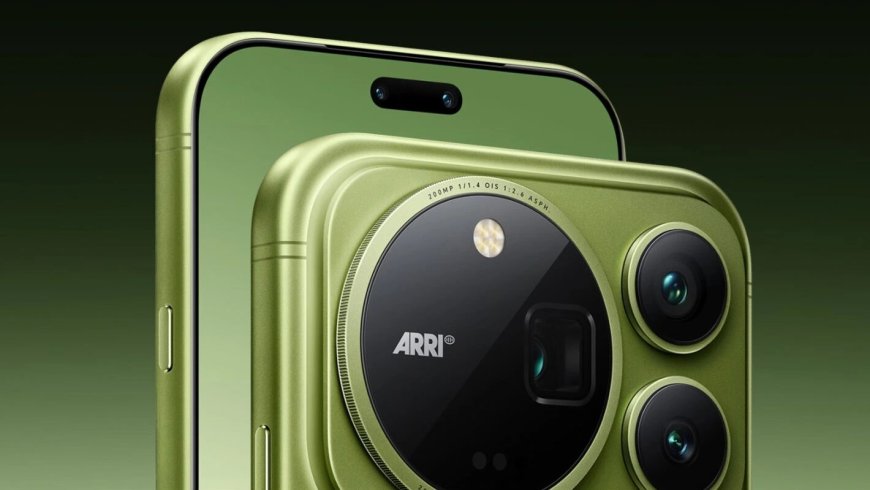
The review unit is Celadon Green, a muted pale green that GSMArena calls premium-feeling but not an attention-grabber. The phone measures 168.5 x 77.2 x 8.0 mm and weighs 232 g, with Gorilla Glass Victus 2 on the front, a glass back and an aluminum frame. Protection is generous: IP68, IP69 and IP69K ratings against dust and water. The rear carries a raised dual-layer glass plateau around the cameras, with a small red ARRI logo on the main lens.
Two design details divide opinion. The big camera plateau makes the phone rock when it lies on a table, and the pill-shaped cutout for the front camera sits off-center in the display. On the practical side, there is a dedicated AI button on the left edge and a two-stage camera button on the right — half-press to focus, full press to shoot — plus a fast, reliable 3D ultrasonic fingerprint sensor under the screen, though it sits a little high for comfortable reach. The box includes a case, a 120W charger, a USB-C cable and a SIM tool, but no screen protector.
The 6.93-inch LTPO AMOLED display is one of the phone's strongest features. It runs at 1320 x 2868 pixels with an adaptive 1–120Hz refresh rate, 10-bit color and support for HDR10, HDR10+ and Dolby Vision. GSMArena measured 812 nits at maximum manual brightness and 2,106 nits in automatic mode, with an HDR peak of 2,081 nits — well below the 10,000 nits Honor advertises, a figure the review notes is only reachable in small areas under ideal conditions. Color accuracy in the Normal mode is excellent, with an average Delta E of 1.0 against the sRGB standard, and the panel drops to 1.8 nits at minimum brightness for comfortable night use.
Battery life and charging: nearly 22 hours, but slower than promised
The global model reviewed here carries a 6,000mAh silicon-carbon battery — capacity varies by market, with listings showing up to 8,800mAh in China. In GSMArena's lab tests it returned an Active Use Score of 21 hours and 56 minutes, built from 44 hours and 54 minutes of calls, 20 hours and 57 minutes of web browsing, 29 hours and 13 minutes of video playback and 12 hours and 5 minutes of gaming. That is excellent endurance by any flagship standard, though the review notes the Galaxy S26 Ultra lasts longer still.
Charging is 120W wired and 80W wireless. Honor advertises a full wired charge in 24 minutes, but GSMArena's test with the bundled charger took 46 minutes: 20 percent at five minutes, 48 percent at 15 minutes and 83 percent at 30 minutes. That is still fast, yet slower than the Magic8 Pro, which needed 37 minutes in the same test.
Performance: fast, with a caveat
Inside is Qualcomm's Snapdragon 8 Elite Extreme Gen 6, built on a 3nm process, with two prime cores running up to 5.01GHz, an Adreno 850 GPU and a faster Hexagon NPU for AI work. The tested unit had 12GB of RAM and 512GB of storage, with configurations up to 16GB and 1TB available.
Benchmarks are strong but not chart-topping among phones sharing the same chip. GSMArena recorded a Geekbench 6 single-core score of 3,465, an AnTuTu result of 4,149,412 and 7,892 in 3DMark Wild Life Extreme. The more important finding is how Honor manages that power: in default mode, some stress tests ran at roughly 45 percent of the performance available in Performance mode, and GPU results in 3DMark were about half. The review describes this app-dependent behavior as frustrating, and notes the same pattern on the Magic8 Pro and Magic V5. Thermal stability under sustained load is also modest, at 49 percent of maximum CPU performance in default mode and 68 percent in Performance mode.
In everyday use, none of that is likely to matter — the review calls performance fast and reliable. It matters most to buyers who expect a flagship chip to run at full speed without digging into settings.
Cameras: the ARRI partnership delivers
The camera system is the reason this phone exists. The main camera is a 200MP sensor with a 24mm f/1.57 lens and stabilization rated at 8.0 stops, joined by a 200MP telephoto with an 85mm f/2.6 lens offering 3.5x optical zoom, and a 50MP ultrawide with a 12mm lens. On the front is a 55MP multi-aspect selfie camera that can shoot in either orientation without rotating the phone, though it has fixed focus — autofocus was present on the Magic7 Pro and has not returned. Honor also sells a teleconverter kit with 200mm and 500mm extender lenses, longer than the attachments offered with rival flagships.

In daylight, the main camera produces excellent 12.5MP images — sharp, clean and well-exposed, with accurate white balance and natural colors. The 2x zoom is remarkably good, and the 50MP and 200MP modes add some detail, though the full-resolution files are not dramatically better. At night the main camera stays clean and well-exposed with a wide dynamic range, with only occasional hot pixels in dark skies.
The telephoto is the standout. Its 3.5x images are very sharp with rich colors, the 200MP mode adds real detail at 3.5x, 6.8x and 10x, and even 20x shots look good, with 30x and 100x surprisingly usable. Low-light telephoto results are among the best GSMArena has seen from a phone at these zoom levels. An AI enhancement mode can sharpen leaves, brickwork and distant detail convincingly, though it sometimes invents textures and can turn legible text into gibberish.
The ultrawide is very sharp with accurate colors and a wide dynamic range, if a step behind the other two cameras, with softer corners and a merely decent macro mode. Selfies are a highlight: the review calls them some of the best it has ever seen, with sharp detail, accurate skin tones and plenty of dynamic range, and portraits separate subjects cleanly apart from occasional bokeh artifacts.
Video is strong too. The main camera records clean, sharp 4K footage with good dynamic range, and the ultrawide and telephoto produce some of the best footage GSMArena has seen from those cameras. There are 8K30 recording, 4K60 and slow motion up to 4K120. Stabilization is mostly good, though fast pans can jerk and night footage can look soft with a slight exposure flicker. The review's overall judgment is that this is one of the best camera systems available right now, with some remaining stabilization and focus issues during video.
Software and AI
The phone ships with Android 17 and MagicOS 11, and Honor promises seven major Android upgrades. A new translucent Liquid Design interface arrives alongside the older Frosted Glass look, and the AI feature list is long: Gemini and Circle to Search, AI subtitles and translation, call translation, AI Memories, Magic Text, AI deepfake detection, AI Image to Video 2.0 and gallery editing tools including upscaling and object removal. Files can be sent directly to Apple devices, and there is a dedicated AI button on the frame. Honor also claims the Magic9 Pro Max is the first Android phone with Google's Personal Intelligence — a claim GSMArena repeats as Honor's own.
How it compares
At £1,299 in the UK, the Magic9 Pro Max costs more than the Galaxy S26 Ultra at £1,149 and the iPhone 18 Pro Max at £1,249. The Samsung lasts longer on a charge and arguably has the better display, but has a smaller battery, slower charging, no 200MP telephoto and less capable AI, in the review's assessment. The iPhone has better battery life, faster charging and the best front camera of the three, but no AI features, no zoom camera and no 120W charging. The Xiaomi 18 Pro Max is cheaper but is not sold in the UK, while the Oppo Find X10 Pro Max is rated one of the best rivals overall but has a weaker telephoto and slower charging. Innopark IT has also reviewed the Xiaomi 18 Pro Max and the Honor Magic8 Pro, and covered the Honor 700 series launch.
Verdict: one of the best phones of 2026
GSMArena's conclusion is that the Magic9 Pro Max feels like a true flagship, with a stunning display, fast and reliable performance, excellent battery life and a truly impressive camera system, and that it deserves to be considered alongside the best phones on the market. It calls the phone one of the best of 2026, with three reservations: the camera plateau that makes it wobble on a table, the off-center pill cutout, and the app-dependent performance management. The price is the other obvious barrier — this is a very expensive phone, and the review is clear that buyers are paying a premium for the camera system above all else.
The strengths, as listed in the review, are one of the best displays on a smartphone, excellent battery life, very fast charging, one of the best camera systems, an excellent selfie camera and seven years of Android OS updates. The weaknesses are the price, the wobbling camera plateau, the off-center cutout and the performance management. For buyers who want the best zoom camera on a phone and can live with the quirks, the review says this is a phone they will love.
Sources
- GSMArena — Honor Magic9 Pro Max (Global) review, 24 November 2026 (all seven pages: introduction, design, lab tests, software and performance, photo quality, video quality, competition and verdict)
- Lowyat.NET — HONOR Magic9 Pro Max Review: A Proper Refresh (Malaysia pricing and regional battery capacity)
- Android Headlines — HONOR Magic9 Pro Max Is Official, and It Brings ARRI's Camera Expertise (featured image source)
What's Your Reaction?
 Like
0
 Dislike
0
 Love
0
 Funny
0
 Angry
0
 Sad
0
 Wow
0