
























































Xiaomi 17T Review: A 5x Telephoto Star Held Back by Its Price
GSMArena's full review of the Xiaomi 17T finds a very easy phone to like: a superb 120Hz AMOLED display, a 6,500mAh battery that lasts over 17 hours of active use, and a Leica camera system led by an excellent 50MP 5x telephoto. The catch is the €750 starting price, with slow 67W charging and a plastic frame making cheaper rivals hard to ignore.

Xiaomi 17T Review: A 5x Telephoto Star Held Back by Its Price
Xiaomi's T-series has always played a familiar role: take the main number series, trim a few flagship touches, and sell the result for less. The Xiaomi 17T follows that script, sitting a notch below the mainline Xiaomi 17 with a gorgeous 120Hz AMOLED display, a Leica camera system and a huge 6,500mAh battery. GSMArena's full review of the phone calls it a very easy phone to like — and then asks whether its €750 starting price is really justified.
On paper, the 17T is a convincing upper-midrange package. It runs MediaTek's Dimensity 8500 Ultra chipset with 12GB of RAM and 256GB or 512GB of UFS 4.1 storage, ships with HyperOS 3 on top of Android 16, and carries an IP68 rating with Gorilla Glass 7i on the front. The question is not whether the phone is good — it is — but whether it is good value in a segment where Xiaomi's own cheaper phones keep undercutting it.
Display: bright, sharp and impressively certified
The 6.59-inch AMOLED panel is one of the 17T's strongest cards. Its 2756 x 1268-pixel resolution is sharp without straining the GPU, and the 12-bit colour depth backs up certifications for both Dolby Vision and HDR10+. Xiaomi claims a 3,500-nit peak brightness, and GSMArena's measurements came close, recording around 3,358 nits on a 10 percent window.
Day-to-day brightness is a little more complicated, because of the way Xiaomi regulates its panels. With the brightness slider pushed to maximum in manual mode, the review unit delivered just under 600 nits — not really enough for comfortable use in direct sunlight. Letting automatic brightness do its job works far better, reaching around 1,035 nits in sunlight on a 75 percent window, and the panel happily pushes further while playing HDR video. The phone also carries a full set of TUV Rheinland eye-care certifications, which Xiaomi bundles under the name Xiaomi Vision Care.
The 120Hz refresh rate uses a simpler LTPS panel, so switching is less dynamic than on LTPO rivals. The system offers 30Hz, 60Hz, 90Hz and 120Hz steps, but in practice GSMArena could not get the phone to drop to 30Hz at all — even 30fps videos played back at 60Hz. A per-app setting lets you force specific apps to 120Hz, and it mostly works, though not for every game. It is a small imperfection in an otherwise excellent screen.
Performance: plenty fast, with one odd GPU result
The Dimensity 8500 Ultra is a current upper-midrange chip, built on TSMC's efficient 4nm process and announced in the first quarter of 2026. Its single prime Cortex-A725 core runs at up to 3.4GHz, backed by three more A725 cores at 3.2GHz and four efficiency cores at 2.2GHz, with an 8-core Mali-G720 GPU and LPDDR5X memory. In CPU tests it holds its own comfortably, landing at roughly the same level as the Dimensity 8400 Ultra in last year's Xiaomi 15T and extracting slightly more from the chip than the Poco X8 Pro, which shares the same silicon.
There was one strange result. In 3DMark runs, the 17T scored notably worse than the 15T and the Poco X8 Pro, despite having one more GPU core than the older chip — and repeated runs confirmed it. GSMArena offered no explanation for the gap. Compound AnTuTu results, by contrast, came out exactly as expected, placing the 17T right alongside the Poco X8 Pro and the 15T. Thermals, at least, are excellent: the chipset barely throttles under sustained stress, and the phone's surface gets warm but stays comfortable to hold.
Camera: the 5x telephoto changes everything
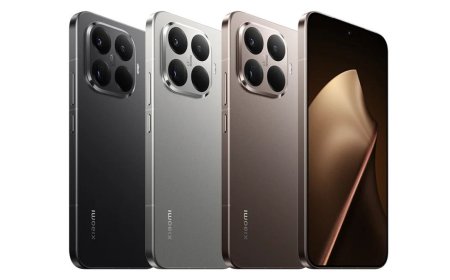
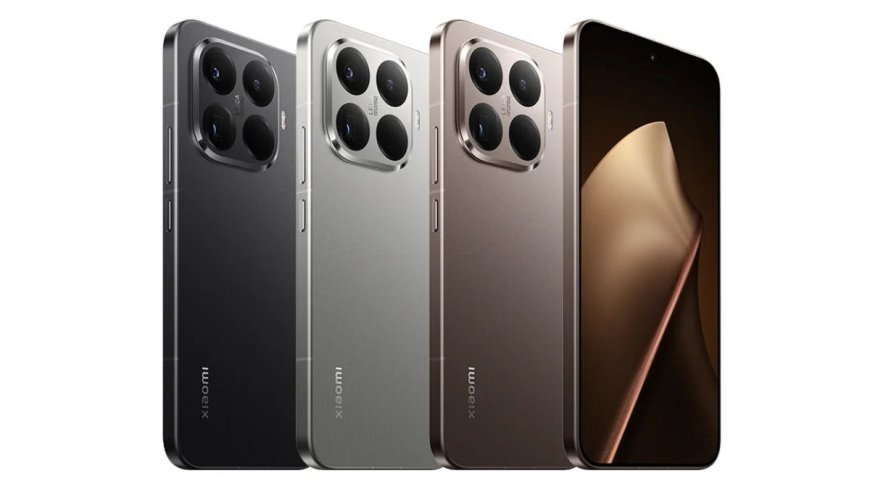
The headline upgrade over last year's 15T is the telephoto camera, now the same 5x module as the 17T Pro. The main camera keeps a 50MP Light Fusion 800 sensor (1/1.55-inch, f/1.7, OIS), joined by a 50MP Samsung JN5 telephoto with a 115mm lens, f/3.0 aperture and OIS, plus a 13MP ultrawide and a 32MP selfie camera. Leica branding appears on the camera island.
In daylight, the main camera produces vivid, high-contrast photos with very good detail, essentially matching the Pro. Portraits show pleasing skin tones with only a hint of smoothing. The telephoto is the star: 5x shots are super sharp, possibly even sharper than on the Pro, with vibrant colours and great contrast, and 10x zoom photos hold up impressively well. The ultrawide, modest hardware notwithstanding, delivers very good daylight photos with likeable colours and strong dynamic range.
Low-light performance is respectable across the board. The main camera exposes well with a wide dynamic range, though shadows can run a little gloomier than on the Pro. The telephoto stays very good at 5x in the dark, with slightly heavier sharpening, and 10x night shots are almost surprisingly detailed. The ultrawide is decent rather than groundbreaking after dark, and selfies are solid if unexciting, with the lack of autofocus limiting close-ups.
Video tops out at 4K60 from the main and telephoto cameras, with HDR10+ recording and a capable Pro mode offering audio level monitoring, a histogram and Log recording with built-in LUTs. The 8K30 and 4K120 modes stay exclusive to the 17T Pro. Footage from the main and telephoto cameras is very good in both daylight and at night, and stabilisation is mostly fine, with only minor hiccups and a little tremor while walking.
Battery: over 17 hours of active use, but slow to refill
The 6,500mAh silicon-carbon battery is the other big win. GSMArena's standardised testing produced an Active Use Score of over 17 hours — comfortably enough for a full day and probably a second one, depending on usage. Trusted Reviews' own PCMark battery test landed on exactly 17 hours as well, so the endurance is not a one-off result.
Charging is where the compromise shows. The 17T supports 67W Xiaomi HyperCharge, reaching 31 percent in 15 minutes and 55 percent in 30 minutes, with a full charge taking exactly one hour. That is not slow in absolute terms, but it lags behind the 100W charging on the cheaper Poco X8 Pro, which shares the same battery capacity, and behind other Xiaomi phones at this price. There is no wireless charging at all, though 22.5W reverse wired charging is included, along with battery protection options that cap charging at 80 percent or top up on a schedule.
Software, build and the small print
The 17T ships with HyperOS 3 on Android 16, and Xiaomi now promises five years of major OS updates plus a sixth year of security patches. The most visible new addition is Hyper Island, Xiaomi's take on the Dynamic Island, surfacing timers, calls, calendar events and media controls. Google Gemini is the assistant on international units, and HyperOS 3 extends cross-device sharing to non-Xiaomi Android devices and Apple hardware.
Build quality is solid even if the materials are not premium: a plastic middle frame, Gorilla Glass 7i front and back, and an IP68 rating good for 30 minutes under 3 metres of fresh water. The phone weighs 200g and measures 157.6 x 75.2 x 8.2mm. The under-display optical fingerprint reader is speedy and accurate, the hybrid stereo speakers earned a very good loudness rating, and connectivity covers dual-SIM 5G with eSIM, Wi-Fi 6E, Bluetooth 6.0, NFC and an IR blaster. The compromises are a USB 2.0 Type-C port with no video output and no headphone jack.
Verdict: great phone, awkward price
GSMArena's conclusion is that the Xiaomi 17T gets the fundamentals right and adds a few genuinely standout features: an excellent display, superb battery life and a camera setup that is arguably among the best in its class, especially for zoom photography. The 5x telephoto alone gives it an edge over many similarly priced rivals and makes it feel surprisingly close to the 17T Pro in day-to-day camera use.
The problem is the market around it. At around €750 — $549.50 for the 256GB model, £499 in the UK — buyers are entitled to expect fewer compromises, and Xiaomi's own range makes the case against it: the Poco X8 Pro offers much of the same experience with faster 100W charging for under €300, and the Poco F8 Pro adds a Snapdragon 8 Elite for around €450. The vivo V70, Oppo Reno15 Pro at around €650 and Samsung's Galaxy S25 FE are all credible alternatives, the last with seven years of OS updates.
None of that makes the 17T a bad phone. It is a very competent, well-rounded upper-midrange device with an unusually capable camera and excellent endurance. But GSMArena's advice is clear: it is easy to recommend if camera quality, particularly telephoto performance, is high on your priority list. Otherwise, there are simply too many compelling alternatives offering better value.
Pros
- Excellent 120Hz AMOLED display with Dolby Vision and HDR10+ support
- Outstanding battery life from the large 6,500mAh silicon-carbon battery
- Very capable camera system with an excellent 5x telephoto camera
- Great photo and video quality overall, especially from the telephoto camera
- Solid build quality with IP68 rating and Gorilla Glass 7i protection
- Good stereo speakers
- Rich connectivity, including an IR blaster
Cons
- 67W charging feels underwhelming for the asking price
- Plastic frame might feel less premium than similarly priced rivals
- Selfie camera lacks autofocus
- Refresh rate behaviour and switching logic still need refinement
- Price is difficult to justify against some direct competitors
Sources
- GSMArena — Xiaomi 17T review (introduction, specs, unboxing)
- GSMArena — Xiaomi 17T review (design and build)
- GSMArena — Xiaomi 17T review (display, battery, charging, speakers)
- GSMArena — Xiaomi 17T review (HyperOS 3, benchmarks, thermals)
- GSMArena — Xiaomi 17T review (camera and video quality)
- GSMArena — Xiaomi 17T review (competition, verdict, pros and cons)
- Trusted Reviews — Xiaomi 17T Review
- Gadgets Now — Xiaomi 17T Review
What's Your Reaction?
 Like
0
 Dislike
0
 Love
0
 Funny
0
 Angry
0
 Sad
0
 Wow
0