


























































Nvidia Halts AI Server Shipments to Four Southeast Asian Countries as US Export Rules Bite
Nvidia has told manufacturing partners Dell and Supermicro to stop shipping AI servers to Malaysia, Singapore, Thailand and Indonesia, the Financial Times reported, as Washington's new export controls force the chipmaker and its partners to work out how to comply. The pause puts a fast-growing data centre boom — and Chinese AI firms' rented access to Nvidia chips — in limbo.

Nvidia Halts AI Server Shipments to Four Southeast Asian Countries as US Export Rules Bite
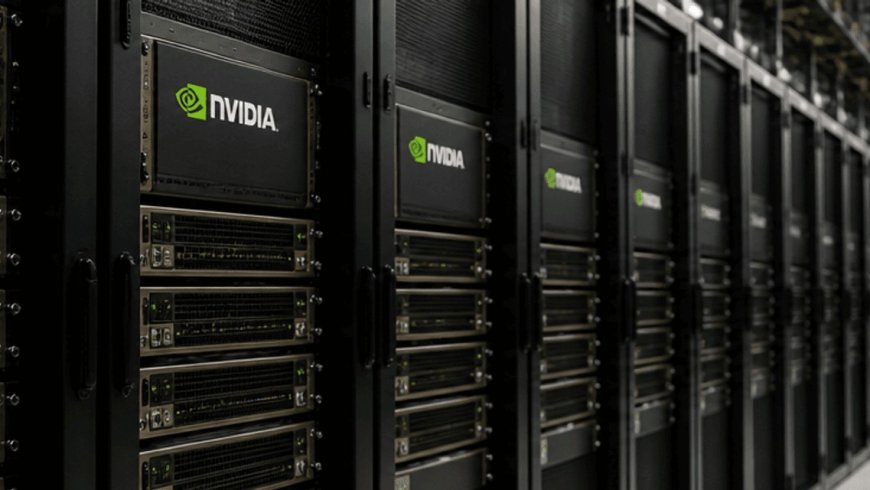
Nvidia has told its manufacturing partners to stop shipping servers fitted with its artificial intelligence chips to four Southeast Asian countries, the Financial Times reported on Thursday, as Washington's new export controls leave the chipmaker and its partners scrambling to work out how to comply.
Manufacturing partners such as Dell and Supermicro, which package Nvidia's chips into servers, have told buyers in Malaysia, Singapore, Thailand and Indonesia that Nvidia will not allow their orders to be shipped, according to three people familiar with the matter cited by the FT. It is unclear whether the halt is temporary. The New York Times, citing a person familiar with the freeze, described it as a temporary stopgap until the Trump administration sets out clearer guidance on future sales.
Nvidia declined to comment. Dell, Supermicro, ByteDance and Aolani did not respond to requests for comment.
Why the shipments stopped
The halt follows an interim final rule from the US Commerce Department's Bureau of Industry and Security, titled "Addressing Remote Access to Advanced Semiconductors", which was announced on November 16 and took effect on November 19. The rule requires a US export licence, reviewed case by case, to ship advanced semiconductors to or within Malaysia, Singapore, Thailand, Indonesia and Brazil — countries Washington regards as carrying a higher-than-normal risk of diversion.
The rules are aimed at a specific workaround. Although Washington restricts direct exports of Nvidia's most advanced chips to China, Chinese AI developers have been renting computing power from data centres in Southeast Asia that bought servers packed with those same chips. The new rule also targets overseas data centres that provide significant computing capacity to companies based in China, Macau and other restricted jurisdictions. Existing data centres already serving such customers have 90 days from November 19 — until February 17, 2027 — to obtain a licence. The rules also require companies to carry out due diligence on their customers and their direct and indirect ownership structures.
The restrictions are not a blanket ban on every chip shipment to the region. They apply to specified products, transactions and users, and there is an exemption for end users headquartered in the United States, or whose ultimate parent is headquartered there, subject to reporting requirements. But with no detailed guidance yet on how the licensing process works, manufacturers appear to be taking the cautious route and holding orders rather than risking a breach.
"Sheer chaos in the region"
An executive at a cloud provider in the region told the FT: "There's this new rule but no guidance on execution. No one knows how to apply for this licence while the 90-day clock is ticking. It's causing sheer chaos in the region."
The four countries have become favoured destinations for Chinese AI developers seeking access to Nvidia's most advanced chips. Demand from Chinese technology companies has fuelled Southeast Asia's data centre boom, particularly in Malaysia and Indonesia, where billions of dollars have poured into building AI infrastructure. Much of that investment is now in jeopardy while deliveries are on hold.
Among those affected is Aolani, a Singapore-based cloud company that had planned to provide advanced computing power to ByteDance, the Chinese owner of TikTok, through leasing agreements. The FT reported that bankers who had agreed to finance the project have stopped issuing credit worth about $500 million, and that ByteDance may now drop the deal.
A lucrative region for Nvidia
Southeast Asia matters commercially to Nvidia as well as strategically. The FT reported, citing company accounts, that Nvidia booked $104 billion of revenue through its Singapore subsidiary in 2025, a 72 per cent increase in 12 months — though that figure also includes some of Nvidia's Taiwan and China revenue recorded through the Singapore unit, so it is not a measure of Southeast Asian sales alone.
A prolonged suspension could affect Nvidia's sales in the region, delay orders, and force the company to help customers meet licensing requirements or redirect hardware to other markets. For China, the restrictions could further limit access to advanced computing. Chinese AI developers already face curbs on buying some of Nvidia's most powerful processors directly; overseas cloud services had offered another route in. If Southeast Asian data centres cannot serve restricted Chinese customers without licences, those companies may find it harder to train AI models — and the pressure on China to develop domestic alternatives will grow.
The scandal behind the crackdown
The new rules arrived in the middle of the most turbulent fortnight in Nvidia's history. They were published days after Jensen Huang resigned as chief executive on November 12, following reports of an extramarital affair with a woman tied to Megaspeed, a Singapore cloud provider that leased Nvidia chip access to Chinese companies and is under investigation for alleged involvement in smuggling. Nvidia's board reinstated Huang as chief executive on November 23.
The Commerce Department has also added Megaspeed to its Entity List, meaning US companies now need a licence to ship it goods covered by export rules. The Justice Department is investigating whether Megaspeed broke US export rules.
For now, the halt leaves a simple question unanswered for the region's data centre builders, cloud providers and their lenders: how long will it last, and what exactly does Washington want them to prove before the servers can move again? Until the guidance arrives, the orders stay where they are.
Sources
- Financial Times, via Channel News Asia — "Nvidia halts chip shipments to Southeast Asia: Report" (November 26, 2026)
- The Financial Express — "Nvidia freezes pending AI server orders to 4 Southeast Asian nations: Report" (November 26, 2026)
- Engadget — "NVIDIA reportedly halts AI chip shipments to Southeast Asia" (November 26, 2026)
- Barron's — "Nvidia Halts Server Shipments to Southeast Asia, Says Report" (November 27, 2026)
- Times of India — "Why Nvidia halted AI server shipments to 4 Southeast Asian countries" (November 27, 2026)
- TechRepublic — "Nvidia Reportedly Halts AI Server Shipments to 4 Southeast Asian Countries Amid US Export Controls" (November 26, 2026)
Background: Nvidia fallout throws spotlight on Southeast Asia's AI boom; Banned Nvidia AI chips found at Shanghai data centre; DOJ probes Alice Huang over Super Micro AI servers bound for China
What's Your Reaction?
 Like
0
 Dislike
0
 Love
0
 Funny
0
 Angry
0
 Sad
0
 Wow
0