



















































China Stocks Post Biggest Jump in Two Years as Beijing Mobilises Its "National Team"
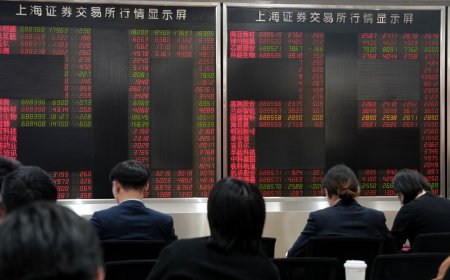
Chinese stocks recorded their biggest one-day gains in more than two years on Friday, 27 November 2026, after Beijing signalled a bigger role for state-backed "national team" investors to stabilise the market. The Shanghai Composite rose 3.7 percent, the CSI 300 gained 4.2 percent, and the tech-focused STAR 50 surged 15 percent, with semiconductor shares posting a record single-day jump.

China Stocks Post Biggest Jump in Two Years as Beijing Mobilises Its "National Team"
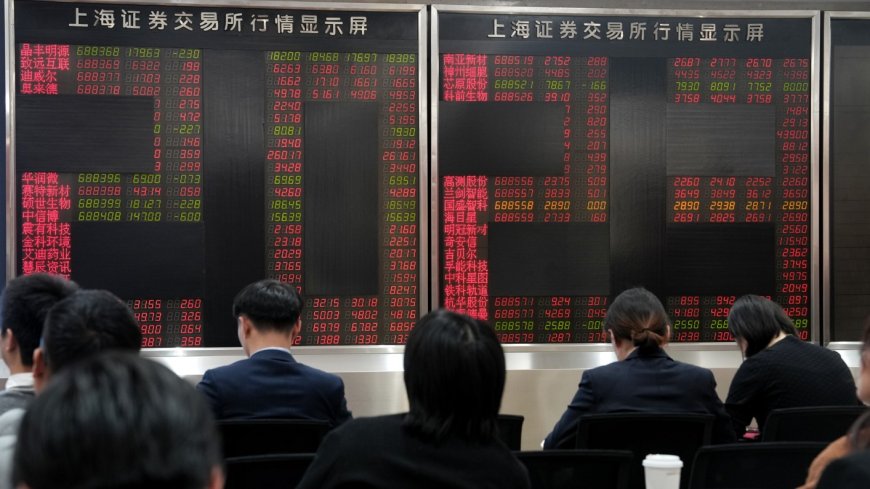
Chinese stocks roared back from 17-month lows on Friday, 27 November 2026, posting their biggest one-day gains in more than two years after Beijing signalled that state-backed investors — the so-called "national team" — would play a much larger role in steadying the market.
The benchmark Shanghai Composite Index ended the day 3.7 percent higher, closing at 3,606.49, while the blue-chip CSI 300 index gained 4.2 percent to finish at 4,063.06. Both recorded their strongest single-day advances since October 2024, when Beijing rolled out a large stimulus package to revive the market.
The rally was sharpest where the selling had been heaviest. The tech-focused STAR 50 Index surged 15 percent for its biggest one-day jump in two years, and a sub-index tracking semiconductor shares soared 19 percent, marking its largest single-day gain on record. The Shenzhen Component Index climbed 7.24 percent to 10,814.02, and the growth-focused ChiNext Index jumped 11.61 percent to 2,443.96.
The gains spread to Hong Kong, where the Hang Seng Index rose 2.1 percent and the Hang Seng Tech Index climbed 6 percent. The yuan also strengthened on the day.
What triggered the rally
The immediate catalyst was a meeting of China's cabinet, the State Council, chaired by Premier Li Qiang. State news agency Xinhua reported that the meeting called for state-backed investors to play a bigger role in stabilising the stock market, and said Central Huijin — the domestic investment arm of sovereign wealth fund China Investment Corp and a leading member of the "national team" — would enhance its role as a quasi-stabilisation fund to ensure ample liquidity.
The cabinet described capital markets as crucial to the broader economy, its strongest gesture yet in support of a market that had fallen to 17-month lows. The meeting also called for better policies to encourage long-term funds to invest in shares and for measures to strengthen defences against risks spilling over from overseas markets.
The pledge arrived in the middle of Friday's trading session, and markets climbed through the afternoon. It followed a relaxation of margin lending rules aimed at reducing selling pressure, and Xinhua Finance separately reported that regulators would tighten rules on share sales by controlling shareholders of listed companies and guard against listings by firms that inflate earnings.
A market that had been sliding since July
The surge came after months of steady decline. Chinese shares had been sliding relentlessly since July on worries about weak consumer demand, a prolonged property downturn, and the risk that trade tensions would threaten exports — the economy's one bright spot. Before Friday's rebound, the tech-heavy STAR 50 and ChiNext indexes had each slumped roughly 50 percent since July.
The "national team" is the name traders have given to a loose collection of state investors who tend to buy shares at times of stress, and their habits are a source of near-constant speculation. Investors took Friday's statement as a strong signal that Beijing is prepared to put a floor under prices. As one market participant put it, there is now something to count on: the national team will come to the rescue if things really turn south.
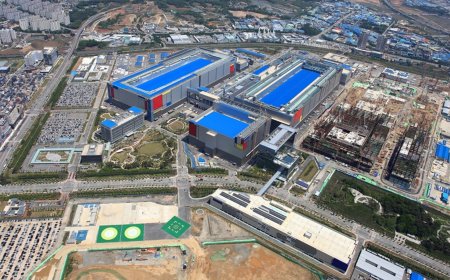
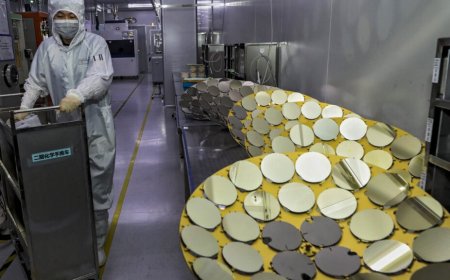
The intervention is also the latest sign of authorities stepping in to shore up bets on the artificial intelligence infrastructure buildout, with chipmakers among Friday's biggest winners. Memory maker CXMT, Cambricon and SMIC were reported to have led the STAR market higher. UBS has separately forecast that homegrown AI chips could take 88 percent of China's home market by 2028 — read more in our report on the UBS forecast.
Analysts urge caution on a one-day move
Despite the scale of Friday's rebound, analysts were quick to warn against reading too much into a single session. Several strategists said it was too early to suggest the market was near a bottom, arguing that support from the national team alone was unlikely to produce a sustained rally.
A lasting recovery, they said, would need stronger evidence that corporate earnings and domestic demand are improving. The State Council statement announced no dollar amount for any intervention, leaving open how much money might actually be deployed.
Investors will have the weekend to consider whether Beijing's support changes a deep-seated wariness about China's equity markets. For now, Friday stands as the market's best day in more than two years — a sharp, policy-driven rebound after four months of losses.
Sources
- Reuters — "China stocks surge most in two years as Beijing vows stronger market support" (27 November 2026), via syndication
- Channel NewsAsia — "China stocks rally after Beijing signals stronger market support" (27 November 2026)
- BBN Times — SSE Composite closing figures, 27 November 2026
- ChipDispatch — "Chinese Chip Stocks Jump 17.6% on State Support Pledge" (27 November 2026)
What's Your Reaction?
 Like
0
 Dislike
0
 Love
0
 Funny
0
 Angry
0
 Sad
0
 Wow
0