


















































South Korea's November Exports Set for Fastest Growth in Over 50 Years as AI Chip Demand Soars
South Korea's exports likely surged 96.8% in November, a Reuters poll of economists shows — the fastest growth in more than half a century — as global demand for the memory chips that power artificial intelligence keeps breaking records. Official trade figures are due on Tuesday, December 1.

South Korea's November Exports Set for Fastest Growth in Over 50 Years as AI Chip Demand Soars
South Korea's exports likely grew at the fastest pace in more than half a century in November, carried by the world's seemingly unending appetite for the memory chips that sit at the heart of the artificial intelligence boom. A Reuters poll of eight economists puts the month's export growth at 96.8% from a year earlier — a figure that, if the official data confirms it, would be the strongest increase since January 1974.
It would also be the 18th consecutive month of export growth for Asia's fourth-largest economy, a country whose trade numbers have become one of the earliest and most-watched signals for the health of global technology demand.
The numbers behind the forecast
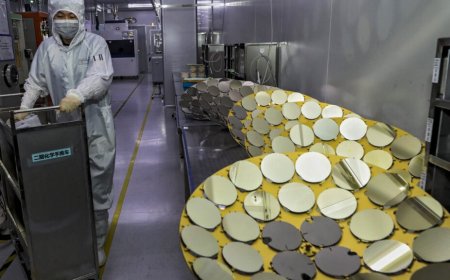
The early evidence backs up the economists' optimism. In the first 20 days of November, South Korean exports rose 101.5% to $77.4 billion, a record for that stretch of any month, according to preliminary customs figures. Shipments of semiconductors did almost all of the work: chip exports surged 294.4% to $38.5 billion, accounting for nearly half of everything the country sold abroad.
The poll also points to a 38.9% rise in imports for November, up from 36% growth in October, which would be the biggest jump since November 2021. The monthly trade surplus is forecast at $48.03 billion, up from $42.65 billion the previous month.
Memory chips are doing the heavy lifting
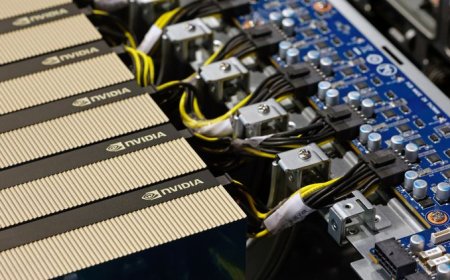
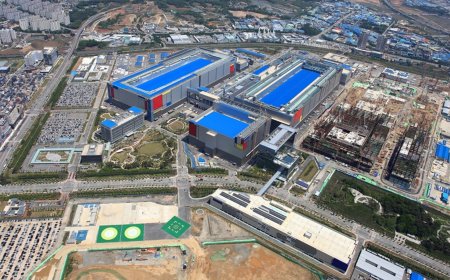
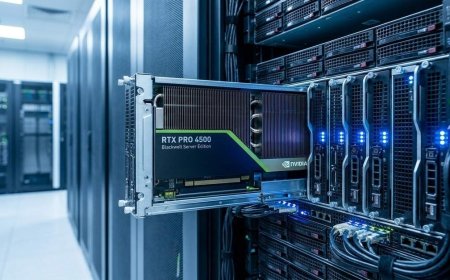
The engine of the surge is memory — the high-bandwidth memory, or HBM, and DRAM chips that data centres need in enormous quantities to train and run AI systems. Samsung Electronics and SK hynix, the two companies that dominate the market, together control roughly 80% of global HBM supply, and both have been reporting record earnings on the back of the boom.
Economists watching the data say the momentum has only built through the second half of the year. Alongside chips and computers, a range of products feeding AI data centres — from industrial materials to petroleum products and wireless communication devices — has continued to post double-digit growth, according to Stephen Lee, chief economist at Meritz Securities. Park Sang-Hyun, chief economist at iM Securities, expects November exports to set a new monthly record, with strong shipments to the United States and China remaining the key drivers.
Central bank raises its growth call
The Bank of Korea has already moved to reflect the windfall. On Thursday, it sharply raised its economic growth forecast for 2027 to 4.1% from 2.9% — the fastest rate it has projected since 2021. The upgrade followed a week in which South Korea became only the fourth country, after Germany, the United States and China, to pass $1 trillion in annual exports.
A $1 trillion milestone — and a warning
The milestone underlines how central chips have become to the South Korean economy, and that concentration is also the risk. When nearly half of a country's exports come from a single product, its fortunes ride on one spending cycle. The Bank of Korea itself has flagged the anxiety: if global AI spending slows, or if new memory supply catches up with demand and prices soften, the same leverage that produced these numbers could work in reverse.
There is a statistical caution, too. Growth rates near 100% partly reflect a weak comparison — the same month a year earlier — so future months will be measured against a much higher base, and the pace is bound to cool even if demand stays strong.
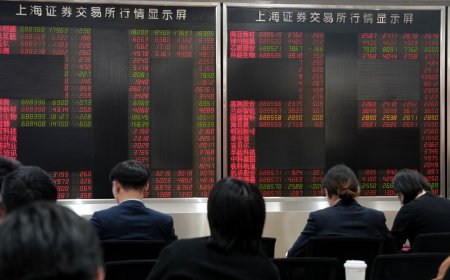
For now, though, the contrast with the stock market is striking. While chip shipments have set records, shares in Samsung and SK hynix have fallen sharply from their mid-year peaks, as investors weigh whether today's extraordinary demand can last. South Korea's chip boom has left retail investors behind even as the export numbers climb.
What happens next
South Korea is scheduled to report its official trade figures for November on Tuesday, December 1, at 9 a.m. local time. Those numbers will show whether the economists' 96.8% estimate holds — and whether the chip supercycle that has carried the economy through 2026 still has room to run.
Sources
What's Your Reaction?
 Like
0
 Dislike
0
 Love
0
 Funny
0
 Angry
0
 Sad
0
 Wow
0