




















































Huawei's Custom HBM Packs Twice the Data Pins of Samsung and SK Hynix Memory
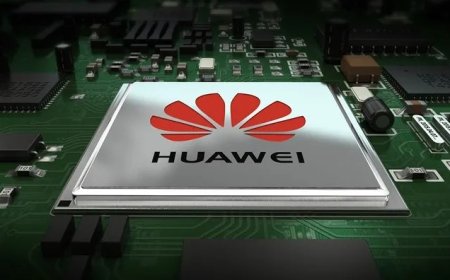
Huawei researchers have designed a custom high-bandwidth memory chip with twice the data-pin density of the HBM mass-produced by Samsung and SK Hynix, Bloomberg reported. The design, set out in a paper scheduled for the ISSCC 2027 conference in February, pairs a 4,096-pin interface with five-layer wafer-on-wafer hybrid bonding — but no speed, capacity or production timeline has been disclosed, and how far Huawei has got toward making it is still unclear.

Huawei's Custom HBM Packs Twice the Data Pins of Samsung and SK Hynix Memory
Huawei has designed a custom high-bandwidth memory chip with twice the data-pin density of the memory Samsung and SK Hynix currently mass-produce, according to Bloomberg. The design surfaced in the advance programme for a major chip conference, where Huawei is scheduled to present it in February 2027 — but it is a research paper, not a product, and how close it is to real manufacturing remains an open question.
The news, reported on November 26, immediately put memory at the centre of the AI hardware race. High-bandwidth memory, or HBM, is the fast memory stacked next to AI accelerators, and it has become one of the most strategically important components in the industry. For Huawei, which is barred from buying advanced HBM from foreign suppliers, building its own is a matter of necessity as much as ambition.
What Huawei is presenting
The design is described in a paper titled "A 64-Channel 4096-DQ Custom HBM with Memory Controllers and 5-Layer Wafer-on-Wafer Hybrid Bonding", listed as item 22.6 in the SRAM, HBM and DRAM session of the IEEE International Solid-State Circuits Conference, or ISSCC. The conference runs February 14 to 18, 2027, in San Francisco, and Huawei's paper is scheduled for Tuesday, February 16, at 4:00 p.m. Pacific Time. Seven Huawei researchers based in Shenzhen are listed as authors.
Two numbers in the title carry the story. The interface uses 4,096 data pins, known as DQ pins, spread across 64 channels — twice the 2,048-bit interface of the JEDEC HBM4 standard, which was announced in April 2025 and uses 32 channels per stack. Doubling the pin count should, in theory, deliver much higher memory bandwidth, since more data can move between the memory and the processor at once.
The second notable detail is the packaging. The design joins five layers of silicon with wafer-on-wafer hybrid bonding, a technique that bonds wafers face to face with direct copper connections instead of solder bumps, and it places memory controllers inside the memory stack itself. That is a different way of building HBM from the stacked-die approach used by the Korean manufacturers.
What is still unknown
For all the headline numbers, the listing discloses no data rate, no total bandwidth, no memory capacity, no power consumption, no manufacturing yield and no commercial date. The title does not say how fast each pin runs, and that is the figure that would settle any comparison with Samsung and SK Hynix. Dividing the pin count by the channel count gives 64 pins per channel — the same as HBM4 — which suggests the design widens the interface by adding more channels rather than making each channel wider.
Bloomberg was careful on this point, reporting that it is unclear how far Huawei has advanced in the effort. Companies often present theoretical chip designs at conferences as a way of sharing ideas and pushing research forward, and acceptance of a paper is not evidence of a product in production. Huawei did not immediately respond to Bloomberg's request for comment.
There is a useful point of comparison in the very same conference session. Samsung is scheduled to present a 48GB HBM4E device running at 17 gigabits per second per pin, 25 minutes before Huawei's paper. Samsung's HBM4 entered volume production in February 2026 with 36GB in 12 layers at 11.7 gigabits per second per pin.
Why Huawei needs its own memory
The context is the export-control regime around advanced memory. Samsung, SK Hynix and Micron are barred from supplying HBM to Chinese clients, and Huawei has long sought to develop its own chips in-house. If Huawei eventually begins mass production of the design, it would ease a key bottleneck in China's push for semiconductor self-sufficiency at a time when existing stockpiles of foreign HBM are running low.
Huawei's Ascend AI chips have been the most widely used homegrown accelerators in China since the United States restricted shipments of Nvidia's most advanced semiconductors. Huawei plans to release at least one new chip every year through 2029 to meet demand from Chinese AI labs such as DeepSeek and Moonshot. But the memory problem is immediate: earlier in November, The Information reported that Huawei had told some customers of its forthcoming Ascend 960DT accelerator to source their own HBM. SK Hynix told the publication it has not supplied Huawei since 2020.
Huawei has already started producing smartphone chips using a technique it calls LogicFolding, and it aims to produce semiconductors with performance comparable to 1.4-nanometre chips by 2031. Chinese memory maker CXMT is also experimenting with new architectures — in October it said it was making progress on a so-called 4F² design for server memory.
The Bloomberg report moved the shares of Samsung, SK Hynix and Micron, deepening investor concern that progress by Chinese chipmakers could, in the long run, challenge the memory giants' dominance. The February presentation is the next point where the missing numbers — measured bandwidth, capacity and power — may finally appear.
Sources
- The Edge Malaysia — Huawei teases next-gen AI memory chip to take on Samsung, Hynix (Bloomberg)
- TechRepublic — Huawei's AI Memory Design Has Twice the Interface Width of Samsung's HBM4
- EE Times — Huawei's Next Big AI Move: HBM Workaround
- TechSpot — Huawei says it can build better memory chips than Samsung, SK Hynix, and Micron, but the proof is still to come
- Tech Times — Huawei Lists 4,096-Pin HBM Memory for Chip Conference: Twice HBM4 Width, No Speed Disclosed
What's Your Reaction?
 Like
0
 Dislike
0
 Love
0
 Funny
0
 Angry
0
 Sad
0
 Wow
0