




















































Nordic's nRF71 Chips Bring Wi-Fi and Edge AI to Battery-Powered Devices with 20x Lower Standby Power
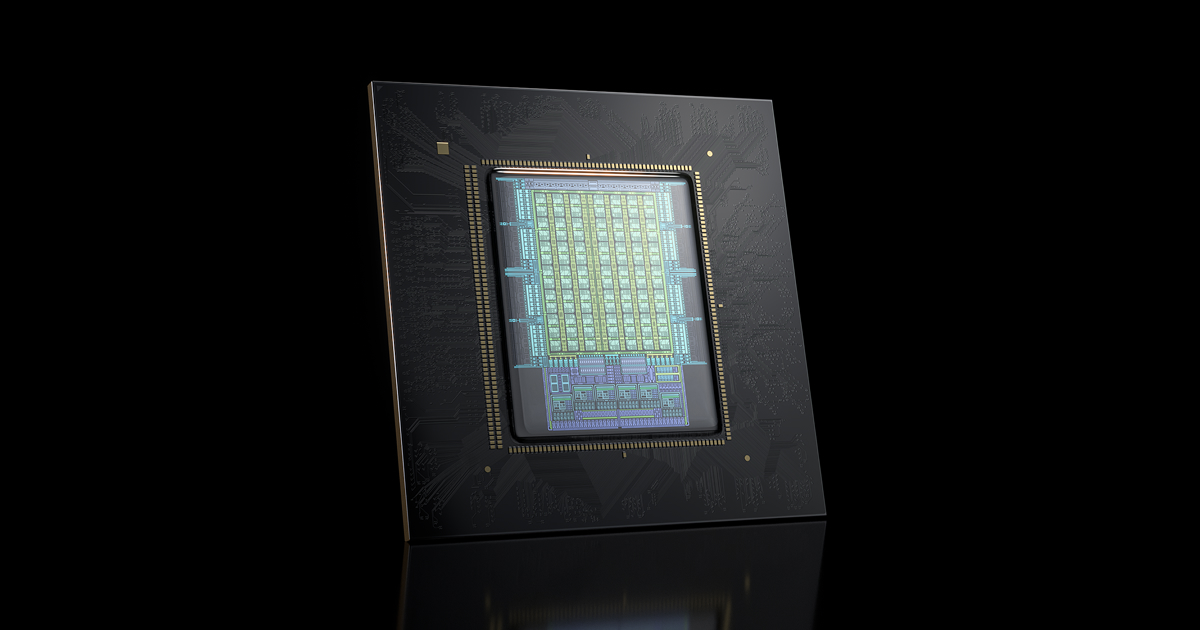
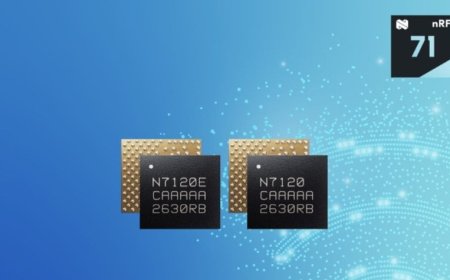
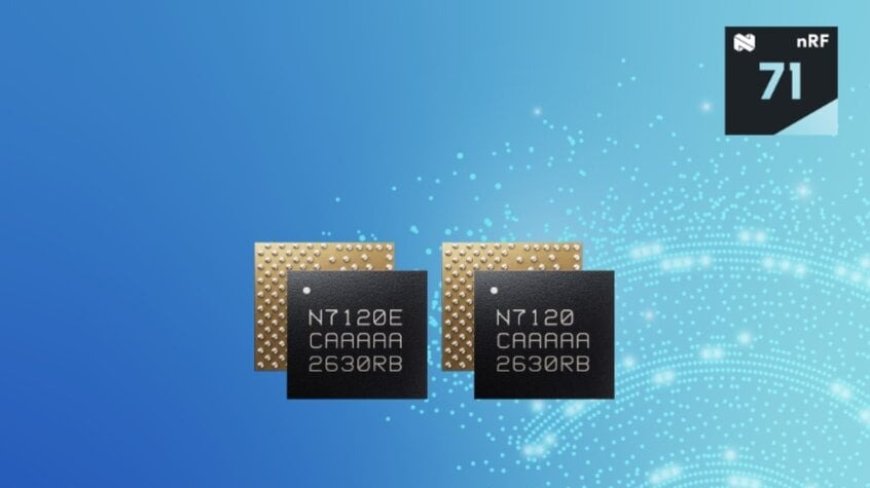
Nordic Semiconductor has unveiled the nRF71 series, a family of ultra-low-power wireless chips that put Wi-Fi, Bluetooth LE, Thread and on-device AI on a single die. The first two parts, the nRF7120 and nRF7120E, cut standby power by up to 20 times compared with the nRF70 series and are now sampling with selected customers.

Nordic's nRF71 Chips Bring Wi-Fi and Edge AI to Battery-Powered Devices with 20x Lower Standby Power
Nordic Semiconductor has unveiled a new family of wireless chips that could finally make Wi-Fi practical for devices that live on a coin cell or a small battery for years. Announced on November 3, 2026, the nRF71 Series combines Wi-Fi, Bluetooth Low Energy, Thread and on-device AI on a single chip, and Nordic says it uses up to 20 times less standby power than the company's current nRF70 series of Wi-Fi products.
For years, Wi-Fi has been the awkward guest in battery-powered connected devices. Bluetooth LE sips power, but Wi-Fi's appetite has forced designers to choose between a direct connection to the home network and a battery that lasts. Nordic's pitch with the nRF71 is that the trade-off is gone.
"Edge AI will be part of every connected device, but for those that run on a battery, Wi-Fi has demanded a power budget they could not afford," said Kjetil Holstad, Nordic's executive vice president for Wi-Fi and power management. "With the nRF71 Series, Nordic removes that barrier."
Two chips, one platform
The series launches with two parts. The nRF7120 offers dual-band Wi-Fi 6 at 2.4 and 5 GHz, while the nRF7120E steps up to tri-band Wi-Fi 6E, adding the 6 GHz band, and adds Nordic's Axon neural processing unit for hardware-accelerated edge AI.
Both chips share the same foundation: a 256 MHz Arm Cortex-M33 application processor, 4 MB of on-chip non-volatile memory and 1 MB of user-accessible RAM, plus up to 65 general-purpose input/output pins in a compact 4.9 by 4.6 mm wafer-level chip-scale package.
That integration matters because the nRF70 parts that came before were Wi-Fi companion chips. They needed a separate host microcontroller, such as Nordic's nRF5340, to run the application. The nRF71 folds the host into the radio chip itself, and the 4 MB of on-chip memory removes the need for external flash in most designs.
Edge AI on the device
The Axon NPU in the nRF7120E is the headline feature for AI workloads. According to Nordic, it runs machine-learning models 10 to 17 times faster than the Cortex-M33 processor can manage on its own. The standard nRF7120 is not left out of the AI story: it can run ultra-small AI models built with Nordic's Neuton software, the automated tinyML tooling the company acquired in June 2025.
The practical idea is familiar — run the model where the data is, instead of streaming everything to the cloud. A sensor that can tell the difference between a person and a pet, or a lock that recognises a familiar face, does not need to wake a server for every event, and it keeps working when the network does not.
Two radios that work at once
Rather than time-slicing a single radio between protocols, the nRF71 carries two independent radio subsystems, each with its own RF and processing blocks. One handles Wi-Fi; the other is the 2.4 GHz multiprotocol radio from Nordic's nRF54 series, covering Bluetooth LE, Thread, Zigbee and Matter.
Because the radios can receive at the same moment, a device can hold its Wi-Fi link to the cloud while still listening for Bluetooth LE or Thread traffic, and neither protocol has to wait for the other. The Wi-Fi radio supports 802.11a/b/g/n/ac/ax in station and SoftAP modes, and power saving leans on Target Wake Time and a low-power receive path.
The power numbers
Nordic quotes Wi-Fi connected-standby current of 14 microamps at 2.4 GHz and 8 microamps at 5 GHz, measured at DTIM10 and 3.6 volts, with sleep-mode currents running from 1.44 to 4.68 microamps. The 2.8 to 5.5 volt supply range spans a single lithium-ion cell from full charge to cutoff, and the chip supports high-speed USB with an integrated PHY.
Nordic is aiming the series squarely at products that need to stay connected and stay asleep at the same time: Matter-enabled smart locks, security panels, smart home hubs, Matter bridges, Thread border routers, wearables and industrial sensors. Development stays inside the nRF Connect SDK, the same toolchain used for the nRF54 and nRF70 series, so teams already working in Nordic's ecosystem do not need to relearn their workflow.
Availability
The nRF71 Series is now sampling with selected customers, and Nordic says developers can contact their local Nordic sales representative about availability. The company has given no general availability date, and showcased the series, including a Nordic-branded module built around either chip, at Electronica 2026 in Munich.
Whether the 20-times standby power claim holds up in real products will depend on how developers use the chip, but the direction is clear: Wi-Fi and on-device AI are moving into the same ultra-low-power designs that Bluetooth LE made possible, and battery-powered devices are about to get a lot more connected.
Sources
- Nordic Semiconductor — Nordic brings edge AI to battery-powered Wi-Fi devices, achieving twenty times lower standby power with new nRF71 Series
- PR Newswire — Nordic brings edge AI to battery-powered Wi-Fi devices with new nRF71 Series
- All About Circuits — Nordic Debuts Wireless Edge AI SoC Boasting 20x Lower Standby Power
- Embedded.com — Nordic Launches nRF71 SoCs for Low-Power Wi-Fi and Edge AI
- Hackster.io — Nordic Semiconductor Promises Ultra-Low-Power, Multi-Protocol Edge Smarts with the New nRF71 Series
- Electronics-Lab — Nordic's nRF71 Series Puts Wi-Fi and Edge AI on One Chip
What's Your Reaction?
 Like
0
 Dislike
0
 Love
0
 Funny
0
 Angry
0
 Sad
0
 Wow
0