





















vivo X500, X500 Pro and X500 Pro Max Hands-On: Three Flagships, One Serious Camera Ambition
vivo has officially unveiled its X500 smartphone family in China, introducing the X500, X500 Pro and the new X500 Pro Max. The lineup combines huge silicon-carbon batteries, high-refresh-rate displays, MediaTek's new Dimensity 9600-series processors and a camera system developed around vivo's long-running ZEISS partnership. The Pro Max is the obvious showpiece, bringing a 200MP telephoto camera and support for an optional 400mm-equivalent ZEISS teleconverter, while the smaller X500 and X500 Pro aim to offer a more practical flagship experience.

vivo's X500 Series Is Here — and the Pro Max Changes the Game
vivo has officially entered the next chapter of its flagship X-series with three new phones: the vivo X500, X500 Pro and X500 Pro Max. Announced in Shanghai on September 21, the lineup is clearly designed around one idea: a smartphone should not just be powerful, it should be capable of replacing a surprisingly large amount of dedicated camera equipment. The Pro Max gets most of the attention, but spending some time with all three makes it clear that vivo is trying to give each model its own personality rather than simply making one phone bigger and calling it a day. The X500 is the more straightforward flagship, the X500 Pro is the compact performance-and-camera model, and the Pro Max is effectively vivo's statement piece for mobile photography.
Design: Familiar X-Series DNA, but More Serious
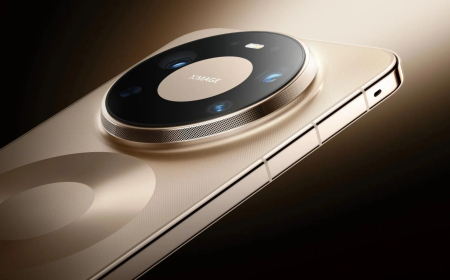
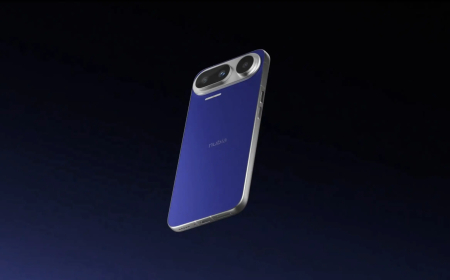
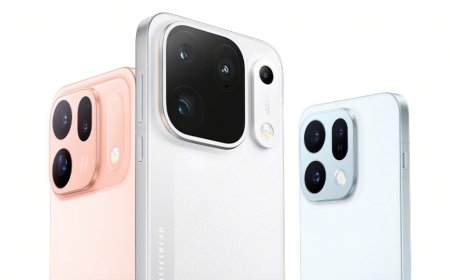
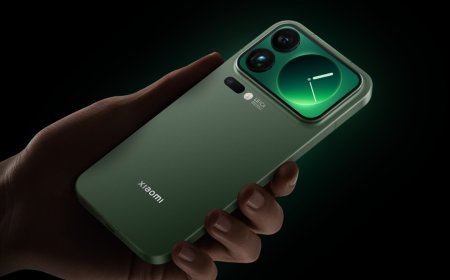
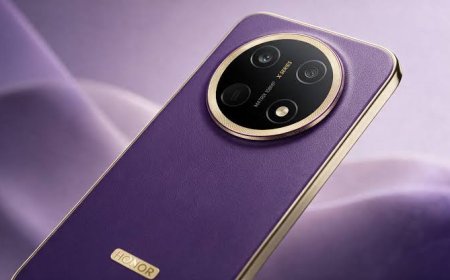
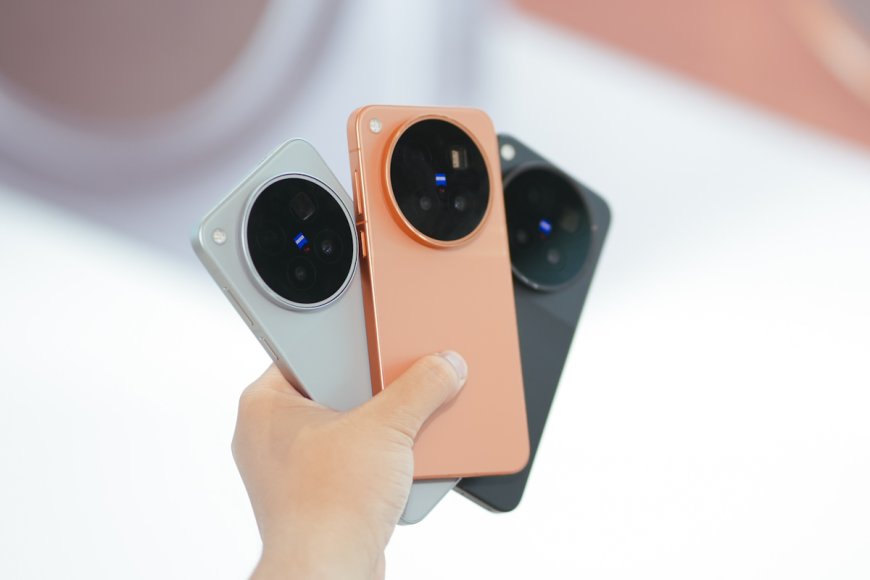
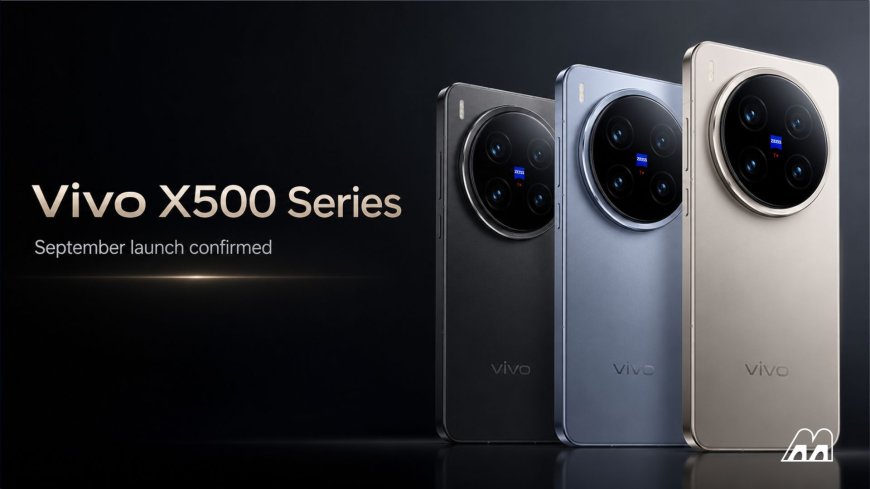
The first impression is that vivo has become much more confident with the visual identity of the X-series. The X500 Pro and X500 Pro Max use a large circular camera module that immediately tells you where the company's priorities are. There is no attempt to hide the cameras or make the phones look like conventional slabs. The camera hardware is part of the design. The Pro Max in particular feels more like a compact imaging device that happens to run Android than a traditional smartphone with a camera attached to it.
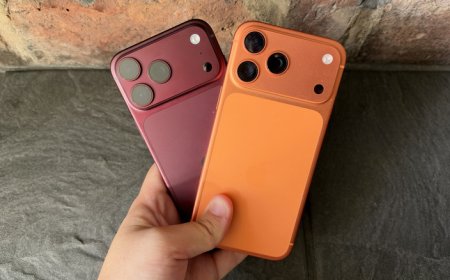
The standard X500 takes a slightly different approach. It uses a more integrated camera design and is physically smaller than the Pro Max, while still carrying the ZEISS branding and a serious triple-camera setup. vivo says the X500 uses a cold-carved glass construction and an aerospace-grade aluminum middle frame. The Pro and Pro Max use what vivo describes as Tide cold-carved glass, giving the three phones a related but distinct feel.
And there is an important practical point here: these are not small phones across the board. The X500 sits at 6.59 inches, the X500 Pro drops to a surprisingly manageable 6.36 inches, while the Pro Max stretches all the way to 6.85 inches. The Pro is therefore the interesting option for people who want flagship hardware without carrying a giant-screen phone, while the Pro Max is aimed directly at users who want maximum screen and camera hardware.
Display: The Pro Max Is Built for Watching and Creating
The X500 Pro Max gets the most impressive screen of the three. It uses a 6.85-inch BOE Q11 AMOLED panel with a 3168 × 1440 resolution, up to 144Hz adaptive refresh rate and 507ppi. vivo lists 1–144Hz adaptive operation, a wide P3 color gamut and peak brightness figures of up to 4,400 nits under its specified measurement conditions. The display is also part of vivo's ZEISS Master Color Display system, which is intended to prioritize accurate and natural color reproduction rather than simply pushing saturation.
The X500 Pro goes in the opposite direction. Its 6.36-inch AMOLED panel offers 1.5K resolution and up to 144Hz adaptive refresh, making it arguably the most interesting screen in the lineup for people who prefer a more compact flagship. The regular X500 sits between them with a 6.59-inch display, 1.5K resolution and support for up to 144Hz. All three therefore have high-refresh-rate panels, but their sizes make them feel like three different types of phone rather than simple storage variants.
In everyday use, the Pro Max's screen is obviously the one that makes the biggest impression. Photos, video and games have more room to breathe, and the 2K resolution makes sense on a panel this large. But the Pro's smaller body has its own appeal. For someone who spends a lot of time typing, browsing and carrying a phone around all day, the 6.36-inch model may actually feel more natural.
Performance: MediaTek's New Flagship Silicon Takes the Stage
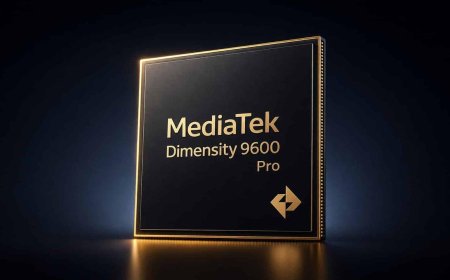
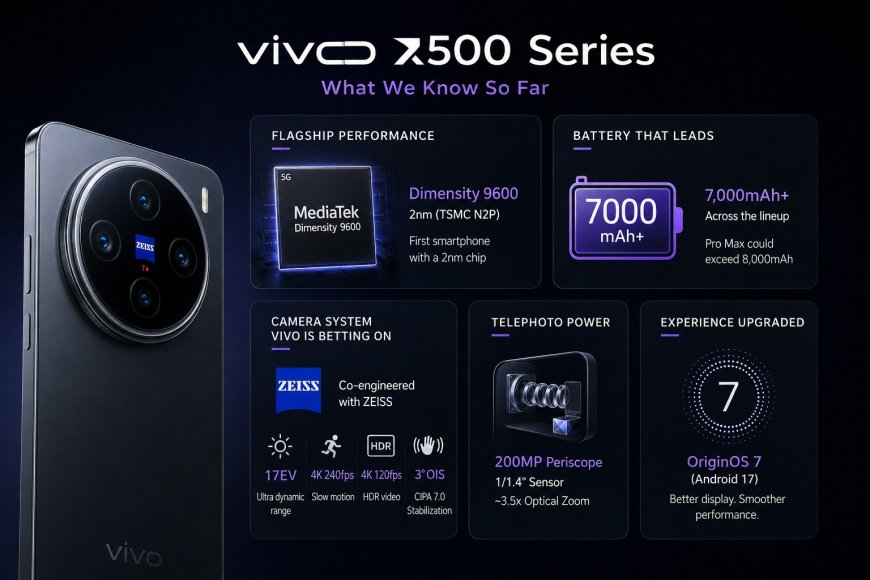
This generation also represents a major moment for MediaTek. The X500 Pro and X500 Pro Max are powered by the Dimensity 9600 Pro, while the standard X500 uses the Dimensity 9600M. The Pro chip is built on a 2nm process and reaches up to 4.55GHz according to launch specifications, while the X500's 9600M is listed as a 3nm platform.
That difference matters because vivo is not treating the processor as just a benchmark component. The new silicon is being used to support imaging features as well, particularly the demanding video capabilities of the Pro models. The X500 Pro and Pro Max can record 4K video at up to 240 frames per second, while vivo also highlights 10-bit Log recording and advanced cinematic video features. That makes the processor part of the camera story rather than something that simply makes apps open faster.
Storage is equally flagship-level. The lineup reaches up to 1TB of UFS 4.1 storage, with LPDDR5X memory configurations, while the Pro Max can reach 16GB RAM. For people who shoot lots of high-resolution photos and video, the larger storage options make considerably more sense than they would on a normal smartphone.
The Cameras Are Where Things Get Really Interesting
This is the section where the X500 series separates itself from most flagship phones.
The X500 Pro and Pro Max share a new 50MP main camera based on Sony's Lytia L910 sensor, using LOFIC technology for expanded dynamic range. vivo and Sony are promoting the sensor around high dynamic range performance, with vivo claiming up to 17 stops in its specified Log video workflow. The Pro models also have 50MP ultrawide cameras, while the telephoto hardware is where the two phones begin to diverge significantly.
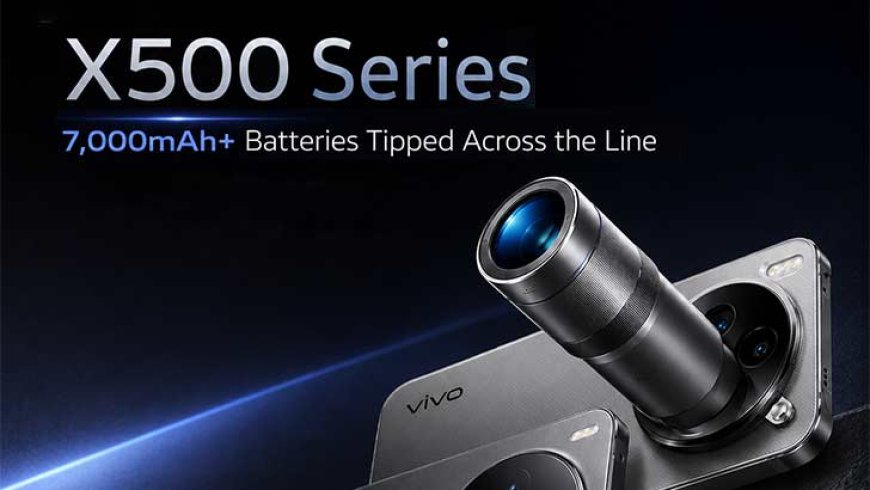
The X500 Pro uses a 64MP Sony LYT610 periscope telephoto with a 3.5x-equivalent optical zoom. The Pro Max goes considerably further with a 200MP telephoto camera, using a 1/1.4-inch-class sensor and an approximately 85mm-equivalent focal length. That camera is designed for much more than ordinary portrait shots. It is the foundation of the Pro Max's entire long-range photography system.
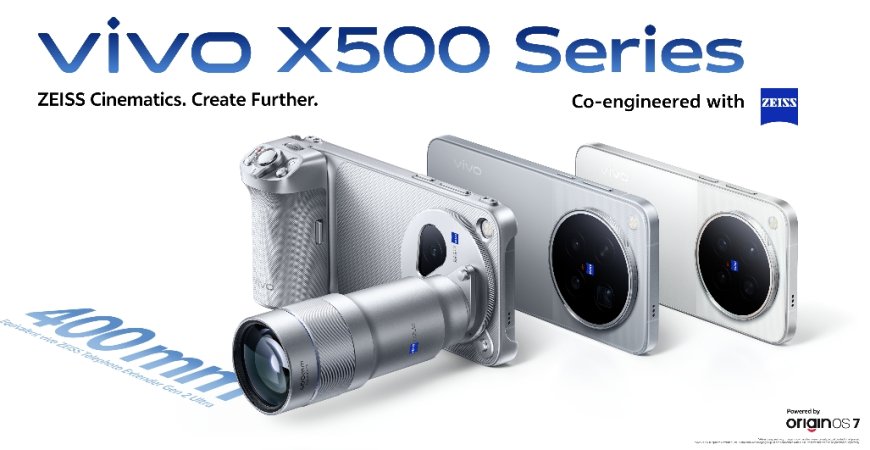
Then vivo does something slightly crazy: it offers an optional 400mm-equivalent ZEISS teleconverter for the X500 Pro Max. With the appropriate accessory, the phone can move from being a powerful smartphone camera into territory that starts to resemble a miniature interchangeable-lens setup. Hands-on reports say the system can technically reach extreme digital zoom levels, although image quality naturally falls as the phone moves further beyond its useful optical range. The practical sweet spot is much closer to the lower zoom ranges than the headline maximum.
The Pro Max's Camera Is Not Just About Megapixels
The 200MP number is easy to put in a headline, but it is not the most interesting part of the Pro Max's camera system.
The main camera includes advanced optical stabilization that vivo rates at CIPA 7.0, with a stabilization range reaching around three degrees. That is a significant focus for a phone that wants to be taken seriously as a video camera. Combine that with the new high-dynamic-range sensor, the Dimensity 9600 Pro's processing power, Log recording and 4K/240fps video, and the Pro Max starts to look less like a conventional camera-phone upgrade and more like vivo trying to build a complete mobile filmmaking platform.
The software side is important too. vivo includes features such as cinematic video modes, subject tracking, long-range portrait modes, film-style color options and its new video-focused tools. There is also support for a separate grip and a small rear display accessory, allowing the phone to behave more like a dedicated camera when shooting with other people. vivo even offers a Creator Kit combining the Pro Max with additional imaging accessories.
And Then There Is the X500
It would be easy to forget the regular X500 while talking about the Pro Max, but that would be unfair.
The standard X500 is arguably the more balanced member of the family. It uses a 6.59-inch 1.5K AMOLED display, the Dimensity 9600M platform and a 7,500mAh silicon-carbon battery. Its main camera is a 50MP Sony LYT828 sensor, accompanied by a 64MP telephoto and 50MP ultrawide camera. The telephoto uses a 72mm-equivalent focal length and supports close focusing.
This is the phone that makes the most sense for someone who wants the X-series experience without going all the way into Pro Max territory. It is still a large-battery flagship with serious cameras and a high-refresh display, but it does not have the huge 200MP telephoto system or the enormous 6.85-inch screen.
In other words, the X500 is not the cheap version of the lineup. It is the more conventional flagship.
Battery Life Could Be One of the Biggest Stories
If there is one specification that immediately stands out across the lineup, it is battery capacity.
The X500 packs 7,500mAh, the X500 Pro carries 6,510mAh, and the X500 Pro Max reaches a huge 8,000mAh. All three use vivo's newer silicon-carbon battery technology, and the Pro models support 90W wired charging and 40W wireless charging.
The Pro Max's 8,000mAh cell is particularly interesting because it is paired with a 2nm flagship processor. The combination should provide plenty of endurance headroom, although real-world battery life will depend heavily on brightness, gaming, camera use, network conditions and software optimization. Early hands-on impressions are encouraging, but a genuine battery verdict requires several days of normal use rather than a launch-event demonstration.
The smaller Pro's 6,510mAh battery may actually be the more surprising package. Packing that capacity into a 6.36-inch flagship makes the phone unusually battery-focused for its size.
OriginOS 7 Brings a New Software Chapter
All three X500 models ship with OriginOS 7, vivo's latest software generation based on Android 17 in the Chinese models. The interface brings new visual design elements and additional customization, while vivo is also putting more emphasis on AI-assisted features and the connection between the phone's hardware and its imaging system.
There is one important caveat for international buyers: the initial launch is China-only. The Chinese software build is designed around local services and features, and vivo has not yet provided complete international pricing or launch timing for all markets. That means buyers outside China should wait for official global versions before judging software availability, supported services and final pricing.
The Three Phones Feel Surprisingly Different
After looking across the lineup, the most interesting thing about the X500 family is that the three phones do not simply feel like “small, medium and large.”
The X500 is the balanced flagship: large battery, high-end display, capable cameras and a powerful processor without going completely overboard. The X500 Pro is the compact enthusiast model, combining a 6.36-inch body with the same Dimensity 9600 Pro platform found in the Pro Max and a much more serious imaging system than its size might suggest.
Then there is the X500 Pro Max, which is unapologetically excessive. It has the biggest screen, the biggest battery, the most ambitious telephoto system and the most camera accessories. The 200MP telephoto, optional 400mm ZEISS extender and advanced video capabilities make it the phone for someone who genuinely wants to experiment with mobile photography rather than simply take better pictures of dinner.
Pricing: The Pro Max Is Surprisingly Close to the Pro
In China, the X500 starts at CNY 5,499 for 12GB RAM and 256GB storage. The X500 Pro starts at CNY 6,499, while the X500 Pro Max starts at CNY 6,999. The Pro Max Creator Kit, which includes additional imaging hardware, reaches CNY 12,999 in its 16GB/1TB configuration.
That starting-price difference between the Pro and Pro Max is worth noticing. The Pro Max is only CNY 500 more than the entry-level Pro in China, yet it brings a much larger display, an 8,000mAh battery and the 200MP telephoto system. Of course, the Pro Max becomes substantially more expensive as storage and accessories are added, particularly if you want the Creator Kit and teleconverter hardware.
These are Chinese launch prices, not confirmed international prices, so they should not be treated as predictions for Bangladesh or other markets.
First Verdict: vivo Is No Longer Playing It Safe With Cameras
The vivo X500 series feels like the company has decided that the camera-phone race is no longer about adding one more megapixel or slightly improving night mode. The Pro Max in particular is trying to turn the smartphone into something much closer to a pocket-sized imaging system.
The most exciting part is not any single specification. It is how the pieces fit together: a high-dynamic-range Sony sensor, ZEISS optics, a 200MP telephoto, serious stabilization, 4K/240fps video, Log recording, huge batteries, a 2nm flagship processor and optional long-range optical accessories. That is a remarkably ambitious package for something that still fits in a trouser pocket.
At the same time, the X500 Pro may end up being the sleeper of the lineup. Its compact 6.36-inch form factor, flagship Dimensity 9600 Pro chip, 6,510mAh battery and advanced camera system make it much easier to imagine as an everyday phone. The regular X500, meanwhile, looks like the sensible choice for buyers who want most of the flagship experience without paying for the extreme imaging hardware.
There is still a lot that a proper long-term review needs to answer. How good are those cameras in difficult night scenes? How much does the 200MP telephoto actually improve real photographs? Can the 8,000mAh Pro Max genuinely deliver multi-day endurance? How hot does the Dimensity 9600 Pro get during sustained gaming and 4K recording? And perhaps most importantly, how will these phones and their camera accessories be priced internationally?
Those answers will require more time with the retail devices. But based on the launch hardware and early hands-on impressions, one thing is already clear: the vivo X500 series is not a routine yearly refresh. It is vivo making a very deliberate statement that the future of flagship smartphones may be as much about cameras and mobile filmmaking as it is about raw processing power.
What's Your Reaction?
 Like
0
Like
0
 Dislike
0
Dislike
0
 Love
0
Love
0
 Funny
0
Funny
0
 Angry
0
Angry
0
 Sad
0
Sad
0
 Wow
0
Wow
0