




























































Democratic Lawmakers Demand Answers From Justice Department Over Support for OpenAI in Copyright Case
Twelve Democratic members of Congress have asked the US Justice Department to explain why it backed OpenAI in the New York Times copyright lawsuit without first consulting the government's intellectual property agencies, and whether outside companies or organisations helped shape the filing.

Democratic Lawmakers Demand Answers From Justice Department Over Support for OpenAI in Copyright Case
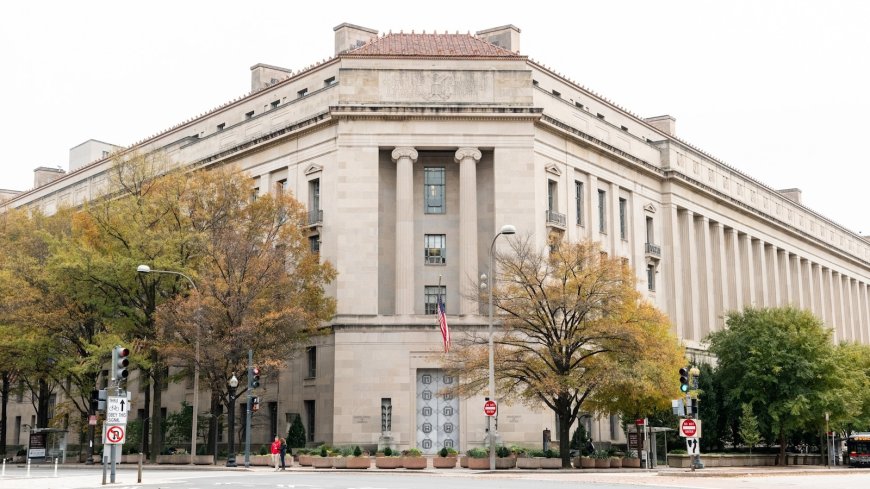
Twelve Democratic members of the US Congress have written to the Justice Department demanding an explanation for its decision to side with OpenAI in a landmark copyright dispute with the New York Times — and asking whether outside companies had a hand in shaping the government's position.
The letter, sent on Thursday to Attorney General Todd Blanche, questions why the department intervened in the case without first consulting the two federal agencies that specialise in intellectual property: the US Copyright Office and the US Patent and Trademark Office.
Led by Representatives Chellie Pingree of Maine, Becca Balint of Vermont and Deborah Ross of North Carolina, the lawmakers say the department's move raises "serious questions about potential bias" — and they want the internal record behind it.
What the lawmakers are asking for
The group has asked the department to hand over, by November 30, its procedures for reviewing and approving statements of interest in intellectual property cases, including who signed off on the filing in the OpenAI case. They also want confirmation of whether the Copyright Office or the patent office was consulted at all, and an explanation if it was not.
Going further, the letter requests every internal draft and supporting document used to develop the filing, along with the names of any outside companies or organisations that supplied legal analysis, briefing material or other communications connected to it.
The lawmakers also asked directly about any "external companies and organizations" that may have influenced the department's decision to file.
Pingree, who co-chairs the Congressional Arts Caucus, framed the issue as one that reaches well beyond a single lawsuit, saying the case could determine how artists, writers and other creators are credited and paid as generative AI develops.
The September filing at the centre of the dispute
On September 1, the Justice Department filed a statement of interest in the case — known as In re OpenAI, Inc. Copyright Infringement Litigation — arguing that training AI models on copyrighted material is generally fair use. It was the first time the US government had weighed in on a copyright case about AI training.
The department argued that restricting the use of copyrighted texts for training would threaten American AI development and national security. The lawmakers noted in their letter that the Trump administration had previously said such questions should be left to the courts.
According to Axios reporting cited in the letter, the filing caught both the Copyright Office and the patent office by surprise. Spokespeople for the Justice Department, the Copyright Office, the patent office and OpenAI did not immediately respond to requests for comment on the letter. A New York Times spokesperson declined to comment.
A separate challenge from House Judiciary Democrats
The letter is the second congressional pushback against the department's filing in less than a month. On October 30, a separate group of Democratic representatives from the House Judiciary Committee — Jamie Raskin, Jerrold Nadler and Hank Johnson — filed a court brief arguing that the department had "injected its views in this case in a manner that runs contrary to its standard practice" without input from "the federal bodies that possess actual expertise in the subject at hand."
Their brief argued that national security is not a factor under the Copyright Act, and that treating it as one would add an exception Congress never enacted.
The other signatories to Thursday's letter are Representatives Suzanne Bonamici, Greg Casar, Judy Chu, Valerie Foushee, Maxwell Frost, Jared Huffman, Sydney Kamlager-Dove, Ro Khanna and Raja Krishnamoorthi.
Why the case matters
The New York Times sued OpenAI and Microsoft in 2023, accusing them of using millions of its articles without permission to train ChatGPT. The newspaper argues that OpenAI exploits its work to build competing products, while OpenAI has told the court that using copyrighted work for AI training is "among the most transformative many of us will see in our lifetimes."
The case is one of the most prominent among dozens of lawsuits brought by copyright holders against OpenAI, Anthropic and Meta over the use of their material to train AI systems. The pending cases are likely to turn on whether AI training counts as fair use — a question that could reshape how AI companies obtain the data their models are built on, and how creators are compensated for it.
Sources
- Reuters — Democratic lawmakers probe DOJ filing in OpenAI copyright case
- Office of Representative Chellie Pingree — Pingree, Balint, Ross Probe Possible DOJ Bias in Landmark OpenAI Copyright Fight
- House Judiciary Committee Democrats — Ranking Members Raskin, Nadler, Johnson Urge Court to Reject DOJ's Arguments
What's Your Reaction?
 Like
0
 Dislike
0
 Love
0
 Funny
0
 Angry
0
 Sad
0
 Wow
0