













































Best Gaming Smartphones of 2026: 6 Top Phones Ranked
Discover the best gaming smartphones of 2026 with six ranked picks, detailed comparisons, phone photos, Amazon links and a clear buying verdict.
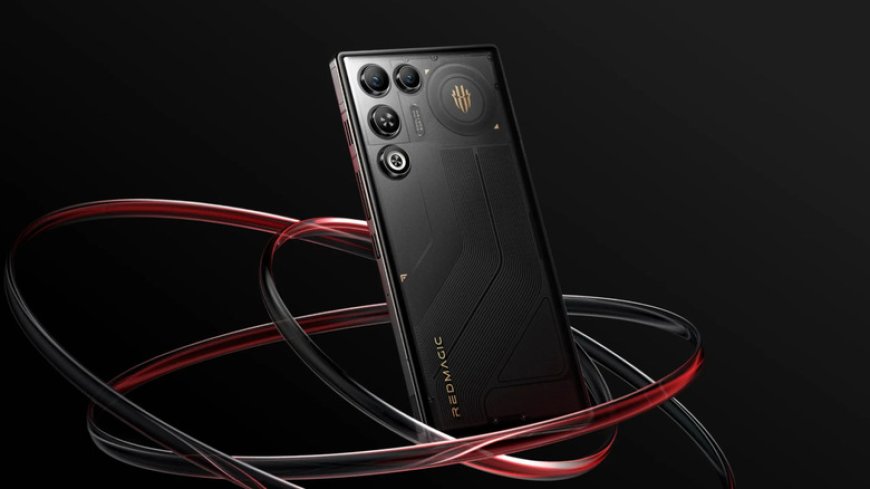
The REDMAGIC 11 Pro is our top dedicated gaming-phone pick for 2026. The iPhone 18 Pro Max is the strongest choice here for players who want iOS, while the REDMAGIC 11 Air makes the most persuasive case for spending less. The important point is that these are three different buying decisions, not three interchangeable versions of the same phone.
This year's best gaming smartphones offer far more than a fast processor. Active cooling, touch-sensitive shoulder controls, charging separation and large batteries can make a real difference during a long session. Mainstream flagships answer with better cameras, more polished everyday software and a less specialized design. GamesRadar's current guide also keeps the REDMAGIC 11 Pro ahead of its newer 11S sibling on value, a useful reminder that the newest model is not automatically the smartest purchase. [1]
Our October 2026 shortlist focuses on fully reviewed phones marketed internationally. China-only imports and devices still awaiting a global release are not awarded speculative scores. The recommendations below combine manufacturer specifications with independent review findings; we have not conducted an in-house six-phone laboratory test.
Best gaming smartphones of 2026: the quick ranking
The marks are editorial buying-guide judgments, not benchmark scores or customer-review averages. Sustained gaming, controls and practical value matter most, followed by battery features and the compromises involved in using each phone every day. Close marks reflect different priorities rather than a precise, universal performance gap.
- 1. REDMAGIC 11 Pro — 9.5/10: Best overall dedicated gaming phone.
- 2. Apple iPhone 18 Pro Max — 9/10: Best gaming iPhone.
- 3. REDMAGIC 11S Pro — 9/10: Best for Android performance enthusiasts when its price is competitive.
- 4. REDMAGIC 11 Air — 9/10: Best-value dedicated gaming option.
- 5. POCO F9 Ultra — 8.5/10: Best gaming-focused flagship alternative.
- 6. Samsung Galaxy S26 Ultra — 8.5/10: Best all-round Android choice for people who also game.
Amazon buying note: Every phone has an Amazon destination below. The REDMAGIC 11S Pro and Galaxy S26 Ultra links lead to readable, exact-model product pages. The other four are clearly labeled model-specific Amazon searches because a direct offer could not be verified. Search results are not a promise of availability. Marketplaces differ, and buyers must check the exact handset, storage, condition, seller, network support, warranty, shipping and import charges. No live price or stock claim is made in this guide.
1. REDMAGIC 11 Pro: the best overall dedicated gaming phone

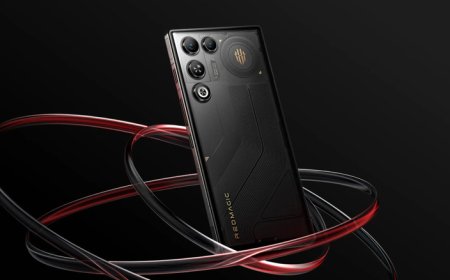
Photo: REDMAGIC 11 Pro. Image by PhoneArena.
Editorial mark: 9.5/10. Best for players who put gaming ahead of camera quality and conventional flagship polish.
The REDMAGIC 11 Pro earns its position by combining a Snapdragon 8 Elite Gen 5 processor with hardware that serves an obvious gaming purpose. Its 6.85-inch AMOLED display has a 2688 × 1216 resolution and a refresh rate of up to 144Hz. The under-display selfie camera leaves the main viewing area uninterrupted, which is especially appealing when a game's controls and information occupy the edges of the screen. [2]
The capacitive shoulder triggers are more important than the rear lighting. They provide extra touch controls that can be mapped to supported on-screen actions, helping players keep their thumbs available for movement and aiming. REDMAGIC advertises a 520Hz trigger sampling rate. That describes how the controls are sampled; it does not mean the game renders at 520 frames per second. [2]
Cooling is the other major attraction. The AquaCore system combines circulating liquid, liquid metal, a large vapor chamber and an internal fan. Those features are not proof that the phone can remain at peak speed indefinitely, but there is independent evidence that the cooling has practical value. PhoneArena reported 85% stability in its Wild Life Extreme stress test and praised the phone's ability to retain performance under load. Its reviewer also noted that the fan can be loud. [2] [3]
The 7,500mAh battery is supported by up to 80W wired and 80W wireless charging. Charging separation, often called bypass charging, is another useful gaming feature because it can supply power to the phone without continuously charging the battery during a session. A 3.5mm headphone socket is a welcome option for players who prefer a wired headset. The IPX8 water-resistance rating should not be mistaken for a certified dust-resistance rating. [2]
The trade-offs are clear. The hidden front camera prioritizes an uninterrupted display over good selfies. Rear-camera quality and software refinement are less convincing than the gaming hardware, and buyers should check the update policy for their own region rather than assuming every market receives the same support. [3]
Buying verdict: Choose the 11 Pro when gaming is the main reason for the purchase. It offers the most convincing balance of specialized controls, cooling and value in this shortlist. Do not automatically pay more for the 11S Pro without comparing the actual configurations and local prices. [1]
Check REDMAGIC 11 Pro listings on Amazon US — exact-model search
2. Apple iPhone 18 Pro Max: the best gaming iPhone
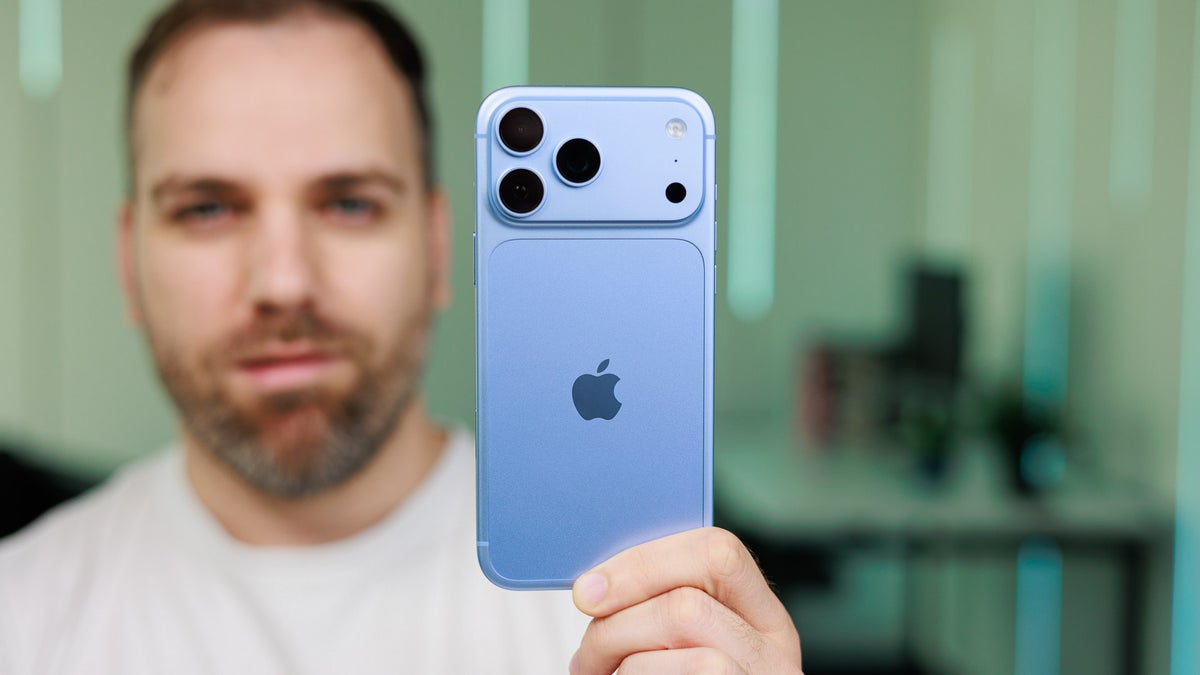
Photo: iPhone 18 Pro Max in Glacier. Image by PhoneArena.
Editorial mark: 9/10. Best for players committed to iOS who also want a premium everyday phone.
The iPhone 18 Pro Max is the current Apple flagship in this comparison, not an older model carried into a new-year list. Its A20 Pro chip supports hardware-accelerated ray tracing, and its 6.9-inch Super Retina XDR OLED display offers ProMotion up to 120Hz. Apple's product page also describes a next-generation vapor chamber. The emphasis is on delivering demanding games in a conventional flagship rather than adding an internal fan or integrated shoulder triggers. [8] [15]
There is useful evidence beyond a short benchmark run. Notebookcheck reported an extended Dame Tech test in which the iPhone 18 Pro Max averaged 58fps in Resident Evil 4 at 2346 × 1080 with a 60fps target. That is a result from one third-party test under its particular settings, not a promise that every title will run at 60fps. It nevertheless gives a more relevant indication of sustained play than a headline processor score alone. [9]
The display's 120Hz ceiling is lower than the highest figure in this guide, but that does not automatically make it a worse gaming screen. A game capped at 60fps cannot suddenly produce 144 or 185 native frames each second because another phone has a faster panel. The titles you play, their iOS versions and their available graphics settings matter more than the largest number on a specification sheet.
Battery capacity also requires careful wording. Review data identifies a 5,391mAh battery in physical-SIM versions and 5,567mAh in eSIM-only models. Apple does not present one universal mAh figure for every regional version. Its official charging specification says up to 50% in about 15 minutes with a 60W-capable adapter or higher, while MagSafe and Qi2 wireless charging reach up to 25W. Apple's video-playback rating must not be read as gaming endurance. [8] [10]
The everyday appeal is strong: premium cameras, capable speakers and a familiar iOS experience. The drawbacks are its high purchase cost and substantial 249g weight before adding a case. Better cooling does not mean heat or throttling has disappeared, and long sessions can still be affected by the game, ambient temperature and graphics settings. [9] [10]
Buying verdict: Buy it because you want the strongest current gaming iPhone and a premium daily phone in the same device. Android buyers should not switch simply because of one benchmark result; game availability, account compatibility and the controls they prefer are more important.
Check iPhone 18 Pro Max listings on Amazon US — exact-model search
3. REDMAGIC 11S Pro: powerful, but compare the price carefully

Photo: REDMAGIC 11S Pro. Vikhyaat Vivek / Digital Trends.
Editorial mark: 9/10. Best for enthusiasts who want the refreshed performance hardware without overlooking value.
The REDMAGIC 11S Pro uses the Snapdragon 8 Elite Gen 5 Leading Version. The name matters: this is a higher-performance version within the same chip family, not a completely different generation. Its core gaming proposition remains familiar, with a 6.85-inch 144Hz AMOLED display, active cooling, shoulder triggers and a 7,500mAh battery. REDMAGIC also lists up to 80W wired and wireless charging. [4]
The attraction is not hard to understand. A phone designed around demanding games gives owners more control over performance modes, cooling and button mapping than a conventional flagship. The refreshed AquaCore system and charging-separation feature support that approach. Buyers who enjoy adjusting these settings may reasonably prefer the 11S Pro, especially when its price is close to the standard 11 Pro. [4]
Independent testing also shows why restraint is necessary. Digital Trends reported stable 60fps play in Zenless Zone Zero at High settings, but its synthetic stress testing showed a substantial performance drop, and an aggressive performance mode failed to finish one stress-test run. The reviewer also described warmth around the upper frame and an audible fan. Active cooling improves the conditions in which a processor works; it does not remove its thermal limits. [5]
Those results should not be directly ranked against another publication's stress-test percentage for the 11 Pro. Different test versions, modes, room conditions and software can materially change the result. The useful conclusion is narrower: the 11S Pro can perform very well in real games, but maximum-power settings are not automatically the most stable settings for a long session.
Cameras and software remain the main everyday compromises. The Digital Trends review found the camera experience less impressive than the gaming performance and noted rough edges in the software. GamesRadar's buying guide retained the regular 11 Pro as its top pick because the refresh did not justify the additional cost in its comparison. [1] [5]
Buying verdict: The 11S Pro is a good enthusiast purchase when the price difference is small or a specific configuration suits you better. It is not an automatic upgrade for someone already satisfied with the 11 Pro. Compare the exact RAM, storage, warranty and included charger rather than just the model names.
View the REDMAGIC 11S Pro 12GB/256GB product page on Amazon Canada
4. REDMAGIC 11 Air: the best-value dedicated gaming option
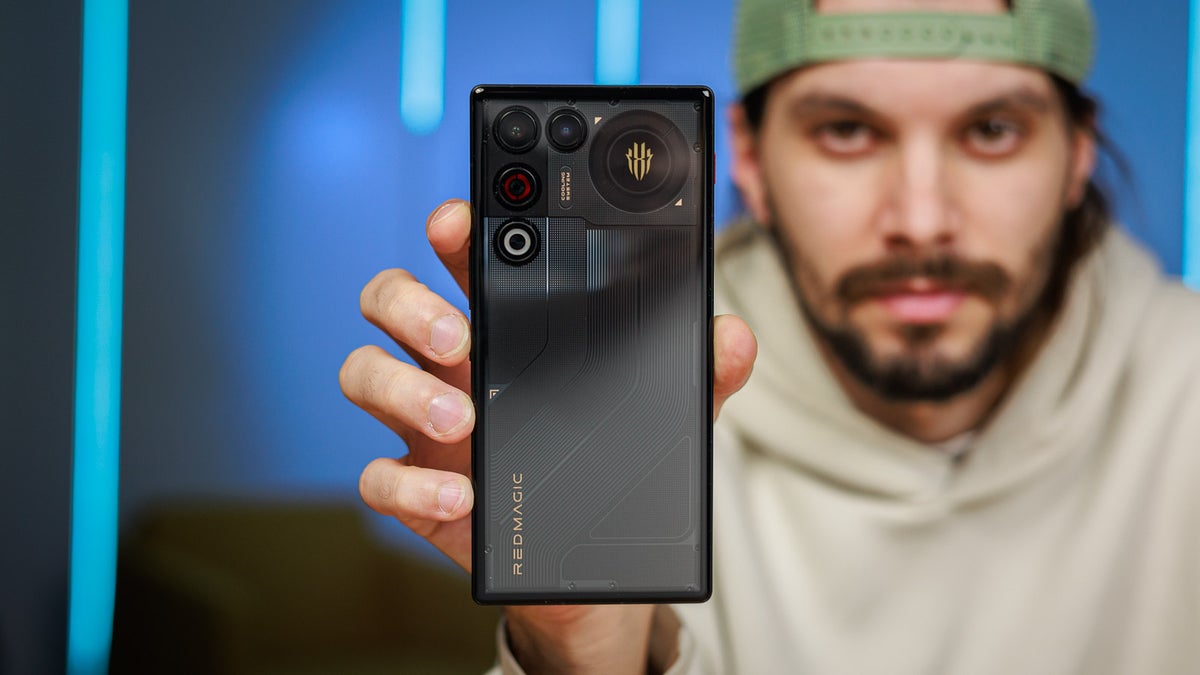
Photo: REDMAGIC 11 Air. Image by PhoneArena.
Editorial mark: 9/10. Best for buyers who want gaming controls and cooling without paying for the most expensive chip.
The REDMAGIC 11 Air makes a sensible compromise. It uses the Snapdragon 8 Elite rather than the newer Snapdragon 8 Elite Gen 5, but retains many of the features that make a dedicated gaming phone useful. These include a 6.85-inch 144Hz AMOLED screen, an internal fan, 520Hz shoulder-control sampling and a large 7,000mAh battery. [6]
That combination is more persuasive than an inexpensive phone that offers a fast chip but no thought for long-session controls or charging. GamesRadar identifies the 11 Air as its value pick, while PhoneArena describes strong everyday responsiveness and a relatively sleek design. The buying case is not that the older processor beats the newer one; it is that a lower-cost package can still cover a player's actual needs. [1] [7]
At 207g and 8mm thick, the Air is lighter and thinner than the more heavily equipped Pro. It is still a large phone, so the name should not be interpreted as meaning small or effortless to hold for hours. The slightly different shape may nevertheless suit buyers who find large gaming phones tiring. [6]
Global charging support is up to 80W wired, with bypass charging available. Do not copy the higher charging figure advertised for the China-market version into a global buying recommendation. There is no wireless charging. The IP54 rating provides dust and splash protection, not the same water-resistance classification as the Pro's IPX8 rating. [6]
The camera compromise is particularly easy to see on the specification sheet: a 50MP main camera is joined by an 8MP ultrawide, while the under-display front camera again favors a clean gaming screen over strong selfies. PhoneArena found the main camera usable but the ultrawide, zoom and selfie results less convincing. [6] [7]
Buying verdict: The 11 Air is the easiest recommendation for someone who wants to spend less without giving up the basic experience of a dedicated gaming handset. Pay extra for the Pro if its newer processor, cooling arrangement and wireless charging matter to your actual use—not simply because its name sounds more premium.
Check REDMAGIC 11 Air listings on Amazon Singapore — exact-model search
5. POCO F9 Ultra: a high-refresh flagship alternative

Photo: POCO F9 Ultra. Vikhyaat Vivek / Digital Trends.
Editorial mark: 8.5/10. Best for buyers who want gaming performance alongside versatile cameras, audio and flagship conveniences.
The POCO F9 Ultra has one of the most eye-catching displays in this comparison: a 6.9-inch AMOLED panel rated up to 185Hz. It pairs that screen with the Snapdragon 8 Elite Gen 5 and a VisionBoost D8 chip for supported display and graphics features. The battery is rated at 8,050mAh typical capacity, with up to 100W wired and 50W wireless charging. [11]
The 185Hz headline needs context. POCO advertises high-frame-rate support for selected games; it does not claim every Android title can render natively at 185fps. Frame interpolation is also different from a game engine producing a new frame for every refresh. Extra displayed frames can improve perceived smoothness without making the game simulation or control processing run at the same rate. Check the supported-game list and the settings that apply to your title. [11]
Outside gaming, the F9 Ultra has a broader appeal than a narrowly focused gaming handset. Its Sound by Bose 2.1 speaker arrangement is a notable part of the package, and its camera hardware includes a 200MP main camera and a 50MP 5× telephoto. Those features make it easier to justify as an everyday flagship for someone who values photography and media as much as gaming. Specifications alone, however, are not a camera-quality score. [11]
Cooling is where buyers should keep expectations realistic. GSMArena reported substantial heat and throttling under prolonged synthetic stress. Its pre-release review software also prevented a dependable 3DMark comparison. That is not proof that every ordinary game will perform badly, but it is enough reason to reject any claim that this phone has solved sustained heat completely. [12]
The large battery and fast charging are attractive, but capacity alone cannot establish how many hours a particular game will run. Display brightness, refresh settings, network use and graphics quality all affect consumption. A dedicated gaming phone's triggers may also be more useful to a competitive player than a faster display mode their preferred game does not support.
Buying verdict: Choose the F9 Ultra if you want a powerful, high-refresh Android flagship with more everyday versatility. Choose a REDMAGIC instead if integrated shoulder controls and a more specialized gaming setup take priority over the camera and audio package.
Check POCO F9 Ultra listings on Amazon UK — exact-model search
6. Samsung Galaxy S26 Ultra: the best all-round Android choice
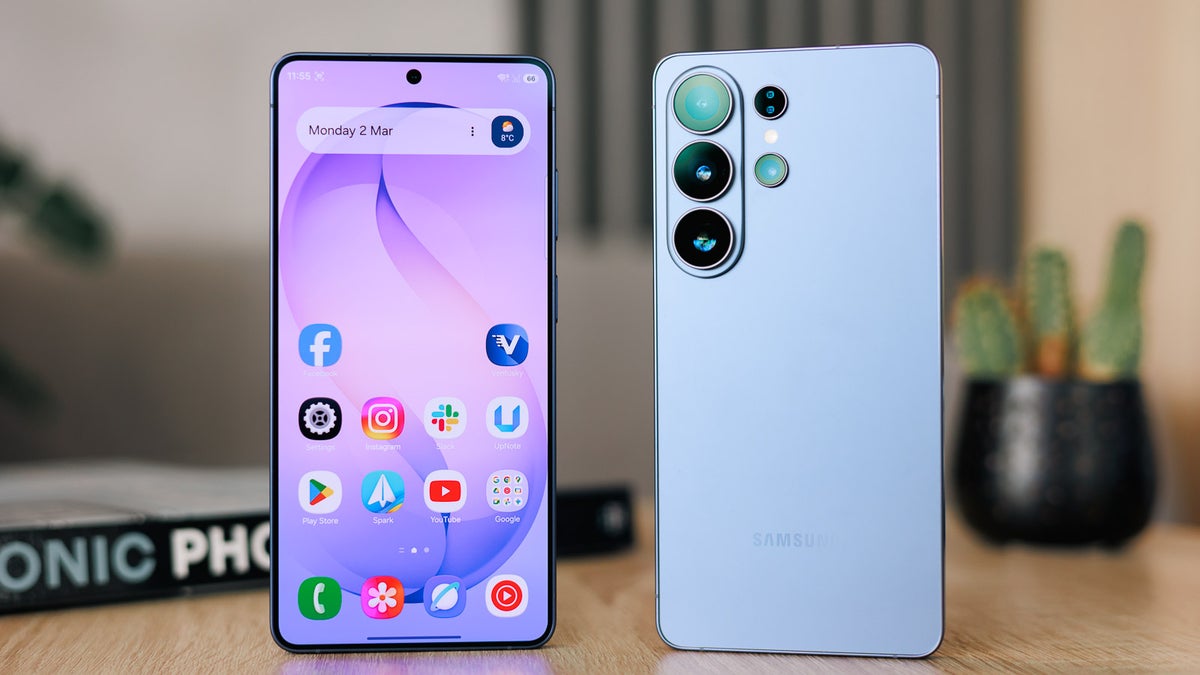
Photo: Galaxy S26 Ultra. Image by PhoneArena.
Editorial mark: 8.5/10. Best for people who need one premium Android phone for work, photography and gaming.
The Galaxy S26 Ultra is not the most specialized gaming device here, but it may be the easiest to recommend as someone's only phone. Its Snapdragon 8 Elite Gen 5 for Galaxy processor is paired with a 6.9-inch QHD+ Dynamic AMOLED 2X display running at up to 120Hz. Samsung's official specifications list a 5,000mAh battery and a 214g body. [13] [14]
Its strengths extend beyond games. S Pen support, Samsung DeX and a versatile camera system make the phone useful in situations where a gaming-first device's controls and cooling have little value. Samsung's specification page lists security support through February 2033, an important consideration for buyers planning to keep an expensive handset for several years. [13]
The gaming compromises are straightforward. There are no built-in shoulder controls or internal fan. PhoneArena found strong initial performance but a substantial drop under sustained GPU load. The phone is capable, but a high burst score should not be presented as the speed it will hold indefinitely during a demanding session. [14]
Charging reaches up to 60W wired and 25W wireless according to the review. The 5,000mAh capacity is smaller than the headline figures of the dedicated gaming rivals in this list, although direct runtime still depends on efficiency and the workload. Its Privacy Display is an everyday privacy feature, not a reason to expect higher frame rates. [14]
The 120Hz panel is not a serious disadvantage in a game that only offers a lower frame-rate cap. Buyers who alternate between gaming, photography, work and video may get more value from the overall package than from features designed solely for competition.
Buying verdict: Choose the S26 Ultra when gaming is important but not the only priority. A REDMAGIC offers more specialized gaming hardware for the job; Samsung makes the stronger argument for the person who wants a versatile premium Android phone with clearly stated long-term security support.
View the unlocked Galaxy S26 Ultra 256GB product page on Amazon US
Head-to-head comparison: what actually changes the experience?
Sustained performance matters more than a single high score
The REDMAGIC models prioritize gaming controls and active cooling. The iPhone 18 Pro Max offers strong sustained results in the cited extended game test. The POCO F9 Ultra and Galaxy S26 Ultra bring flagship performance but also have reported stress-load heat or throttling compromises. None should be called universally fastest based on results gathered from unrelated laboratories. [3] [5] [9] [12] [14]
A fair direct comparison would use the same game build, comparable graphics settings, the same room temperature and a long enough run to expose heat. The existing reviews do not provide that single controlled six-phone test. It is more useful to explain each phone's strengths than to combine unrelated benchmark numbers into a supposedly scientific league table.
Controls can matter more than refresh-rate bragging rights
The 11 Pro, 11S Pro and 11 Air offer integrated shoulder controls. For a player who finds those controls comfortable, that can be a more meaningful difference than moving from 120Hz to a higher display ceiling. The benefit still depends on the game, its control layout and any rules governing remapped inputs. [2] [4] [6]
Refresh rate, touch sampling and game frame rate are different measurements. Refresh rate describes the screen; touch sampling concerns input detection; native frame rate is what the game renders. Manufacturers may advertise all three prominently, but a large figure in one category does not guarantee the same figure in another.
The biggest battery is not automatically the longest-lasting gaming phone
The POCO's 8,050mAh figure is the largest listed capacity in this shortlist, while the REDMAGIC models combine large batteries with gaming-oriented charging features. The iPhone demonstrates why capacity alone is insufficient: software, chip efficiency and the regional battery version also influence the result. [2] [4] [6] [10] [11]
Do not compare a manufacturer's video-playback claim with a reviewer's gaming session. They are different workloads. Charging wattage is also a peak capability, not a promise that the battery receives that power continuously from empty to full. The useful questions are how long your game runs at your preferred settings, how hot the phone becomes and how easily you can recharge between sessions.
Cameras, software and support still affect value
The REDMAGIC phones make an obvious trade: gaming hardware and an uninterrupted display come before outstanding selfies or a camera-focused flagship experience. The POCO, Samsung and Apple alternatives are easier to justify when photography and everyday use are equally important. [3] [5] [7] [10] [11] [14]
Support should be checked before import buying. Samsung publishes a specific security-support end date for the S26 Ultra. GSMArena lists four major OS upgrades and six years of security support for the POCO review model. REDMAGIC's regional policies deserve particular attention. Do not assume that a low import price includes the same warranty or support as a locally distributed handset. [3] [12] [13]
Before buying a gaming smartphone in 2026
Start with your games, not with the most expensive configuration. Check whether they support high frame rates on the exact device and whether those modes reduce resolution or graphics quality. A phone can have a 185Hz screen while the game you play remains capped much lower.
Next, decide whether the device will replace your everyday phone. If it will, camera quality, weight, software support and local repair options deserve serious attention. If it is mainly a gaming device, controls, cooling and charging separation may deserve more of your budget.
Choose storage for the library you actually keep installed, including updates and downloaded assets. A 512GB configuration may be more useful to a large-library player than paying for the maximum RAM option. RAM capacity by itself is not a frame-rate guarantee, and extra memory cannot remove a processor's thermal limits.
Finally, inspect the Amazon listing carefully. A search result may be a case, a different generation or a renewed unit. Confirm the exact model and condition, then check regional network bands and SIM or eSIM requirements. For international orders, confirm delivery eligibility, taxes, return arrangements and the applicable warranty before paying.
Frequently asked questions
Which is the best gaming smartphone of 2026 overall?
The REDMAGIC 11 Pro is our overall dedicated-gaming recommendation because of its balance of controls, cooling, battery features and value. That is an editorial buying verdict, not a claim that it wins every game or every benchmark. The iPhone 18 Pro Max is the better recommendation for someone who specifically wants iOS.
Which phone is the best-value gaming choice?
The REDMAGIC 11 Air is the value pick here. It retains a 144Hz screen, internal fan, shoulder controls and bypass charging while using an older flagship processor. Buyers must accept weaker camera flexibility and no wireless charging. Actual value still depends on the price and warranty available in their market. [1] [6]
Does a 185Hz screen mean every game runs at 185fps?
No. The game must support that frame rate on the device, and its graphics settings and thermal behavior must allow it. Interpolated frames are not the same as additional native frames produced by the game engine. Always check the exact title's supported modes. [11]
Should I buy a gaming phone with the most RAM?
Not automatically. First meet the game's requirements, then consider storage, sustained performance, cooling and price. A larger RAM number does not guarantee a higher frame rate, and paying for a top-memory configuration can be poor value if the games you play do not benefit from it.
Is a gaming phone suitable for everyday use?
Yes, but the compromise varies. The REDMAGIC models put more emphasis on controls and cooling than camera quality. The Galaxy S26 Ultra, iPhone 18 Pro Max and POCO F9 Ultra offer a broader flagship-style package. Weight, software preferences and local support may decide which compromise is acceptable.
Final verdict: which one should you buy?
For a dedicated gaming purchase, the REDMAGIC 11 Pro remains the most balanced recommendation. It brings the controls, cooling and charging features that justify buying a gaming phone in the first place. The REDMAGIC 11 Air is the smarter alternative when budget matters more than the newest chip, while the 11S Pro makes sense when its price premium is small or its configuration better fits your needs.
The iPhone 18 Pro Max is the clear choice for an iOS player who wants a premium daily phone as well. The POCO F9 Ultra suits someone attracted to a high-refresh screen, large battery and versatile flagship hardware. The Galaxy S26 Ultra is the most natural Android recommendation when work, photography, software support and gaming all have to share the same device.
The best gaming smartphone of 2026 is ultimately the one that improves the games you actually play without forcing you to pay for features you will not use. Buy for stable sessions, comfortable controls and the right regional support—not just the biggest number in an advertisement.
Featured image: REDMAGIC 11 Air and REDMAGIC 11 Pro. Trusted Reviews comparison image.
References
- GamesRadar: The best gaming phones of 2026
- REDMAGIC 11 Pro official features and specifications
- PhoneArena: REDMAGIC 11 Pro review
- REDMAGIC 11S Pro official features and specifications
- Digital Trends: REDMAGIC 11S Pro review
- GSMArena: REDMAGIC 11 Air review
- PhoneArena: REDMAGIC 11 Air review
- Apple: iPhone 18 Pro Max technical specifications
- Notebookcheck: iPhone 18 Pro Max extended gaming results
- PhoneArena: iPhone 18 Pro Max review
- POCO F9 Ultra official features and specifications
- GSMArena: POCO F9 Ultra performance review
- Samsung: Galaxy S26 Ultra official specifications
- PhoneArena: Samsung Galaxy S26 Ultra review
- Apple: iPhone 18 Pro product page and vapor chamber
What's Your Reaction?
 Like
0
 Dislike
0
 Love
0
 Funny
0
 Angry
0
 Sad
0
 Wow
0