












































US Plans $389 Million in Semiconductor and Fusion Research Awards
The Commerce Department plans four R&D awards for power semiconductors and critical materials, including projects tied to fusion and AI data centers.
US Plans $389 Million in Semiconductor and Fusion Research Awards
The US Commerce Department plans to provide up to $389 million in research and development funding to four companies working on power semiconductors and critical materials, according to Reuters. The awards are intended to strengthen technologies ranging from commercial fusion to the power systems used by AI data centers.
The department said the government will receive minority, non-controlling and non-voting equity stakes as a condition of the funding. The money comes from a $10 billion semiconductor R&D fund approved by Congress in 2022. Commerce Secretary Howard Lutnick said the awards would accelerate domestic semiconductor innovation and energy resources.
Four projects
Helion is set to receive up to $175 million for high-voltage power semiconductors and advanced energy modules for fusion generation. The company said the award will accompany $50 million in new private investment.
Commonwealth Fusion Systems is slated for up to $85 million to develop semiconductors for radio-frequency plasma heating, power electronics, diagnostics and radiation-hardened electronics. Its work also includes technologies for robotic maintenance systems.
Vertical Semiconductor is set to receive up to $73 million for vertical gallium-nitride power semiconductors aimed at AI data-center racks. Sibelco North America is slated for up to $56 million to develop purification methods for ultra-high-purity quartz used in semiconductor manufacturing.
Why power devices matter
AI data centers require more electricity and higher power density, while fusion developers need specialized electronics that can operate in demanding environments. The projects address different parts of that challenge: efficient power conversion, radiation tolerance and materials purity.
The awards remain planned awards and letters of intent, not evidence that the projects are already complete or that commercial fusion has been achieved. Their value will depend on technical milestones, private investment and the ability to manufacture the resulting devices at scale.
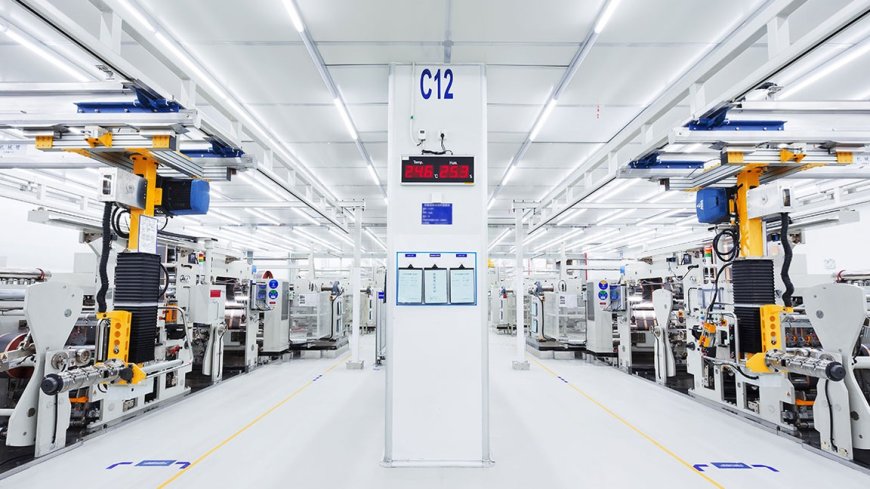
Illustrative file photo of laptop circuitry; not a chip or production facility named in this report. Photo: Alexandre Debiève / Unsplash. Unsplash License; cropped to 16:9. Image source; license.
Sources
Reuters report; US Commerce press releases; US Department of Energy critical-materials program.
What's Your Reaction?
 Like
0
 Dislike
0
 Love
0
 Funny
0
 Angry
0
 Sad
0
 Wow
0