




























































How to Spot Fake News and Verify Tech Rumors Before You Share Them
Fake news spreads faster than real news — especially about phones, AI and big tech. Learn how to check a claim in under a minute, spot AI-generated fakes, and avoid sharing rumors that are not true.
How to Spot Fake News and Verify Tech Rumors Before You Share Them
Fake news spreads faster than real news — especially about phones, AI and big tech. Learn how to check a claim in under a minute, spot AI-generated fakes, and avoid sharing rumors that are not true.
Every day, millions of people share tech "news" that turns out to be fake: a phone that does not exist, a feature that was never announced, a quote a CEO never said. False stories spread because they are surprising, emotional and easy to share. The good news is that most of them fall apart with a one-minute check.
1. Check the source before the story
Before believing a claim, ask where it came from. Is it a known publication with editors and a reputation to protect, or an unknown account, a screenshot of a screenshot, or a site you have never heard of? A real story usually has a named author, a publication date and a link to the original announcement or document.
2. Search the claim in your own words
Copy the key part of the claim into a search engine. If only one obscure site reports it and no major outlet has picked it up, be suspicious. If several reputable outlets report the same facts, it is much more likely to be true. For tech rumors, check the company's official site or press page — a real product launch or feature always appears there eventually.
3. Watch for the warning signs
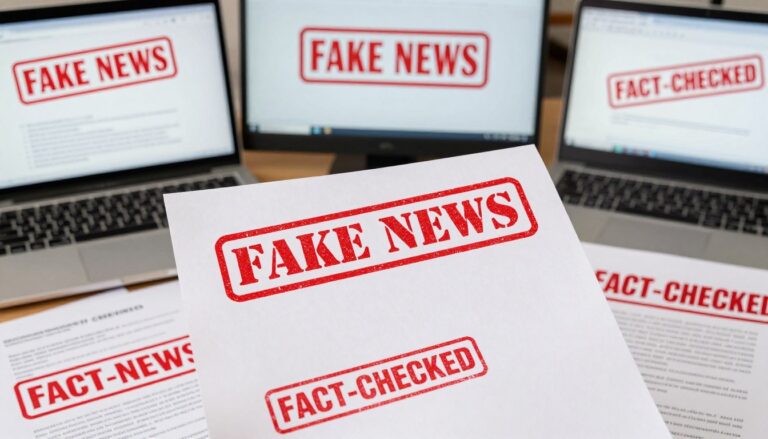
Fake stories often use ALL-CAPS headlines, excessive exclamation marks, and emotional language designed to make you angry or excited. They cite "sources" without naming anyone, or quote "a report" without linking to it. They ask you to share urgently "before it gets deleted". Real journalism does not need those tricks.
4. Check the date and the context
Old news is often shared as if it just happened. Check the date on the article — a story from two years ago about a phone launch or a company scandal is not news today. Also check whether a quote or video is being used out of context: a real photo from one event is often reused to illustrate a completely different story.
5. Spot AI-generated images and videos
AI can now create realistic photos and videos of events that never happened. Look closely at hands and fingers, text in the image, reflections, and details that do not make sense. Reverse-image search the picture (Google Lens or TinEye) to see where it first appeared. If a dramatic image only exists on one social media account, be very suspicious.
6. Understand the difference between a rumor and a fact
In tech news, rumors are normal — leakers and analysts predict products months in advance. A rumor is a claim from an unnamed source; a fact is confirmed by the company or by multiple independent reports. Good tech sites label rumors clearly. If a site presents a rumor as a confirmed fact, do not trust it.
7. What to do before you share
Ask yourself three questions: Who is saying this, and do they have a reason to lie? Can I find the same information from a second, independent source? Does this confirm something I already believe a little too perfectly? If any answer worries you, do not share it. Sharing a false story takes a second; undoing the damage takes much longer.
Sources
What's Your Reaction?
 Like
0
 Dislike
0
 Love
0
 Funny
0
 Angry
0
 Sad
0
 Wow
0