







































Best Smartphones of 2026: Android vs iPhone—Who Is Ahead?
Compare 2026’s leading iPhone, Samsung and Google flagships, with clear scores, camera and battery advice, Amazon buying links and a final Android vs iPhone verdict.
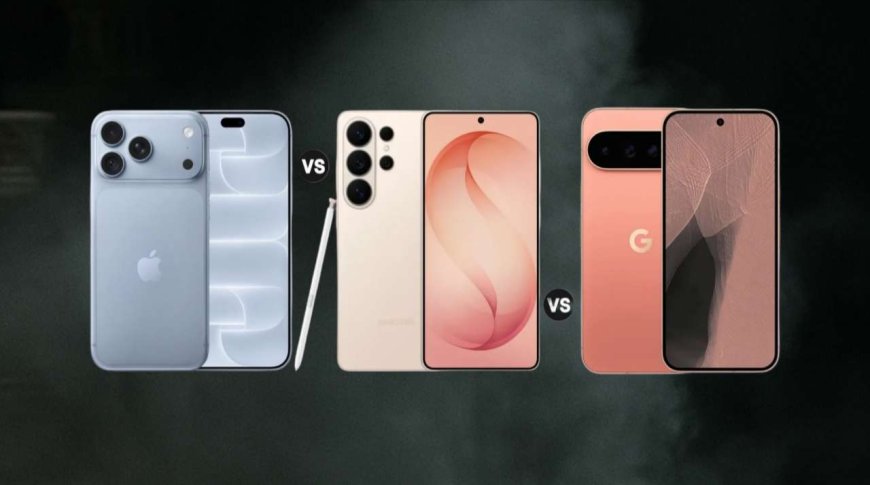
Best Smartphones of 2026: Android vs iPhone—Who Is Ahead?
Android or iPhone? In 2026, the answer is less about which logo is on the back and more about what you need your phone to do. Apple makes a persuasive case for buyers who put battery endurance, performance and video tools first. Android remains the more flexible choice for people who want different ways to work, customize their software and use their cameras.
Our verdict is a narrow iPhone win in this premium flagship comparison, not a declaration that every iPhone is better than every Android phone. The strongest Android alternative is close enough that its stylus, lighter body and productivity features could easily matter more than a small difference in the final score.
This guide compares three current, conventional flagship phones rather than every handset on sale. The marks below are Innopark IT’s editorial assessments of published specifications, support commitments and independently reported findings. They are not laboratory results or claims that we personally tested these devices. Prices quoted as starting prices are U.S. launch prices, not promises about today’s Amazon offers or the cost of importing a phone.
The 2026 flagship shortlist: scores, photos and Amazon links
| Phone and product photo | Editorial mark | Best reason to choose it | Exact Amazon variant |
|---|---|---|---|
Apple iPhone 18 Pro Max |
91/100 | Battery endurance, performance and advanced video tools | Black, 256GB, unlocked |
Samsung Galaxy S26 Ultra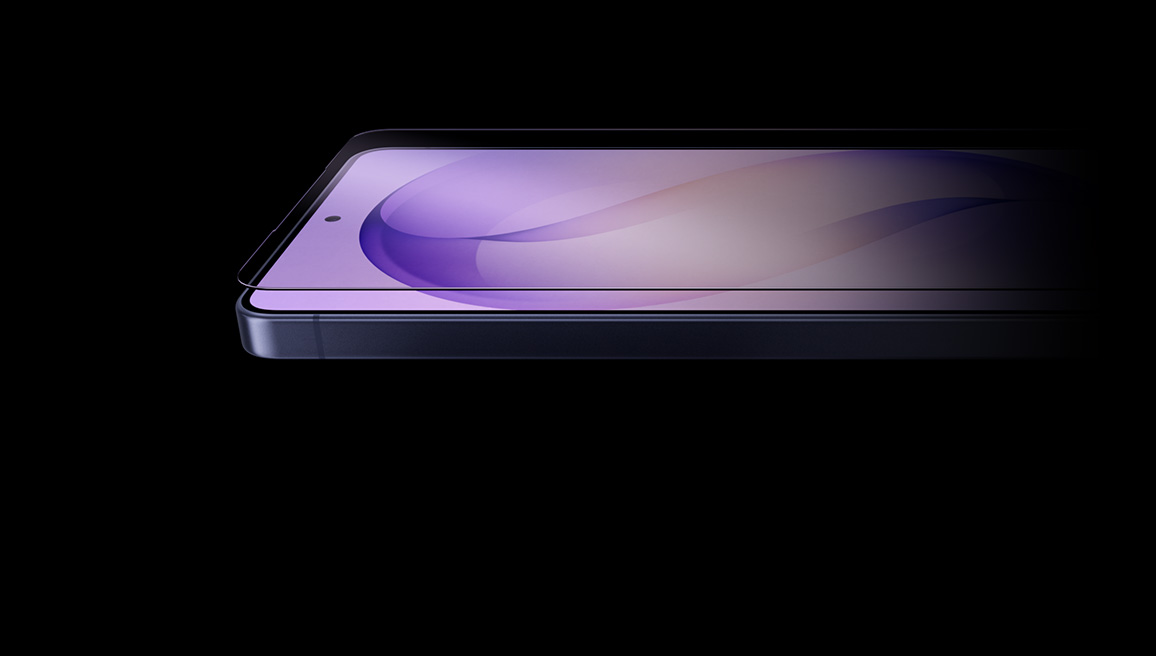 |
89.5/100 | S Pen productivity, versatile native zoom and a lighter large-screen design | Cobalt Violet, 512GB, unlocked |
Google Pixel 11 Pro XL |
84.8/100 | Google’s camera software, integrated AI features and long software support | Obsidian, 512GB, unlocked |
Product images: Apple; Samsung; Google product image via DXOMARK. Images illustrate the phone model; check the linked Amazon page for the selected finish, storage and regional version. These are direct product links, not search-result links. Prices, sellers, returns and availability can change. No claim is made that these offers are the cheapest available.
The linked storage capacities are not identical. That matters: the buying links are useful routes to specific offers, but they are not a controlled, like-for-like price comparison. The scorecard assesses each phone’s overall proposition, not the temporary price of one seller’s listing.
How the marks work
Camera capability carries 25 marks; performance carries 20; battery and charging carry 20; display and everyday productivity carry 15; software and support carry 10; and value carries 10. Each category receives an editorial rating out of ten, which is converted to its weighted contribution.
| Category | Available marks | Apple contender | Samsung contender | Google contender |
|---|---|---|---|---|
| Cameras and creative tools | 25 | 23.75 | 23.75 | 22.50 |
| Performance | 20 | 19.00 | 18.00 | 16.00 |
| Battery and charging | 20 | 19.00 | 17.00 | 17.00 |
| Display and productivity | 15 | 12.75 | 14.25 | 12.75 |
| Software and support | 10 | 9.00 | 9.00 | 9.00 |
| Value | 10 | 7.50 | 7.50 | 7.50 |
| Total | 100 | 91.00 | 89.50 | 84.75 |
The displayed Google total rounds to 84.8. Small gaps should not be mistaken for scientific precision. The equal value marks reflect premium pricing and the absence of a verified, same-storage, same-market delivered-price comparison. Changing the weights can change the winner: someone who uses a stylus every day should give productivity much more weight than this general-purpose scorecard does.
Apple iPhone 18 Pro Max: our narrow overall winner
Amazon buying link: iPhone 18 Pro Max—Black, 256GB, unlocked.
Apple announced this model on September 9, with availability beginning September 18, 2026. Its U.S. starting price is $1,299. The important hardware includes a 6.9-inch OLED display with adaptive refresh rates up to 120Hz, the A20 Pro chip and a 48MP main camera with a variable aperture. Storage choices extend from 256GB to 2TB, although the Amazon offer linked here is specifically the 256GB version.
Why it leads on performance and endurance
Apple’s chip is only one part of the argument. In its direct comparison, PhoneArena’s direct comparison reports an advantage for the iPhone in CPU and graphics benchmarks, alongside better battery endurance than Samsung’s competing flagship. That is independent review evidence, not simply a repetition of Apple’s marketing.
The practical benefit is extra headroom for demanding games, video work and heavy use. It does not mean the Android alternative feels slow when opening messages or browsing the web. Benchmark leadership is a useful distinction for demanding tasks, not proof that ordinary daily interactions will be dramatically different.
Apple’s official specifications rate the eSIM-only version for up to 45 hours of video playback. That is a manufacturer test claim, not a prediction of screen-on time for every owner. Mobile signal, camera use, brightness and gaming all change the result. It should not be placed directly beside another manufacturer’s playback figure as though the testing conditions were identical.
The camera upgrade that actually matters
The main camera’s variable aperture can change the lens opening between four settings. This gives the camera another way to manage light and depth of field, rather than relying entirely on software to change the appearance of an image. Apple also provides Pro controls for settings such as shutter speed and white balance.
The rear system includes 48MP main, ultrawide and telephoto cameras. The telephoto has a native 4x optical setting. Apple also advertises 8x “optical-quality” output; that wording is important because it is not the same as a separate native 8x optical lens.
For video creators, the official specification includes 4K Dolby Vision at up to 120 frames per second on the main camera, ProRes options with external recording and Apple Log 2. These are substantial tools, but they benefit people who will actually edit and manage the footage. Large files and external recording requirements deserve as much attention as the headline resolution.
Where the iPhone makes compromises
At 249 grams, this is a substantial phone before a protective case is added. A large screen is useful for editing and reading, but its size and weight can be tiring for one-handed use. Buyers seeking a light, compact handset should not treat the highest-scoring premium flagship as an automatic recommendation.
The U.S. version is also eSIM-only. An unlocked listing does not guarantee that your operator supports every feature or can activate the phone. Apple’s new Siri AI experience is rolling out in beta, with language and regional restrictions. Buy the hardware for capabilities you can verify in your country, not for a feature that may arrive later.
Best fit: buyers prioritizing endurance, demanding performance and a rich video workflow, especially if they already use Apple devices.
Samsung Galaxy S26 Ultra: the best Android alternative here
Amazon buying link: Galaxy S26 Ultra—Cobalt Violet, 512GB, unlocked.
Samsung’s 2026 flagship arrived earlier in the year, with general availability beginning March 11. Its U.S. launch starting price was $1,299.99. It combines a 6.9-inch display, Snapdragon 8 Elite Gen 5 for Galaxy, a 5,000mAh battery and the integrated S Pen.
Its appeal is not that it wins every benchmark. It is that several genuinely useful capabilities are brought together in one device: handwritten notes, flexible multitasking, Samsung DeX and a camera system with multiple native telephoto options.
Productivity is Samsung’s strongest argument
A stylus changes the way some people use a phone. Marking up a document, jotting down an idea or selecting a precise part of an image can be easier with the S Pen than with a fingertip. DeX adds another route to working with the phone using a desktop-style interface and compatible equipment.
The device is also thinner and lighter than Apple’s contender: Samsung lists 7.9mm and 214 grams. Neither measurement makes it a small phone, but the difference in weight is meaningful for a device carried and held throughout the day.
The Privacy Display is another distinctive feature. It can limit side viewing for the full screen or selected situations. Samsung warns that information can still be visible depending on the angle, brightness and environment. It is an extra privacy tool, not a guarantee that nobody nearby can see sensitive information.
Why camera versatility earns high marks
The camera arrangement includes a 200MP main sensor, a 50MP ultrawide, a 10MP 3x telephoto and a 50MP 5x telephoto. Two native telephoto positions give photographers useful framing choices before more aggressive digital processing enters the picture.
That is a better reason to consider the camera than the largest advertised zoom number. Samsung’s 100x AI-powered zoom is not 100x optical magnification. At extreme settings, stabilization and computational processing play a large role in the result.
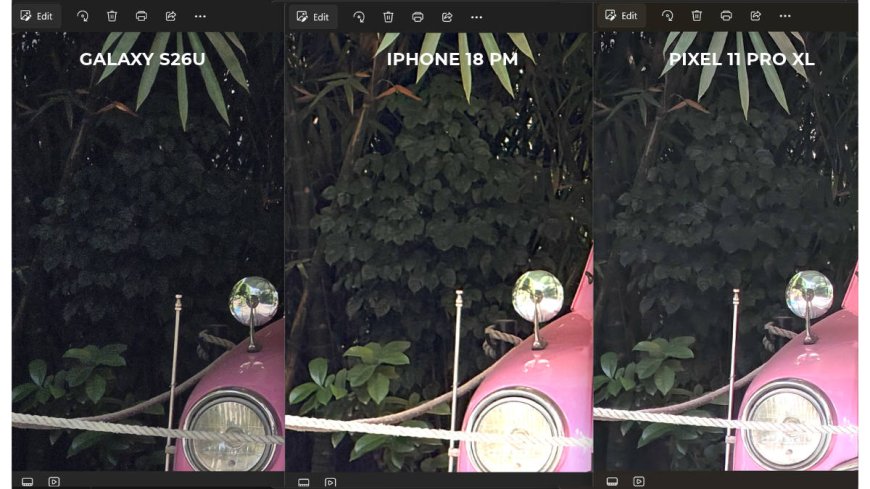
PhoneArena’s head-to-head review gives Samsung the edge for detail at the phones’ native telephoto lengths. Its observations also show why camera buying decisions should not be reduced to megapixels: exposure and color preferences can differ between the two systems. A higher-resolution sensor does not automatically produce the more convincing photograph in every scene.
The charging advantage does not erase every weakness
Samsung supports 60W Super Fast Charging 3.0 with suitable equipment. Fast charging is helpful when a brief top-up is more realistic than leaving the phone connected for a long period. The correct adapter and cable matter, and charging changes with temperature, battery level and usage.
The trade-off is that strong charging does not necessarily mean the longest unplugged endurance. PhoneArena’s direct comparison favors Apple for runtime. CNET also identifies the lack of built-in magnetic wireless charging as a drawback. Buyers who use magnetic accessories should check the case and charger combination rather than assume equivalent behavior across brands.
Samsung’s commitment to seven generations of operating-system upgrades and seven years of security updates is a strong reason to consider keeping the phone longer. That commitment does not mean every carrier and country receives each update on the same day.
Best fit: Android buyers who want a large-screen work tool, S Pen support, versatile zoom and more freedom to organize their daily workflow.
Google Pixel 11 Pro XL: the Google-first camera and software choice
Amazon buying link: Pixel 11 Pro XL—Obsidian, 512GB, unlocked.
Google’s latest large Pro phone became available on August 20, 2026, with a U.S. starting price of $1,299. The linked Amazon variant has 512GB storage, so its offer should not be confused with the base starting price.
The phone combines a 6.8-inch Super Actua display, Tensor G6 processor and Titan M3 security coprocessor. Google positions it around the way its hardware, camera processing and Gemini features work together, rather than simply winning a contest for the highest raw processor score.
Camera software is central to the appeal
Google describes an upgraded 48MP telephoto camera with a larger sensor, 5x portrait capability and computational Pro Zoom extending to 120x. The distinction between native optics and computational magnification is essential here too. A 120x label is not evidence of a 120x optical lens or proof that fine details remain trustworthy at that setting.
DXOMARK’s camera evaluation reports strengths in exposure, color, autofocus and the balance between detail and noise, alongside telephoto and portrait improvements. Its weaknesses include instability in some night exposures and limitations in low-light video. That is a more useful picture than calling any camera universally perfect.
For a buyer, the sensible approach is to examine full-size sample images in the kinds of conditions they actually photograph. Family portraits, pets indoors and bright outdoor scenes are different challenges. The maximum zoom figure is rarely the most important one.
Useful features, with real conditions attached
The HiLight system uses colored lights around the camera flash to show selected information while the phone is face down. Google also includes Pixelsnap magnetic charging support and describes Qi 2.2 charging compatibility at up to 25W.
Tensor G6 brings Google’s latest on-device processing capabilities, but manufacturer claims about faster browsing or AI computation should not be read as proof that it outperforms Apple or Qualcomm in every workload. Our lower performance mark reflects a more cautious assessment of its position for demanding users, not a claim that normal daily use is inherently slow.
The phone launched with Android 17, and Google promises seven years of operating-system, security and Pixel Drop updates from first U.S. Google Store availability. That is a concrete ownership benefit. Individual AI features can still depend on account eligibility, language, connectivity and country. An included trial is not the same as a permanent free subscription.
Best fit: people who prefer Google’s approach to photography, notifications and software, and value a clearly stated long support period more than benchmark leadership.
Android vs iPhone: who wins the important battles?
Cameras: choose the style and tools, not the biggest number
Apple and Samsung receive equal overall camera marks here for different reasons. Apple’s variable aperture and extensive video options are compelling for creators. Samsung offers a flexible selection of native focal lengths. Google is a strong option for buyers drawn to its processing and software-assisted shooting experience.
None of those statements makes one phone the winner of every photograph. A useful buying decision separates portraits, long-distance detail, motion and video instead of assuming a single camera specification predicts them all.
Battery: the iPhone has the strongest case in this comparison
The independent head-to-head evidence gives Apple the advantage over Samsung for endurance. That helps explain its narrow overall win. It is not a verified claim that Apple outlasts every Android phone sold in 2026, and our sources do not establish an equivalent controlled three-way runtime comparison with the Google contender.
Charging convenience remains a separate question. Think about whether you need the longest time away from a socket, the quickest useful top-up or a particular magnetic accessory setup. Those are related but different priorities.
Productivity: Android has the more flexible flagship here
Samsung’s stylus and desktop-style workflow are tangible advantages for someone who works from their phone. Android’s appeal also lies in the range of hardware and software approaches available across manufacturers. That choice is valuable, although this three-phone shortlist cannot establish the best device at every budget.
Apple’s strengths are different: advanced creative tools and a familiar environment for people already using its ecosystem. Switching platforms has a cost in learning, app purchases and accessories that a scorecard cannot fully measure.
AI: judge what works where you live
AI is prominent in all three manufacturers’ advertising, but useful features are not automatically available to every buyer. Some require internet access or a supported language. Others are in beta, subject to usage limits or associated with paid services.
Check the specific feature, country and account conditions before paying more for it. Generated edits can also change the factual content of a photograph. Keep original images when authenticity matters, and verify important answers rather than treating an assistant’s output as a reliable source by itself.
Buying in India, the US, China or Bangladesh
The Amazon links in this article point to Amazon.com offers. They are not confirmations of local stock, official distribution or delivery to India, China or Bangladesh. A U.S. dollar starting price cannot be converted directly into a reliable local retail price without considering tax, shipping, import costs and warranty coverage.
For U.S. buyers, verify the seller, condition, carrier compatibility and whether a discount depends on activation or trade-in. For buyers importing into Bangladesh or India, confirm the exact regional model, supported network features and where warranty service will be provided. Do not assume that “unlocked” means every network function will work everywhere.
China requires particular attention to the regional version and service availability. Apple’s launch documentation, for example, states that its Reference Image feature is not available in China at launch. That illustrates why a global feature list is not a guarantee of an identical local experience.
SIM support deserves its own check. The U.S. iPhone specification is eSIM-only, and Google’s U.S. specification also lists dual eSIM. Ask your operator about activation for the actual imported model before ordering. Buyers who require a physical SIM should not rely on a generic product title.
We also found retailer specification fields that conflicted with manufacturer documentation. The iPhone Amazon listing showed an older iOS version, while the Pixel listing showed an older Android version. This guide uses the manufacturers’ specifications for software claims. The discrepancy is a reminder to check the model and variant carefully, not a reason to copy retailer metadata uncritically.
Final verdict: iPhone wins narrowly, but Android may suit you better
Our overall winner is Apple’s contender at 91/100. Its combination of independently reported endurance and performance advantages, plus its advanced camera controls and video formats, gives it the narrowest of leads in this premium comparison.
Samsung is our Android winner at 89.5/100. Choose it instead if the S Pen, multiple native telephoto options, lighter body and more flexible productivity setup solve actual problems in your day. Those benefits are more important than a 1.5-point editorial gap for the right buyer.
Google earns 84.8/100 and remains a persuasive choice for its photography approach, Google-led software features and seven-year support promise. It is not our default recommendation for buyers whose first priority is maximum raw performance.
So, who is ahead in 2026? iPhone takes the overall lead among these three premium flagships; Android retains the lead in choice and, through Samsung here, productivity flexibility. Buy the phone that matches your habits, local support and total cost—not the one with the largest zoom label or the loudest AI promise.
Sources
- Apple launch announcement and availability: https://www.apple.com/newsroom/2026/09/apple-debuts-iphone-18-pro-and-iphone-18-pro-max/
- Apple technical specifications: https://support.apple.com/en-us/148591
- Samsung official product details: https://www.samsung.com/us/smartphones/galaxy-s26-ultra/
- Samsung preorder and launch-period information: https://news.samsung.com/us/galaxy-s26-series-pre-orders-showing-strong-early-momentum
- Google official launch announcement: https://blog.google/products-and-platforms/devices/pixel/google-pixel-11-pro-xl/
- Google official technical specifications: https://store.google.com/product/pixel_11_pro_specs?hl=en-US
- Google software-support policy: https://support.google.com/pixelphone/answer/4457705?hl=en
- PhoneArena direct flagship comparison: https://www.phonearena.com/reviews/apple-iphone-18-pro-max-vs-galaxy-s26-ultra_id7936
- CNET phone guide and Samsung evaluation: https://www.cnet.com/tech/mobile/best-phone/
- Mashable flagship comparison and launch-price context: https://mashable.com/tech/iphone-18-pro-max-vs-galaxy-s26-ultra-price-specs
- DXOMARK Google camera evaluation: https://www.dxomark.com/google-pixel-11-pro-xl-camera-test/
- Amazon Apple product listing: https://www.amazon.com/Apple-iPhone-Black-256GB-Unlocked/dp/B0HJHXTRFN
- Amazon Samsung product listing: https://www.amazon.com/dp/B0G4SWN34T
- Amazon Google product listing: https://www.amazon.com/Google-Pixel-Unlocked-Smartphone-Gemini/dp/B0H8326L82
- Apple selected-model image source: https://www.apple.com/shop/buy-iphone/iphone-18-pro/6.9-inch-display-256gb-black-unlocked
- Samsung product image source: https://www.samsung.com/us/smartphones/galaxy-s26-ultra/
- Google product image source: https://www.dxomark.com/google-pixel-11-pro-xl-camera-test/
What's Your Reaction?
 Like
0
 Dislike
0
 Love
0
 Funny
0
 Angry
0
 Sad
0
 Wow
0