






















































Apple Has iPads Running macOS Internally, Report Says — But a Public Release Isn't Coming
Bloomberg's Mark Gurman says Apple has iPads running macOS internally — and has had them for some time — but there is no work underway to bring the desktop operating system to consumers. Apple will keep bringing Mac features to iPadOS piece by piece instead.

Apple Has iPads Running macOS Internally, Report Says — But a Public Release Isn't Coming
Apple has iPads running macOS inside its own labs — and has had them for some time, according to Bloomberg's Mark Gurman. But anyone hoping to buy a Mac-powered iPad should not hold their breath: Gurman says Apple is doing no work at all to turn the experiment into a product you can buy.
The claim surfaced in a question-and-answer segment of Gurman's Power On podcast on November 25, 2026, and was picked up by GSMArena the same day. It is a report about internal testing, not a product announcement — and the second half of Gurman's answer matters just as much as the first.
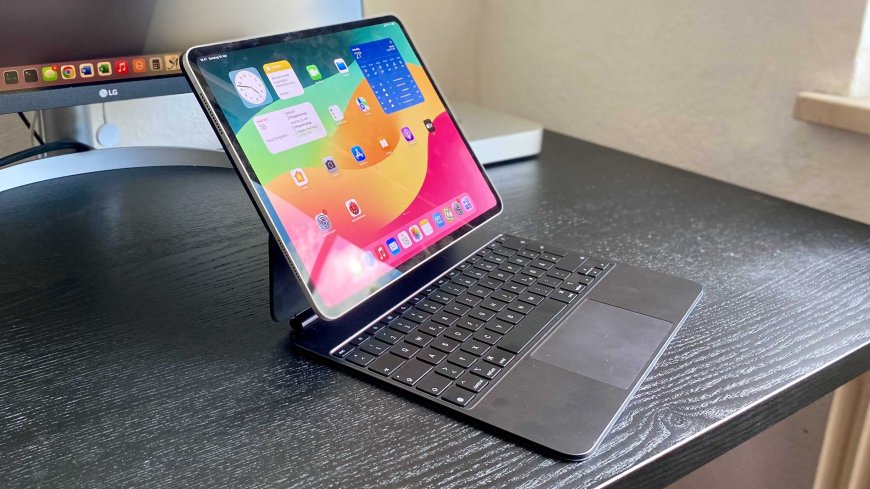
No public photograph of Apple's internal macOS iPad exists. The image above shows an iPad Pro with a Magic Keyboard — the closest thing to a laptop-style iPad you can buy today.
What Gurman actually said
Answering a listener's question, Gurman said Apple has iPads running macOS internally and has had them for a while. The shared Apple Silicon architecture across iPads and Macs, he explained, gives Apple the flexibility to test that kind of combination — the same chips power both product lines, so running the desktop operating system on tablet hardware is technically straightforward.
But he was just as clear about what is not happening. "There is no work being done to consumerize macOS on the iPad," Gurman said, adding that he had checked and found no ongoing project to build a brand-new operating system for the iPad either. In other words, the macOS iPad exists behind closed doors, and Apple has no plan to open those doors.
Why Apple is keeping the two systems apart
The split between iPadOS and macOS is deliberate, and Gurman pointed to regulation as one reason it is likely to stay that way. European Union rules evaluate compliance on a per-operating-system basis, which gives Apple an incentive to keep distinct software platforms for each device category rather than merging them into one.
Apple's own leadership has said the same thing in public, repeatedly. Chief executive John Ternus reiterated during the company's November earnings call that Apple has no fundamentally different changes planned for the relationship between the two systems. Software chief Craig Federighi has argued in the past that putting macOS directly onto an iPad would undermine what makes the tablet distinct, and marketing chief Greg Joswiak has likewise dismissed the idea of combining the devices.
There is also a business calculation. Gurman noted in a newsletter earlier this year that Apple executives internally believe a hybrid device would hurt sales — the company argues it makes better devices by keeping the categories separate, and it sells more of them that way too.
The irony is that the two product lines have never looked closer together. Apple's first touchscreen MacBook Pro reached customers only weeks ago, narrowing the gap from the Mac side even as the iPad gains more desktop-style features from the other direction.
The iPadOS route instead
Rather than bringing full macOS to the iPad, Apple has spent years carrying individual Mac capabilities across to iPadOS. The latest version, iPadOS 26, added a proper windowing system, a menu bar and Exposé-style app switching, while pro apps such as Final Cut Pro and Logic Pro already run natively on the tablet.
That piecemeal approach is the plan, according to Gurman. Expect more Mac features and Mac apps to arrive on the iPad over time — just not the Mac operating system itself. For readers keeping track of Apple's wider roadmap, the company is also preparing new iPhones, iPads and Macs for early 2027, and it recently changed how it builds iOS 28 and macOS 28.
The giant foldable iPad is still the wild card
One device could still blur the line. Gurman reiterated that work continues on a giant foldable iPad, known internally as Project J312 — a 19- to 20-inch device that could run macOS, iPadOS or something entirely new. But he warned there is no guarantee it will ever launch: its expected window has already slipped from 2027 to 2028 and now to around 2029, with cost and manufacturing-yield problems still threatening to kill the project. Estimates put its price at $3,000 to $5,000 if it does arrive.
For now, then, the macOS iPad remains an internal curiosity. Apple can build it, has built it, and has decided — at least for the foreseeable future — that you will never get to use it.
Sources
- GSMArena — Apple is running macOS on iPads internally, new report claims
- MacRumors — Apple Has iPads Running macOS Internally, Says Gurman
- 9to5Mac — Apple has iPads running macOS already, but don't get too excited
- AppleInsider — Apple can run macOS on an iPad, but you won't get to use it
- Digital Trends — Apple has tested macOS on iPads internally, but won't release it to consumers
- Gadgets 360 — Apple Is Reportedly Running macOS on iPads Internally, but a Public Release Is Unlikely
What's Your Reaction?
 Like
0
 Dislike
0
 Love
0
 Funny
0
 Angry
0
 Sad
0
 Wow
0